
Can You Get Bail in a GST Case? The Complete Legal Process Explained
Receiving a notice from the GST department can be stressful for any business owner. But what happens when the situation escalates to an arrest? It’s a reality many are unaware of, and the thought can be overwhelming. While GST is primarily a tax law, certain serious offences under the Central Goods and Services Tax (CGST) Act, 2017, are treated as criminal acts, which can lead to arrest and prosecution. Understanding your rights and the legal pathways available is crucial in such a scenario. This article provides a clear, comprehensive breakdown of the offences that can lead to an arrest and explains the step-by-step process to secure bail in a GST case. We will cover the different types of bail available, the legal procedures involved, and the key factors courts consider, giving you a complete guide to this complex issue, with the entire process of bail in GST case explained in simple terms.
Understanding When a GST Offence Becomes a Criminal Matter
Before diving into the bail process, it’s essential to understand what triggers such a severe action as an arrest under GST law. Not every mistake or non-compliance leads to criminal proceedings. The law makes a clear distinction between minor procedural lapses and major fraudulent activities intended to evade tax. The provisions for arrest are reserved for serious offences where there is a clear intent to defraud the government exchequer of a significant amount. This framework ensures that honest taxpayers are not unduly harassed, while stringent measures are in place to tackle deliberate tax evasion. The power to arrest is vested with the Commissioner of GST, who must have a “reason to believe” that a person has committed a specific, grave offence.
Cognizable and Non-Bailable Offences Under GST
To grasp the severity of the situation, we need to understand two critical legal terms: “cognizable” and “non-bailable.” A cognizable offence is one for which a police officer (or in this case, a duly authorized GST officer) can make an arrest without a warrant from a court. A non-bailable offence means that securing bail is not a matter of right for the accused. Instead, it is granted at the discretion of the court, which will weigh various factors before making a decision. Section 132 of the CGST Act, 2017, is the primary provision that outlines the punishments for GST offences and specifies which of them are cognizable and non-bailable. This section acts as the cornerstone for understanding GST bail in India, as it categorizes offences based on the amount of tax evaded or fraudulent credit claimed, thereby determining the legal recourse available to the accused.
Key Offences and Monetary Thresholds for Arrest
The CGST Act clearly specifies the conditions under which an offence becomes serious enough to be classified as non-bailable and cognizable, warranting an arrest. The primary factor is the monetary value of the tax evasion or fraudulent transaction. The law sets high thresholds to ensure that this stringent measure is used only in cases of substantial fraud.
Here is a simple breakdown of the offences that can lead to arrest if the amount involved exceeds ₹5 crores:
- Fraudulent Claim of Input Tax Credit (ITC): Availing or utilizing ITC based on invoices or bills without the actual supply of goods or services.
- Issuing Fake Invoices: Supplying any goods or services without issuing a proper invoice, or issuing an invoice without an actual supply, with the intention of wrongfully availing ITC or tax refunds.
- Collecting Tax but Not Depositing It: Collecting GST from customers but failing to deposit it with the government for a period exceeding three months from the due date.
- Obstructing an Officer: Obstructing or preventing any officer in the discharge of their duties under the GST Act.
It is crucial to understand the monetary thresholds and their implications, which are summarized below:
| Tax Evasion/Fraudulent ITC Amount | Type of Offence | Imprisonment Term |
|---|---|---|
| Exceeding ₹5 Crores | Cognizable & Non-Bailable | Up to 5 years and a fine |
| Between ₹2 Crores & ₹5 Crores | Non-Cognizable & Bailable | Up to 3 years and a fine |
| Between ₹1 Crore & ₹2 Crores | Non-Cognizable & Bailable | Up to 1 year and a fine |
This distinction is the most important aspect for any business owner to know. The possibility of arrest and the difficulty in securing bail arise only in high-value fraud cases exceeding ₹5 crores. For a deeper legal understanding, you can refer to the official CGST Act, 2017 on the CBIC website.
The Legal Process for Getting a Bail in a GST Case
When an arrest occurs in a GST matter, the accused is typically produced before a Magistrate within 24 hours. From this point, the legal machinery for seeking release from custody, or bail, is set in motion. The process is governed by the Code of Criminal Procedure (CrPC), 1973, as GST law itself does not lay down a separate procedure for bail. Navigating this process requires precision, prompt action, and expert legal guidance. The objective is to convince the court that the accused will not abscond, tamper with evidence, or obstruct the investigation, and therefore, their continued detention is not necessary. The entire journey, from filing the application to the court’s final order, involves several critical steps and legal arguments.
Types of Bail You Can Apply For
In the context of GST offences, there are primarily two types of bail that an individual can seek, depending on whether an arrest has already been made.
- Anticipatory Bail (Section 438 of CrPC): This is a proactive measure. If you have a credible reason to believe that you might be arrested for a non-bailable GST offence (for instance, upon receiving a summons or during an investigation), you can file an application for anticipatory bail. This is filed in the Sessions Court or the High Court. If granted, the court issues a directive that in the event of an arrest, the person shall be released on bail. It is a crucial tool to protect one’s liberty even before it is curtailed.
- Regular Bail (Section 437 & 439 of CrPC): This type of bail is sought after a person has been arrested and is in judicial custody. The application is first filed in the Magistrate’s court where the accused is produced. If the Magistrate rejects the bail plea, the accused can then move the application to the Sessions Court, and subsequently to the High Court if needed. The primary objective of a regular bail application is to secure the release of the person from jail pending the completion of the investigation and trial.
Step-by-Step Guide to the Bail Procedures in GST Cases India
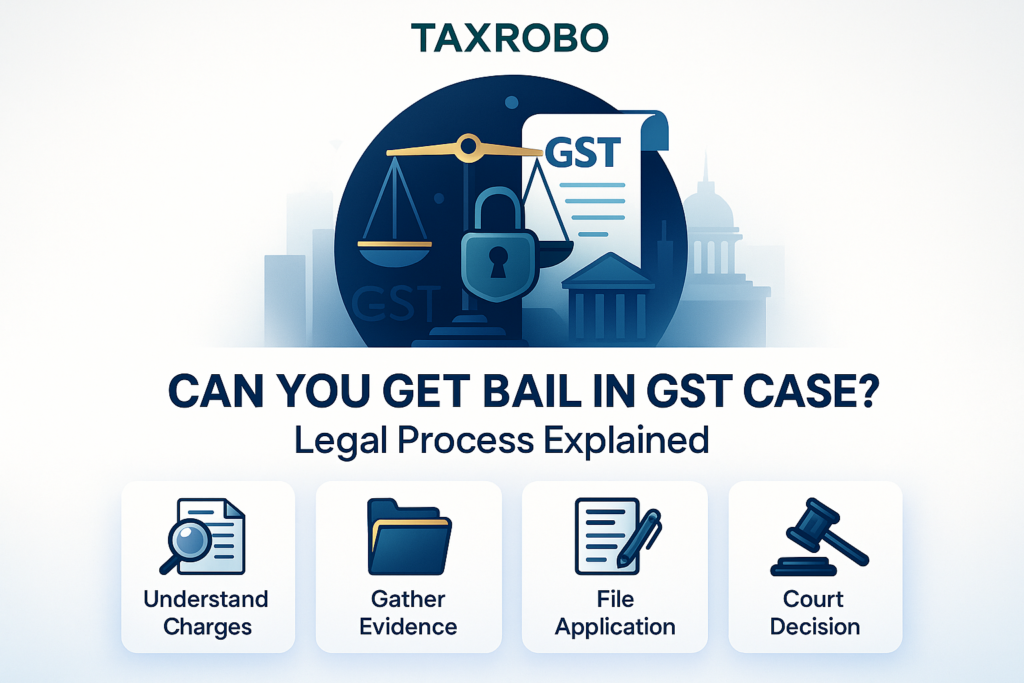
Securing bail is a structured legal process that requires meticulous preparation and execution. Here’s a step-by-step guide on the typical bail procedures in GST cases India:
- Step 1: Engage a Competent Tax Lawyer: This is the most critical first step. GST law is a specialized field that intersects with criminal law. You need a lawyer who has proven experience in indirect tax litigation and is well-versed with the procedures under the Code of Criminal Procedure. Their expertise will be invaluable in drafting the application and arguing your case effectively.
- Step 2: Draft a Strong Bail Application: Your lawyer will prepare a detailed bail application in a GST case in India. This document is the foundation of your case and must be drafted carefully. It typically includes:
- Personal details of the accused.
- A brief of the allegations made by the GST department.
- Strong legal grounds for granting bail (e.g., the accused is not a flight risk, has deep roots in the community, is willing to cooperate fully with the investigation, has health issues, etc.).
- Arguments countering the department’s accusations, highlighting weaknesses in their case if apparent at this stage.
- An undertaking to comply with any conditions the court may impose.
- Step 3: Filing in the Appropriate Court: The application is filed in the court with the appropriate jurisdiction. For regular bail, this is typically the court of the Magistrate before whom the accused was first produced. For anticipatory bail, it is filed in the Sessions Court or High Court. If the application is rejected by a lower court, an appeal can be filed in the next higher court in the judicial hierarchy.
- Step 4: The Court Hearing: During the hearing, your lawyer will present arguments based on the application, emphasizing why your detention is not necessary for the investigation. The public prosecutor, representing the GST department, will oppose the bail application, arguing that the accused might flee, tamper with evidence, or influence witnesses. The judge will hear both sides before making a decision.
- Step 5: The Court’s Order and Bail Conditions: If the court is satisfied with your arguments, it will grant bail. However, this release is almost always conditional. Common conditions include:
- Furnishing a Bail Bond: Submitting a personal bond and possibly sureties for a specified amount as a guarantee of attendance.
- Cooperation with Investigation: A promise to cooperate fully with the investigating officers and appear whenever required.
- Surrendering Passport: To prevent the accused from leaving the country.
- Non-tampering of Evidence: An order not to contact witnesses or tamper with any evidence related to the case.
Key Factors Courts Consider Before Granting Bail
The decision to grant bail in a non-bailable offence is entirely at the court’s discretion. The judge will carefully evaluate several factors based on the “triple test” and other established legal principles:
- The Gravity of the Offence: The magnitude of the alleged tax evasion or fraudulent ITC is a primary consideration. Larger amounts often lead to greater reluctance from the court to grant bail.
- The Applicant’s Past Record: The court will check if the accused has any prior criminal history. A clean record works significantly in the applicant’s favour.
- Risk of Absconding: The court assesses whether there is a risk of the applicant fleeing justice if released. Factors like family ties, property ownership, and community roots are considered.
- Risk of Tampering with Evidence: The prosecution will often argue that the accused could destroy evidence or influence witnesses if released. The defence must counter this by showing that the investigation is advanced and all crucial evidence is already in the department’s custody.
- Health and Age of the Accused: The poor health, old age, or specific medical condition of the accused can be a strong ground for granting bail on humanitarian grounds.
- Cooperation with Authorities: The extent to which the accused has cooperated with the GST officers during the investigation can positively influence the court’s decision.
Proactive Steps: How to Avoid GST Arrests and Legal Complications
While knowing the bail process is important, the best strategy is always prevention. Avoiding a situation that could lead to an arrest should be the primary goal for every business. This comes down to establishing and maintaining robust GST compliance practices from the very beginning. Strong compliance not only keeps you on the right side of the law but also builds a foundation of trust and transparency for your business operations. It acts as a shield, protecting you from the severe consequences of non-compliance, including financial penalties, prosecution, and damage to your reputation.
Best Practices for Robust GST Compliance
Implementing a disciplined approach to GST compliance is non-negotiable. Here are some essential best practices every business should follow:
- Maintain Meticulous Books of Accounts: Keep your financial records, including sales registers, purchase ledgers, and expense vouchers, accurate and up-to-date. This forms the bedrock of all your GST filings.
- File All GST Returns on Time: Ensure that your GSTR-1 (outward supplies) and GSTR-3B (summary return) are filed accurately and within the prescribed due dates every month or quarter.
- Always Issue Valid Tax Invoices: For every taxable supply of goods or services, issue a GST-compliant tax invoice. This is a legal requirement and a critical piece of evidence for your transactions.
- Reconcile ITC Regularly: Systematically reconcile your purchase records with the details appearing in your GSTR-2A and GSTR-2B. This ensures you are claiming only legitimate Input Tax Credit and helps identify any discrepancies with your suppliers.
- Never Engage in Fraudulent Practices: Under no circumstances should you engage in activities like issuing invoices without an actual supply of goods (fake invoicing) or participating in circular trading to artificially inflate turnover or claim fraudulent ITC.
Why Professional Guidance is Non-Negotiable
GST laws are intricate and subject to frequent amendments and clarifications. For a business owner focused on growth, keeping track of every nuance can be a daunting task. An inadvertent error can sometimes be misinterpreted as a deliberate attempt to evade tax, leading to serious complications. This is where professional guidance becomes indispensable. Expert firms like TaxRobo offer specialized services that can safeguard your business. Services such as GST advisory, compliance management, and internal audits help identify potential risks and rectify procedural gaps before they attract the attention of tax authorities. A professional expert can provide clarity on complex transactions, ensure your compliance framework is robust, and represent you effectively if you ever receive a notice, preventing minor issues from escalating into major legal battles.
For comprehensive support, explore TaxRobo’s GST Services.
Conclusion
The power of arrest under GST law is a serious measure reserved for significant cases of tax fraud. While the prospect is intimidating, it’s vital to remember that a structured legal process for GST bail in India exists and is rooted in the principles of justice. Securing bail in a GST case involves understanding that offences involving tax evasion above ₹5 crores are non-bailable, meaning bail is at the court’s discretion. The process involves filing either an anticipatory or a regular bail application, supported by strong legal arguments. The court’s decision hinges on multiple factors, including the severity of the offence, the conduct of the accused, and the risk of them obstructing justice.
Ultimately, the best defence is impeccable compliance. By maintaining accurate records, filing returns on time, and seeking expert guidance, you can protect your business from the risk of facing such severe legal consequences. Proactive measures are always better than reactive legal battles.
Are you concerned about your GST compliance or facing a notice from the department? Don’t wait for the situation to worsen. Contact the experts at TaxRobo today for a confidential consultation and ensure your business stays secure and compliant.
Frequently Asked Questions (FAQs) about Bail in GST Cases
Q1: Is every GST offence non-bailable?
A: No. An offence under GST is considered non-bailable only if the tax evasion or fraudulent ITC availed exceeds ₹5 crores, as stipulated under Section 132 of the CGST Act. Offences involving amounts between ₹2 crores and ₹5 crores are non-cognizable and bailable, while those below ₹2 crores are also bailable.
Q2: Can I get anticipatory bail if I receive a summons from the GST department?
A: Yes. A summons is an official call to provide information or evidence and is not an arrest warrant. However, if during the course of the investigation you have a strong and well-founded reason to believe that you may be arrested for a non-bailable offence, you can certainly file for anticipatory bail in the Sessions Court or High Court as a precautionary measure.
Q3: What happens if my bail application is rejected by the Magistrate?
A: If your regular bail application is rejected by the Magistrate’s Court, you have the right to appeal the decision in a higher court. The judicial hierarchy allows you to move the application to the Sessions Court. If it is rejected there as well, you can further appeal to the High Court and, in rare cases, the Supreme Court.
Q4: How long does the bail process usually take?
A: There is no fixed timeline for the bail process. The duration to get bail in a GST case can vary significantly, from a few days to several weeks or even longer. It depends on various factors, including the complexity of the case, the arguments presented by the prosecution and the defence, the court’s workload, and the stage of the investigation.