
How to Handle GST ITC Mismatch Leading to Investigation
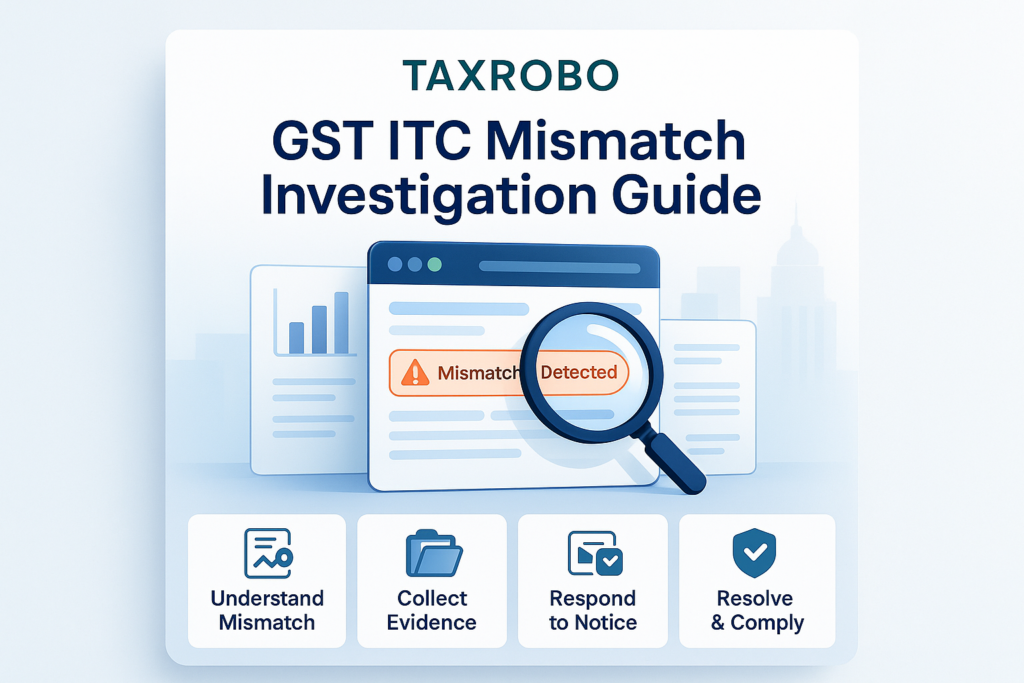
That official-looking envelope from the GST department can be a source of major stress for any business owner. Inside, you might find a notice about a discrepancy in your Input Tax Credit (ITC) claim, a situation that can quickly become overwhelming. This notice is often the first step in a process that could escalate into a full-blown GST ITC mismatch investigation. An ITC mismatch happens when there’s a difference between the ITC you claimed in your GSTR-3B return and the tax details your suppliers filed in their GSTR-1, which automatically appears in your GSTR-2A/2B. These discrepancies are flagged by the GSTN’s automated systems, triggering notices that demand swift and accurate responses. This guide will break down the causes of ITC mismatches, explain the investigation process, provide a step-by-step action plan for resolution, and offer proactive tips to keep your business compliant and avoid these issues in the future.
What is GST ITC and Why Does a Mismatch Occur?
Before diving into the investigation process, it’s crucial to understand the fundamentals of Input Tax Credit and the common reasons mismatches arise. Getting this right is the first step in building a robust GST compliance framework for your business. A clear grasp of these concepts helps in not only resolving current issues but also in preventing future discrepancies that could attract unwanted attention from the tax authorities.
A Simple Guide to Input Tax Credit (ITC)
Input Tax Credit, or ITC, is the cornerstone of the Goods and Services Tax (GST) system. It is a mechanism that allows businesses to reduce their final tax liability by claiming credit for the GST they have already paid on their business purchases, or ‘inputs’. Think of it as a way to prevent the cascading effect of tax-on-tax, ensuring that tax is levied only on the value added at each stage of the supply chain. For example, imagine a t-shirt manufacturer. They pay GST when they purchase fabric, thread, and buttons. When they sell the finished t-shirt, they collect GST from their customers. Thanks to ITC, they can deduct the GST amount they already paid on their raw materials from the GST they owe the government on their sales. This simple principle makes goods and services cheaper for the end consumer and creates a transparent, self-policing tax system.
Top 5 Reasons for a GST ITC Mismatch
An ITC mismatch can occur for several reasons, often stemming from simple human error or a lack of coordination between you and your suppliers. Understanding these common pitfalls is essential to manage GST ITC discrepancy in India. Here are the top five reasons you might receive a notice:
- Supplier Errors: This is one of the most frequent causes. Your supplier may have made a mistake while filing their GSTR-1 return. Common errors include entering the wrong GSTIN for your business, quoting an incorrect invoice number, entering the wrong invoice date, or misstating the tax amount. Since your GSTR-2B is auto-populated based on their filing, any error they make directly impacts your available ITC.
- Buyer Errors: Mistakes can also happen on your end. You might have made a data entry error while manually entering ITC figures into your GSTR-3B. Another common mistake is claiming ITC on an item that is ineligible under GST law, such as goods purchased for personal use or items listed in the blocked credit section (e.g., motor vehicles, with some exceptions).
- Timing Differences: GST compliance is time-sensitive. A mismatch can occur if your supplier files their GSTR-1 for a particular month *after* you have already filed your GSTR-3B for the same period. In this scenario, the invoice won’t appear in your GSTR-2B for that month, but you might have already claimed the ITC based on your purchase records, leading to a temporary mismatch.
- Incorrect Invoice Details: Even small discrepancies between the invoice details in your records and what your supplier has filed can trigger a flag. This includes differences in the invoice value, the date of the invoice, or the place of supply. Consistency across all documentation is key to seamless compliance.
- B2B vs. B2C Classification Error: If a supplier mistakenly reports your Business-to-Business (B2B) transaction as a Business-to-Consumer (B2C) sale in their GSTR-1, the transaction will not appear in your GSTR-2B. Since ITC can only be claimed on B2B supplies, this error will directly lead to a mismatch and deny you the credit you are rightfully owed.
The Anatomy of a GST ITC Mismatch Investigation
When the GST Network (GSTN) algorithms detect a significant difference between your claimed ITC and the data reported by your suppliers, an automated process is initiated. This doesn’t immediately mean you are in trouble, but it does require a formal response. Ignoring these initial communications is a critical mistake that can escalate the matter from a simple query to a formal GST ITC mismatch investigation, complete with penalties and interest. Understanding the stages of this process helps you appreciate the seriousness of each notice and respond appropriately.
The First Warning: The Automated Notice (DRC-01C)
The first step in this process is typically an automated intimation. The GST portal constantly compares the ITC you claim in your GSTR-3B with the details available in your auto-populated GSTR-2B. If the ITC claimed in GSTR-3B exceeds the available ITC in GSTR-2B by a pre-defined limit, the system automatically sends an intimation in Form GST DRC-01C. This form is not a demand notice but a request for clarification. It clearly highlights the discrepancy and requires you to take one of two actions within a strict timeline, usually seven days: either pay the excess ITC claimed along with interest through Form DRC-03 or provide a detailed reason for the difference in Part B of DRC-01C. This is your first opportunity to resolve the issue before it escalates.
When it Escalates: Scrutiny Notices (ASMT-10) and SCNs
If you fail to respond to DRC-01C or if the tax officer finds your explanation unsatisfactory, the matter moves to the next level. The officer may issue a scrutiny notice in Form ASMT-10. This is a more formal communication where the officer seeks a detailed explanation and supporting documents for the identified discrepancies. You are expected to provide a comprehensive reply with evidence to justify your ITC claim. Should your response to the ASMT-10 also be deemed insufficient, or if you fail to respond at all, the department can initiate demand and recovery proceedings. This often begins with a Show Cause Notice (SCN), which is a far more serious step. A detailed guide on How to Handle GST Notices – ASMT-10, DRC-01, DRC-07 Explained Simply can provide specific strategies for these communications. An SCN is a formal document asking you to explain why the disputed ITC amount, along with applicable interest and penalties, should not be recovered from you. It signals the start of a formal adjudication process that can lead to a confirmed tax demand.
Your Action Plan: How to Handle a GST ITC Mismatch Investigation in India
Receiving a notice from the GST department can be daunting, but with a systematic approach, you can navigate the process effectively. The key is to be prompt, thorough, and transparent in your communications with the tax authorities. Following a structured plan will not only help you resolve the current issue but also strengthen your internal processes for the future.
Step 1: Acknowledge the Notice Promptly
The single most important rule is to never ignore a GST notice. Whether it’s an automated DRC-01C or a formal ASMT-10, these communications come with strict deadlines. Failing to respond within the stipulated time can be interpreted as an admission of fault and may lead to the tax officer taking action against you without considering your side of the story. Acknowledge receipt of the notice immediately and make a note of the deadline for your reply. This simple first step demonstrates your willingness to comply and sets a positive tone for all future interactions with the department. It gives you control over the process rather than letting the deadlines control you.
Step 2: Conduct a Detailed Internal Reconciliation
Before you can draft a reply, you need to understand the exact cause of the mismatch. This requires a meticulous internal review. Here are some actionable GST ITC mismatch resolution tips India to guide your reconciliation process:
- Download Essential Reports: Go to the GST Portal and download your GSTR-2B and your filed GSTR-3B for the tax period mentioned in the notice.
- Compare Line by Line: Create a spreadsheet and compare every invoice in your GSTR-2B with your internal purchase register and the consolidated ITC figure you claimed in GSTR-3B. This is a crucial step detailed in our How to Resolve ITC Mismatch Issues – GSTR-2A/2B vs 3B Guide.
- Identify and Isolate: Highlight the specific invoices that are causing the mismatch. For each discrepancy, identify the root cause. Is it a supplier error (invoice not uploaded), a clerical error on your part (wrong amount claimed), a timing difference, or an ineligible credit claim? This detailed analysis will form the backbone of your official reply.
Step 3: Communicate with Your Suppliers
If your reconciliation reveals that the mismatch is due to an error or omission by your supplier, your next step is to contact them immediately. Proactive and clear communication is essential. Provide them with the specific details of the missing or incorrect invoices (invoice number, date, value, and tax amount). Politely request them to amend their GSTR-1 filing in the next available tax period to correct the error. It’s crucial to keep a formal record of all your communications with the supplier, such as emails or letters. This documentation serves as proof that you have taken the necessary steps to rectify the discrepancy from your end, which can be a valuable piece of evidence to include in your reply to the tax department.
Step 4: Prepare and File a Clear, Factual Reply
Your reply to the notice must be comprehensive, factual, and supported by evidence. A well-structured response can often resolve the issue without further escalation. Ensure your submission includes the following:
- A Cover Letter: Briefly introduce the purpose of your submission, referencing the notice number and date.
- Point-by-Point Response: Address each discrepancy highlighted in the notice separately. Clearly explain the reason for the mismatch for each point.
- Reconciliation Statement: Attach the detailed reconciliation worksheet you prepared in Step 2. This provides the officer with a clear, invoice-level breakdown of your analysis.
- Supporting Documents: This is critical. Attach copies of all relevant documents, such as tax invoices, e-way bills, debit/credit notes, proof of payment to the supplier (e.g., bank statements), and proof of receipt of goods or services (e.g., goods receipt notes).
- Voluntary Payment (if applicable): If your internal review confirms that you have wrongly claimed excess ITC, the best course of action is to pay the amount along with applicable interest via Form DRC-03. Include a copy of the payment challan with your reply to demonstrate your compliance.
Step 5: Consult a GST Expert
While you can handle minor discrepancies on your own, dealing with a GST ITC mismatch in India, especially when it escalates to a scrutiny notice or SCN, can be legally and procedurally complex. The way you draft your reply can have significant financial implications. This is where professional help becomes invaluable. A qualified tax consultant or CA can help you prepare a legally sound and persuasive reply, ensure all your documentation is complete and correctly presented, and if necessary, represent your case before the tax authorities. Their expertise can save you significant time, stress, and potential penalties, ensuring the matter is resolved favorably.
Proactive Measures to Avoid GST ITC Mismatch Issues in India
The best way to handle an investigation is to prevent it from happening in the first place. By implementing robust internal controls and making GST compliance a regular part of your business operations, you can significantly reduce the risk of mismatches. These proactive steps are some of the most effective GST ITC mismatch solutions for businesses India.
Implement a Strict Vendor Verification Process
Your ITC claim is only as reliable as your suppliers’ compliance. Before you start doing business with a new vendor, make it a policy to conduct due diligence. Verify their GSTIN to ensure it is active and check their filing status on the government portal. A vendor who consistently files their returns late or incorrectly is a major red flag and can cause continuous ITC problems for your business. You can do this for free on the Official GST Portal. A little diligence upfront can save you from major headaches down the line.
Make Monthly Reconciliation a Non-Negotiable Habit
Do not wait for a notice from the department to reconcile your books. Make it a mandatory business process to reconcile your purchase register with your auto-populated GSTR-2B *before* you file your GSTR-3B every month. This proactive check allows you to identify any discrepancies in real-time. If an invoice is missing from your GSTR-2B, you can immediately follow up with the supplier to get it corrected, long before it becomes a problem. This simple monthly habit is the single most effective way to ensure the ITC you claim is accurate and fully accounted for. This highlights The Importance of Accurate Record-Keeping to Prevent GST Demand Notices.
Use Modern Accounting Software
In today’s digital age, managing GST compliance manually using spreadsheets is inefficient and prone to errors. Invest in modern accounting or ERP software that has built-in GST compliance features. These tools can automate the reconciliation process by directly pulling data from the GSTN, comparing it with your purchase records, and highlighting mismatches in an easy-to-understand dashboard. This not only reduces the chance of manual data entry errors but also saves a significant amount of time, freeing you up to focus on growing your business.
Conclusion
A GST notice can be alarming, but a GST ITC mismatch investigation is a manageable process if handled with a systematic and timely approach. The key is to understand the root cause of the mismatch, respond to notices promptly with factual evidence, and maintain clear communication with both your suppliers and the tax authorities. Diligent record-keeping, regular monthly reconciliations, and proactive vendor management are the pillars of strong GST compliance. Remember, ignoring a notice is not an option and will only lead to more severe financial consequences, including interest, penalties, and potential recovery actions. By being proactive and prepared, you can turn a stressful situation into an opportunity to strengthen your financial processes.
Don’t let a GST notice disrupt your business. TaxRobo’s team of GST experts is here to help you navigate the entire process, from reconciliation to representation. Contact us today to ensure your business remains compliant and stress-free.
Frequently Asked Questions (FAQs)
Q1: What happens if I ignore a GST ITC mismatch notice?
Answer: Ignoring a notice like DRC-01C is a serious mistake. It can lead to the demand being confirmed by the tax officer without your input. The department can then initiate recovery proceedings under the GST Act, which may include freezing your bank accounts, attaching your property, or blocking your ability to generate e-way bills, which can severely impact your daily business operations.
Q2: Can I claim ITC if my supplier has not paid the tax to the government?
Answer: No. As per Section 16(2)(c) of the CGST Act, one of the fundamental conditions for claiming ITC is that the tax charged on the invoice has been actually paid to the government by the supplier. Even if you have a valid tax invoice and have paid the full amount to your supplier, your ITC claim can be held invalid if the supplier defaults on their tax payment. This makes vendor compliance monitoring crucial.
Q3: What is the time limit for a supplier to amend their GSTR-1 for a mistake?
Answer: A supplier can amend or add details of invoices from a previous tax period in their subsequent GSTR-1 filings. The deadline for making such corrections for a financial year is the 30th of November of the following financial year, or the date of filing the GST annual return for that year, whichever is earlier. It is crucial to follow up with your suppliers to ensure they make corrections well before this deadline passes.
Q4: If I find an error and need to reverse the ITC, do I also have to pay a penalty?
Answer: If you voluntarily identify an error, reverse the wrongly claimed ITC, and pay the applicable interest *before* any notice is issued by the department, you can typically avoid penalties. The law encourages self-correction. However, if the discrepancy is pointed out by the tax department through a notice or during an audit, a penalty may be levied in addition to the tax amount and the interest due.