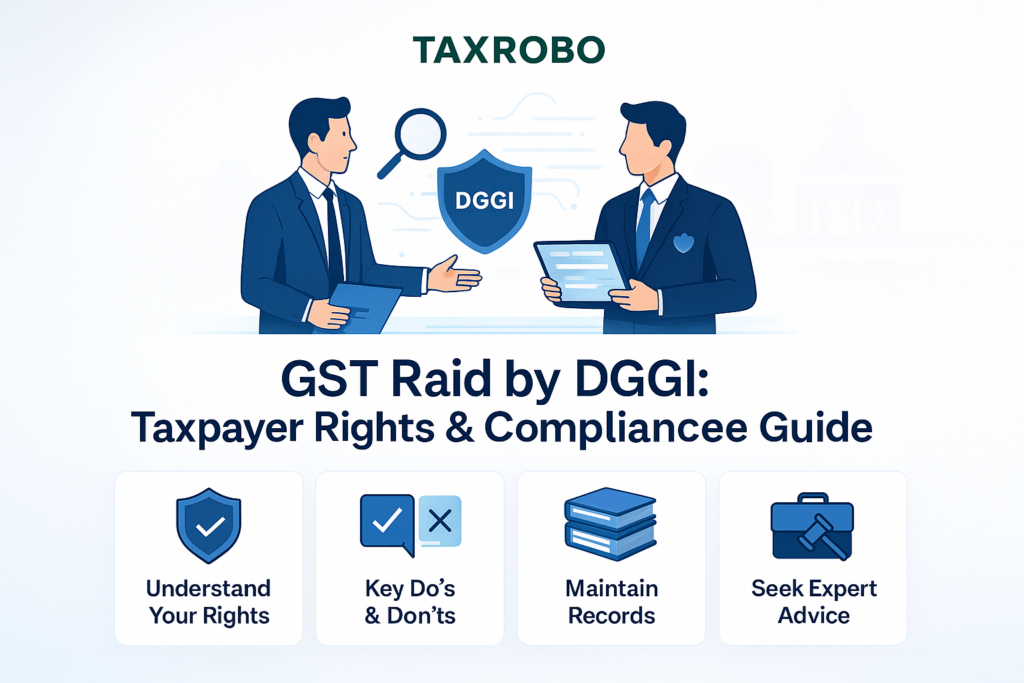

GST Raid by DGGI – Rights of Taxpayer & Do’s and Don’ts
For any small business owner, the thought of an unexpected visit from tax authorities can be a source of significant anxiety. A GST raid, in particular, can be an intimidating experience. However, navigating this stressful situation while being uninformed about your legal standing can make things considerably worse. This post is designed to be a crucial guide, empowering you with a clear understanding of the rights of a taxpayer during a GST raid. A GST raid is essentially an inspection, search, and seizure operation conducted by authorities like the Directorate General of GST Intelligence (DGGI) when they suspect significant tax evasion. You can read more about the Difference Between GST Audit, Inspection, Search & Seizure Explained. Knowing your rights is not about creating a confrontation; it’s about ensuring the process is conducted fairly, lawfully, and with respect for your legal protections. This guide will help you understand the entire process, from why raids happen to the practical steps you should take during and after one, ensuring you are prepared, not panicked. This deep dive into understanding GST raids in India will equip you with the knowledge to handle the situation with confidence and composure.
Understanding GST Raids in India: Why Do They Happen?
A GST raid is not a random event. It is a carefully initiated action based on specific information or data analysis that suggests potential tax evasion. The Goods and Services Tax framework has robust digital systems that track transactions, and any significant anomalies can trigger scrutiny. Understanding the legal authority behind these actions and the common red flags can help businesses maintain better compliance and minimize risks. The goal of these raids is to unearth fraudulent activities, recover unpaid taxes, and deter future non-compliance within the larger business community. These GST raid procedures in India are governed by strict legal protocols designed to balance the powers of the tax authorities with the rights of the individual or business being investigated.
Who is the DGGI and What is Their Role?
The Directorate General of GST Intelligence (DGGI) is the apex intelligence and investigation agency for matters related to the Goods and Services Tax. Operating under the Central Board of Indirect Taxes and Customs (CBIC), the DGGI is tasked with collecting, collating, and disseminating intelligence related to GST evasion across India. Their officers are vested with significant powers under the Central Goods and Services Tax (CGST) Act, 2017, including the authority to conduct search and seizure operations. You can learn more about the Powers of GST Officers During Investigation (Section 67, 70, 74 Explained). They act on credible information, data from analytics tools, and intelligence from various sources to identify cases of substantial tax fraud, such as the creation of fake invoices for passing on illegal Input Tax Credit (ITC), complex tax evasion schemes, and deliberate non-payment of GST liabilities.
Common Triggers for a GST Raid
Tax authorities like the DGGI use sophisticated data analytics and a network of informants to identify potential tax evaders. A raid is typically the last resort when there is a strong “reason to believe” that fraudulent activity is occurring. Here are some common red flags that can lead to a GST raid, highlighting the potential GST raid implications for taxpayers:
- Significant Data Discrepancies: Major mismatches between the data declared in GSTR-1 (outward supplies), GSTR-3B (summary return), and the information available through E-way bills are a primary trigger. For instance, if a business reports high turnover in its GSTR-1 but declares and pays significantly less tax in its GSTR-3B, it raises an immediate alarm.
- Suspicious or Unusually High ITC Claims: Claiming Input Tax Credit that is disproportionately high compared to the business’s output tax liability is a major indicator of potential fraud. This includes claiming ITC on fake invoices from non-existent suppliers or on goods and services that were never actually received.
- Non-filing of GST Returns: A business that has been consistently non-compliant and has not filed its GST returns for six or more consecutive tax periods signals to the department that it may be trying to hide its transactions and evade its tax obligations.
- Specific Intelligence about Tax Evasion: The DGGI often acts on specific and credible intelligence received from whistleblowers, other government agencies, or even disgruntled business partners about fraudulent activities like creating shell companies, under-reporting sales, or operating clandestine businesses.
- Transactions with Suspicious Dealers: Engaging in transactions with suppliers whose GST registration has been cancelled retrospectively or who have been identified as tax evaders can put your business under the scanner. The tax department closely monitors the entire supply chain.
Your Shield: Unpacking the Rights of a Taxpayer During a GST Raid
While the powers granted to GST officers are extensive, they are not absolute. The law provides a robust framework of checks and balances to protect citizens from any potential misuse of authority. Knowing the rights of a taxpayer during a GST raid is your most effective shield. These rights ensure that the search is conducted legally, ethically, and with due respect for your dignity and property. Asserting these rights politely and firmly is crucial for ensuring a fair process and is a key aspect of taxpayer protection under GST law.
The Right to Verify Authority
Before allowing any officer to enter your premises or begin a search, you have the absolute right to verify their authority and the legality of their action. This is the first and most critical step in safeguarding your interests.
- Demand a Valid Search Warrant: The search team must be in possession of a valid Search Warrant (Form GST INS-01) issued by a competent authority, who must be an officer not below the rank of Joint Commissioner. Carefully inspect this document. You have the right to check for key details such as the name of the person or business, the full address of the premises to be searched, the date of issuance, and the official seal and signature of the issuing authority. A search conducted without a valid warrant is illegal.
- Verify Officer Identity: Every member of the search party is required to carry an official identity card. You have the right to ask each officer to show you their ID and you can note down their names and designations. This ensures that the individuals conducting the raid are legitimate officers and creates a record of who was present.
Rights During the Search Procedure
Once you have verified the warrant and identities, the search will commence. Even during this process, the law outlines specific procedures to uphold the taxpayer’s dignity and rights.
- Presence of Independent Witnesses: A search and seizure operation must be conducted in the presence of two independent and respectable witnesses from the locality, often referred to as “Panchas.” These witnesses are not part of the tax department; their role is to be neutral observers of the entire proceeding to ensure transparency and fairness.
- Personal Search Etiquette: If a personal search of any individual is deemed necessary by the officers, it must be carried out with strict adherence to decency. Critically, a male officer can only search a male, and a female officer must conduct the search of a female. This is a fundamental right that protects an individual’s dignity.
- The Right to a Peaceful and Orderly Process: Tax officers are expected to conduct the search in a reasonable and orderly manner. They cannot harass, intimidate, or threaten anyone on the premises. While they have the authority to search, they do not have the right to needlessly damage property. If you feel the officers are acting unprofessionally or causing undue disturbance, you have the right to point it out and have it noted.
Rights Related to Seizure and Statements
The actions of seizing documents or recording statements are critical parts of any raid, and specific rights protect you during these stages. These are vital for all taxpayer rights in GST investigations.
- Right to a Seizure Memo (Panchnama): If the officers decide to seize any books of accounts, documents, cash, or goods, they are legally obligated to prepare a detailed list of everything they are taking. This document is called a Seizure Memo or “Panchnama.” It must be signed by the officers, the two independent witnesses, and you (or your representative). Insist on receiving a copy of this Panchnama before the officers leave; it is your official record of what was seized.
- Recording of Your Statement: Officers will likely record a statement from you or key personnel. You have the right to give this statement voluntarily, without any threat, coercion, or promise. Answer all questions truthfully and factually. Remember that this statement is an official legal document and can be used as evidence in subsequent proceedings. Do not say anything you are unsure of; it is acceptable to state that you need to check your records to provide a specific detail.
- Right to Professional Assistance: While the law may not explicitly permit a lawyer or a Chartered Accountant to be physically present throughout the search, you have the right to contact them for guidance. You can inform the officers that you wish to make a phone call to your tax consultant to inform them of the situation and seek immediate advice.
A Practical Checklist: The Do’s and Don’ts During a GST Raid
In the heat of the moment, it can be difficult to remember complex legal provisions. This practical checklist provides clear, actionable steps to follow. Keeping these do’s and don’ts during a GST raid in mind can help you navigate the situation calmly and effectively.
What You SHOULD Do
- Do Stay Calm and Cooperate: Panic is your enemy. Maintain your composure and cooperate with the officers. Answering their questions calmly and factually will help the process move smoothly. Cooperation does not mean surrendering your rights, but rather facilitating a lawful process.
- Do Verify the Warrant and Identities: As mentioned earlier, this is non-negotiable. Politely but firmly ask to see the Search Warrant and the identity cards of all officers before the search begins. Take a moment to read the warrant carefully.
- Do Offer Assistance: Help the officers locate the specific documents, books, or records they are looking for. This demonstrates your willingness to cooperate and can help expedite the process.
- Do Keep a Personal Record: While the official record is the Panchnama, it is wise to maintain your own log of the proceedings. Note down the start and end times of the raid, the names of the officers present, the specific areas they searched, and a list of the questions they asked.
- Do Insist on a Panchnama: Never let the officers leave with seized items without providing you with a duly signed copy of the Panchnama. Scrutinize the list to ensure it accurately reflects what has been taken.
What You SHOULD NOT Do
- Don’t Obstruct the Officers: Hindering or obstructing a government official from performing their duty is a serious offense and can lead to legal penalties. Do not block their access, refuse to answer questions, or engage in any form of physical or verbal confrontation.
- Don’t Destroy or Hide Evidence: Any attempt to alter, conceal, or destroy documents, computer files, or goods during the raid will be viewed as an admission of guilt and can result in severe legal consequences, including prosecution.
- Don’t Sign Blank or Unread Documents: The officers may ask you to sign several documents, including your recorded statement and the Panchnama. Read every single word carefully before you sign. Never sign a blank piece of paper or a document you do not fully understand.
- Don’t Make Informal Cash Payments: Under no circumstances should you agree to make an “on-the-spot” tax payment in cash under pressure. The formal process for tax recovery involves the issuance of a Show Cause Notice (SCN) and a formal order. Any payment made under duress during a raid is improper and can be contested.
After the Raid: What Are the Next Steps and Implications?
The end of the raid is not the end of the process; it is the beginning of the investigation phase. Your actions in the immediate aftermath are critical and can significantly influence the outcome of the case.
Immediate Actions to Take Post-Raid
Once the tax officials have left your premises, you need to act swiftly and strategically.
- Contact Your Tax Consultant: Your first call should be to your Chartered Accountant or tax lawyer. Provide them with a detailed account of the raid and share a copy of the Panchnama and any other documents you received.
- Review the Panchnama: Go through the seizure memo with your consultant to check for any inaccuracies or discrepancies between the items listed and what was actually taken.
- Prepare Your Documentation: Begin compiling your own set of financial records, GST returns, and supporting documents to prepare a robust defense for the upcoming investigation. This will help you counter any allegations made by the department.
Understanding the GST Raid Implications for Taxpayers
A raid is followed by a detailed investigation where the seized documents and recorded statements are analyzed. Based on this, the department may issue a Show Cause Notice (SCN), which is a formal document asking you to explain why a certain amount of tax, interest, and penalty should not be levied on you. The potential outcomes can range from the closure of the case if a satisfactory explanation is provided, to the confirmation of a demand for tax, interest, and heavy penalties. In cases of serious fraud, it can even lead to prosecution.
How TaxRobo Can Help You Navigate the Aftermath
The period following a GST raid is critical and requires expert legal and financial navigation. Trying to handle complex tax litigation on your own can be overwhelming and risky. This is where professional guidance becomes indispensable. TaxRobo’s team of expert CAs and lawyers specializes in handling such cases. We can help you with comprehensive litigation support, from drafting a precise and legally sound reply to the Show Cause Notice to representing you before the tax authorities. For instance, we can guide you on How to Respond to a GST Show Cause Notice: A Step-by-Step Guide. Furthermore, we can help ensure your future GST compliance for individuals in India and for businesses is robust and watertight to prevent future issues. Don’t face it alone.
Conclusion
A GST raid can be a daunting event, but knowledge is power. Understanding the rights of a taxpayer during a GST raid is your first and most important line of defense. Remember to verify the search warrant and officer identities, insist on the presence of independent witnesses, and secure a copy of the Panchnama for any items seized. The most critical ‘do’ is to remain calm and cooperative, and the most vital ‘don’t’ is to never make a tax payment on the spot under duress. While being prepared for such an event is crucial, the best strategy is always proactive compliance. Maintaining meticulous records, filing accurate GST returns on time, and conducting regular internal audits can significantly reduce the risk of facing such scrutiny. Be prepared, not scared. For a complete review of your GST compliance or for expert assistance with any tax notice, contact TaxRobo’s experts today. For more information on your rights, you can also refer to the official GST Portal.
Frequently Asked Questions (FAQs)
Q1: Can GST officers seize cash or personal jewelry during a raid?
Answer: Officers can seize unaccounted cash if they have reason to believe it is the proceeds of tax evasion or connected to undisclosed business supplies. Personal assets like jewelry can be seized only if there is credible evidence linking them directly to undisclosed business income. They cannot seize assets that are properly disclosed in your wealth tax or income tax returns and are consistent with your known sources of income.
Q2: Can a GST raid happen at my home?
Answer: Yes. If an authorized officer has a “reason to believe” that goods liable for confiscation, or books of accounts and crucial documents relevant to the investigation, are kept at a residential property, the raid can be conducted there. However, the residential address must be explicitly mentioned in the Search Warrant for the search to be legal.
Q3: What happens if I am not present at my business premises during the raid?
Answer: The search can still proceed even in your absence. The law allows for the search to be conducted in the presence of any other adult person who is in charge of the premises at that time, such as a manager, an employee, or even an adult family member, along with the two mandatory independent witnesses. It is always advisable to have a responsible person at your business premises who can contact you immediately in such a situation.
Q4: Do these taxpayer rights in GST investigations apply to a salaried individual running a small online business from home?
Answer: Absolutely. The GST law applies uniformly to all registered taxpayers, regardless of the size or nature of their business. Whether you are a large manufacturing company or a salaried individual running a small e-commerce store from home, if you are registered under GST, all the rights and responsibilities discussed in this article apply to you. This makes strong GST compliance for individuals in India who are also entrepreneurs extremely important.