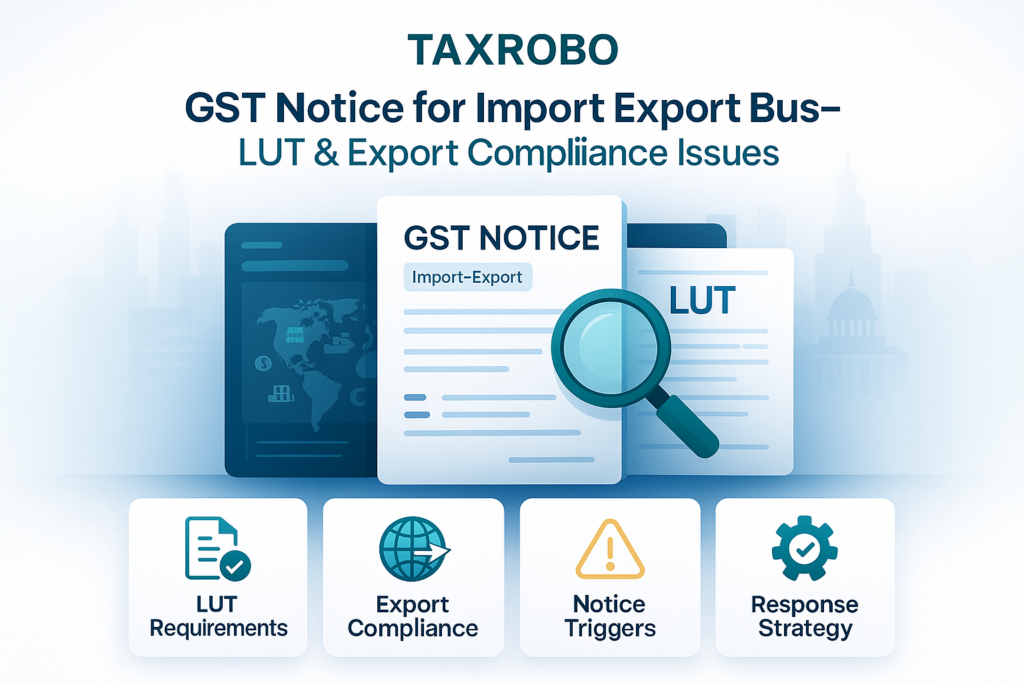

GST Notice for Import Export Business – Navigating LUT & Export Compliance Issues
Receiving a formal notice from the GST department is a common fear for any business owner, but for exporters, it can feel particularly stressful. While taking your business global is a fantastic opportunity, it also means navigating a complex web of regulations where even minor mistakes can lead to significant penalties and operational hurdles. This guide is designed to demystify the common import export compliance issues that Indian businesses face. We will break down why you might receive a GST notice for exporters in India, with a special focus on the Letter of Undertaking (LUT) and critical documentation, so you can handle your operations with confidence. By the end of this article, you will understand the core GST concepts for exporters, identify common pitfalls, and learn actionable steps to maintain compliance and handle any official correspondence effectively.
The Foundation: Understanding GST for Indian Exporters
Before diving into the reasons behind a GST notice, it’s essential to grasp the fundamental principles of the Goods and Services Tax (GST) as it applies to the export sector. The Indian government has structured the GST framework to encourage exports, but this framework rests on strict compliance with specific rules. Understanding these basics is the first step toward avoiding common errors and ensuring your business operates smoothly within the legal landscape. The entire system is built on a specific principle designed to boost international trade, offering exporters two distinct paths to manage their tax obligations, each with its own set of procedures and implications for your business’s cash flow.
Why Exports are “Zero-Rated” Under GST
Under the GST regime, the export of goods or services is considered a “zero-rated supply.” This is a crucial concept to understand. It doesn’t mean that these goods and services are exempt from tax; rather, it means the rate of tax levied on them is zero. The primary objective of this policy is to ensure that Indian products and services remain competitive in the global marketplace. By not loading the final export price with domestic taxes, the government helps Indian exporters offer more attractive pricing to international buyers. This principle also allows exporters to claim a refund on the Input Tax Credit (ITC) for taxes paid on raw materials and services used to produce the export goods, further reducing their operational costs and making the entire export process more financially viable.
The Two Routes for GST Compliance in Exports
To align with the “zero-rated” principle, the GST law provides exporters with two distinct options to manage their tax compliance. Choosing the right route depends on your business’s working capital, operational efficiency, and risk appetite.
- Route 1: Exporting with a Letter of Undertaking (LUT)
A Letter of Undertaking, or LUT, is a legal document that an exporter can furnish to the GST department. By filing this document, the exporter undertakes or promises to fulfill all the export compliance requirements in India. The primary benefit of the LUT is that it allows you to export goods or services without paying the Integrated GST (IGST) upfront. This is the most popular route for established exporters as it prevents the blockage of working capital. To be eligible, the taxpayer must not have been prosecuted for any tax evasion offense exceeding ₹250 lakhs. - Route 2: Exporting by Paying IGST and Claiming a Refund
The second option is to pay the applicable IGST on the export transaction at the time of supply and then claim a refund of the paid tax from the government. While this route is available to all exporters, including new businesses that may not immediately opt for an LUT, it has a significant drawback. Your working capital gets locked up with the government until the refund is processed and credited to your account. This delay can impact your cash flow and ability to fund subsequent business operations, making it a less preferred option for many small and medium-sized enterprises. GST Refunds for Exporters & IT Companies – Latest Procedure & Timelines
Decoding the GST Notice: Common Import Export Compliance Issues
Receiving a notice from the tax authorities can be unsettling, but it is often just a request for information or clarification regarding a perceived discrepancy. The GST system is highly data-driven, and automated checks frequently flag mismatches between different filings. Understanding the most common triggers for these notices can help you proactively address potential compliance challenges in import export India. These issues often stem from clerical errors, procedural oversights, or a misunderstanding of the intricate import export business regulations India. By familiarizing yourself with these common pitfalls, you can implement robust internal processes to minimize errors and ensure your filings are accurate and consistent across all platforms, thereby reducing the likelihood of receiving a scrutiny notice.
Top Reasons for Receiving a GST Notice for Exporters in India
The GST Network (GSTN) cross-references data from various sources. Any inconsistency is a red flag. Here are the primary reasons an exporter might find a notice in their inbox:
- Mismatch in Data: This is the most frequent cause. Discrepancies between the export details declared in your Shipping Bill (filed on the ICEGATE portal) and the invoice data reported in your GSTR-1 and GSTR-3B returns will almost certainly trigger a notice. This includes differences in invoice value, invoice number, HSN codes, or taxable value.
- LUT Compliance Failures: Issues related to your Letter of Undertaking are a major source of import export compliance issues. This could range from procedural lapses like not renewing the LUT for a new financial year to substantive violations like failing to meet the export obligations you committed to under the LUT.
- Refund Claim Errors: If you export by paying IGST, any errors in your refund application can lead to a notice. This includes claiming an incorrect refund amount, providing insufficient supporting documentation, or discrepancies between the bank account details on the GST portal and the one mentioned in the refund application.
- Non-realization of Export Proceeds: A critical condition for treating a supply as an export is the receipt of payment in convertible foreign exchange. Failure to receive these payments within the timeline prescribed by the Reserve Bank of India (RBI) under the Foreign Exchange Management Act (FEMA) is a serious compliance breach that can lead to a demand for tax payment with interest. Import & Export of Goods/Services: FEMA & Forex Compliance
Common LUT Issues for Import Export India
The LUT route is designed to simplify exports, but it comes with its own set of strict rules. Overlooking these can quickly lead to trouble and is a common source of LUT issues for import export India. The department is particularly vigilant about the conditions attached to this facility, as it involves forgoing upfront tax revenue based on the exporter’s promise to comply.
- Failure to Renew: The LUT is valid only for one financial year. A fresh LUT must be filed on the GST portal for the upcoming financial year on or after April 1st. Many businesses forget this deadline and continue exporting without a valid LUT, which is a major compliance violation.
- Incorrect Filing: The application for the LUT, Form GST RFD-11, must be filled out meticulously. Common errors include providing incorrect details of the business, GSTIN, or the witnesses required for the undertaking. Incomplete or inaccurate applications can be rejected.
- Violation of LUT Conditions: When you file an LUT, you undertake to export the goods/services within three months from the date of the invoice and realize the payment within the FEMA-prescribed timeline (generally nine months). If you fail to meet these conditions, the privileges of the LUT are revoked, and you become liable to pay IGST along with 18% interest from the date of export.
- Actionable Tip: To avoid this simple but costly mistake, set a recurring calendar reminder for the first week of March each year to begin the process of filing a new LUT. You can file it on the official GST Portal.
The Critical Role of Import Export Documentation India
Flawless import export documentation India is the backbone of a compliant business. Your documents are the primary evidence of your transactions, and any inconsistency creates a trail of red flags for tax authorities. Each document serves a specific purpose in the export chain, and they must all tell a consistent story.
Here are key documents and common errors associated with them:
- Commercial Invoice & Packing List: Mismatches between the invoice and the packing list regarding product descriptions, quantity, value, or Harmonized System of Nomenclature (HSN) codes are common errors. The details on the commercial invoice must precisely match what is declared in your GSTR-1.
- Shipping Bill / Bill of Export: This is a critical document filed with customs. Errors such as incorrect port codes, inaccurate currency details, or a mismatch between the declared Free on Board (FOB) value and the invoice value can cause major issues, especially when it comes to claiming refunds or reconciling data.
- Bank Realisation Certificate (BRC): The BRC is the ultimate proof that you have received payment for your exports in foreign currency. Delays in obtaining and submitting this certificate to the relevant authorities can lead to the department questioning the validity of your export transaction, which can trigger a GST notice for exporters in India.
Your Action Plan: Responding to Notices & Ensuring Future Compliance
Receiving a notice doesn’t have to be a cause for panic. With a systematic approach, you can address the department’s queries effectively and, more importantly, implement practices to prevent future issues. The key is to be responsive, factual, and proactive. By strengthening your internal processes, you can transform your approach from being reactive to potential problems to proactively managing your export compliance requirements in India. This not only saves you from potential penalties but also builds a reputation for reliability and diligence, which is invaluable in international trade. How to Respond to a GST Show Cause Notice: A Step-by-Step Guide
A Step-by-Step Guide to Responding to a GST Notice
If you receive a notice, follow these steps methodically to ensure a proper response:
- Read Carefully: First and foremost, do not ignore the notice. Read it thoroughly to understand the specific discrepancy or query being raised. Pay close attention to the deadline for response, the issuing authority, and the sections of the law quoted.
- Gather Your Documents: Systematically collect all relevant import export documentation India related to the period or transaction mentioned in the notice. This includes commercial invoices, shipping bills, GSTR filings (GSTR-1 and GSTR-3B), LUT acknowledgment letters, Bank Realisation Certificates (BRCs), and any correspondence with your buyer.
- Prepare a Factual Reply: Draft a clear, concise, and point-by-point response that directly addresses each query raised in the notice. Avoid vague language. If there was an error on your part, acknowledge it and explain the corrective action taken. Attach legible copies of all supporting documents as annexures to substantiate your claims.
- Submit Online: Most GST replies are required to be filed electronically through the GST portal. Ensure you submit your response well within the stipulated time to avoid any adverse action.
- Seek Professional Help: It is highly recommended to consult a tax professional. An expert can help you interpret the notice correctly, draft a legally sound reply, and represent your case before the authorities if needed. This minimizes the risk of an unsatisfactory response that could lead to further proceedings.
Proactive Steps to Avoid Compliance Challenges in Import Export India
The best way to handle a notice is to prevent it from being issued in the first place. Here are some best practices:
- Monthly Reconciliation: Make it a non-negotiable monthly task to reconcile the data in your GSTR-1 with the information on your shipping bills (from the ICEGATE portal) and your internal accounting records. This single habit can catch most data-mismatch errors before they become a problem.
- Stay Updated: Tax laws are dynamic. Regularly follow official updates and circulars from the Central Board of Indirect Taxes and Customs (CBIC) and the GST Council regarding changes to import export business regulations India.
- Maintain Meticulous Records: Keep organized digital and physical records of all export-related documents for the period prescribed by law (currently six years from the annual return due date). This ensures you can quickly retrieve any document required by the authorities.
- Use Reliable Software: Invest in good accounting and GST compliance software. These tools can help automate data entry, reduce manual errors, and provide timely reminders for filing deadlines and renewals like the LUT.
Conclusion: Stay Compliant, Grow Globally
The world of international trade offers immense opportunities for Indian businesses, but success hinges on navigating the complex landscape of GST and other regulations. While dealing with import export compliance issues can seem daunting, a systematic and informed approach can prevent most problems. Understanding the fundamentals of the two export routes (LUT vs. IGST Refund), being aware of the common triggers for GST notices such as data mismatches and LUT errors, and maintaining impeccable documentation are the pillars of a strong compliance strategy. By being proactive, organized, and vigilant, you can ensure your export business not only survives but thrives in the global marketplace.
Facing a GST notice or struggling with your export compliance requirements? Don’t let paperwork hinder your global ambitions. Contact TaxRobo today for expert guidance and ensure your business stays compliant and competitive.
Frequently Asked Questions (FAQs)
1. What happens if I miss the deadline to renew my LUT?
If you fail to file a new LUT for the financial year, you lose the privilege of exporting goods or services without paying IGST. For every export transaction thereafter, you will be required to pay the applicable IGST first and then go through the process of claiming a refund. This can significantly block your working capital and complicate your compliance process.
2. How long do I have to realize export payments under FEMA?
Generally, under the regulations of the Foreign Exchange Management Act (FEMA), export proceeds must be realized and repatriated to India within nine months from the date of export. This timeline can be extended under specific circumstances with approval from the RBI. Meeting this deadline is a critical condition linked to your GST compliance for zero-rated exports.
3. Can I correct an error in my GSTR-1 after filing it?
Yes, the GST law allows for the amendment of details furnished in a previously filed GSTR-1. You can make corrections in the GSTR-1 of a subsequent tax period. It is crucial to identify and rectify any mistakes as soon as possible to avoid data mismatches between your returns and other documents like shipping bills, which could trigger a notice.
4. Is getting a GST notice a serious problem?
Not necessarily. In many cases, a notice is simply a formal query from the tax department to clarify a discrepancy they have observed. It is an opportunity for you to provide the correct information and documentation. However, it becomes a serious problem if you ignore the notice or provide an incomplete or unsatisfactory response, which can lead to penalties, interest demands, and further legal proceedings. A prompt, accurate, and professionally drafted reply is key.