
GST Investigation Notice for Fake ITC – How to Handle Safely
Receiving an official-looking envelope from the Goods and Services Tax (GST) department can send a wave of panic through any business owner. Your mind races with questions: What did I do wrong? Is this a mistake? What happens next? This feeling is increasingly common as the government intensifies its crackdown on fake Input Tax Credit (ITC) claims to prevent tax evasion. But fear and confusion are not your allies here. The key to navigating this challenge is a calm, methodical approach, which is precisely what effective GST Investigation Notice Handling is all about. This guide will provide you with a clear, step-by-step roadmap to understand and respond to the notice, protect your business, and handle the process without fear, especially when it comes to dealing with fake ITC notices.
What is a GST Investigation Notice and Why Did You Receive One?
Before you can formulate a response, it’s crucial to understand the basics. The notice you received is not a random inquiry; it’s a formal communication triggered by specific data points or discrepancies that the GST department’s advanced analytical systems have flagged. Understanding the core concepts of ITC and the red flags that lead to such notices is the first step toward resolving the issue effectively.
Understanding Input Tax Credit (ITC) for Small Businesses
Input Tax Credit, or ITC, is the heart of the GST system. In simple terms, it is the tax credit that a business can claim on the GST it has already paid on its purchases, raw materials, and services (inputs). This credit can then be used to reduce the amount of GST it needs to pay on its sales (outputs). The primary purpose of ITC is to avoid the “cascading effect” of taxes—that is, tax on tax. For small businesses, managing ITC correctly is vital for maintaining healthy cash flow and reducing the final tax liability, making it a cornerstone of GST compliance.
What Qualifies as “Fake” ITC?
Fake ITC is a fraudulent practice where a business claims Input Tax Credit on the basis of invoices for which no actual goods or services have been received. This is a direct form of tax evasion and is treated with extreme seriousness by the authorities. The department is armed with sophisticated data tools to identify such schemes.
Here are some common examples of how fake ITC is generated:
- Invoices from Non-Existent Suppliers: A business obtains an invoice from a company that exists only on paper and has no real operations.
- Invoices Without Supply of Goods/Services: A genuine supplier issues an invoice to another business without actually supplying any goods or services, solely for the purpose of passing on ITC.
- Circular Trading: A group of shell companies engage in a circular flow of invoices among themselves. They issue invoices to one another without any real movement of goods, creating a fraudulent chain of ITC that is eventually claimed by one of the entities.
Common Triggers for a Fake ITC Investigation Notice
The GST Network (GSTN) uses powerful data analytics and artificial intelligence to monitor transactions and identify suspicious patterns. Your business might have received a notice if the system flagged any of the following activities, which are common grounds for dealing with fake ITC notices:
- Significant Mismatches: Major discrepancies between the sales data reported by your suppliers in their GSTR-1 and the ITC you claimed in your GSTR-3B, as reflected in your GSTR-2A/2B. The Impact of GSTR-2A and GSTR-3B Mismatches on ITC Claims can be severe.
- ITC from Defaulting Suppliers: Claiming ITC from suppliers who have failed to file their returns or pay their due taxes to the government.
- Unusually High ITC Claims: Your ITC claims are significantly higher than the average for your industry or disproportionate to your reported sales turnover.
- Transactions with “Risky” Taxpayers: You have conducted business with suppliers who have been flagged by the department for suspicious activities or have a poor compliance history.
Immediate Steps to Take After Receiving a GST Notice
The first 24 to 48 hours after receiving a notice are critical. Your actions during this period can set the tone for the entire investigation. Here’s a calm and structured approach to follow.
Step 1: Don’t Panic – Verify the Notice’s Authenticity
The first and most important step is to confirm that the notice is genuine. In an era of scams, it’s essential to verify any official communication. Every genuine notice issued by the GST department must have a computer-generated Document Identification Number (DIN).
Action to Take: Locate the DIN on the notice you received and visit the official CBIC portal to verify its legitimacy. This simple check will confirm that the notice is from an authorized officer and is officially recorded. This is the first rule to handle GST notices safely in India.
- Verify your notice here: CBIC DIN Search
Step 2: Read and Understand the Allegations Carefully
Once you have verified the notice’s authenticity, take a deep breath and read it thoroughly from start to finish. Do not just skim it. Understanding exactly what the department is asking is crucial for preparing a proper response.
Pay close attention to the following details:
- The Specific Allegations: Identify which transactions or suppliers are under scrutiny. The notice will often mention specific invoice numbers or tax periods.
- Information and Documents Requested: Make a precise list of all the documents, records, and explanations the department has asked for.
- The Deadline for Response: Note the date by which you must submit your reply. Missing this deadline can lead to serious consequences.
- Issuing Authority: Take note of the name, designation, and office address of the officer who has issued the notice.
Step 3: Gather and Organize All Relevant Documents
With a clear understanding of the allegations, your next task is to gather all the necessary paperwork to support your case. Being organized is key. Create a dedicated file for this matter and start collecting every piece of evidence related to the transactions in question.
Here is a checklist of essential documents you should prepare:
- A copy of the GST investigation notice itself.
- All purchase invoices that are mentioned in the notice.
- Supporting e-way bills and delivery challans that prove the movement of goods.
- Bank statements or payment gateway records that show proof of payment made to the supplier.
- Copies of your GSTR-3B, GSTR-1, and GSTR-2A/2B returns for the relevant tax periods.
- Any contracts, purchase orders, or agreements you had with the supplier.
- Inventory records (stock register) showing the receipt of goods.
A Guide to Proper GST Investigation Notice Handling
After completing the initial steps, you need to move on to the formal response and interaction with the authorities. This is where precision, professionalism, and expert guidance become invaluable. This is the core of how to deal with GST investigation India and ensure the best possible outcome.
How to Draft a Factual and Professional Reply
Your written reply is your first formal opportunity to present your side of the story. It must be clear, factual, and backed by solid evidence. The goal is to address every concern raised by the officer and demonstrate your compliance.
Here’s how to structure your reply for maximum impact:
- Be Timely: Ensure your reply is submitted well before the deadline mentioned in the notice.
- Use a Point-by-Point Format: Address each allegation or query from the notice one by one. This makes your reply easy to follow and ensures you don’t miss anything.
- Stick to the Facts: Avoid emotional language, assumptions, or vague statements. Present only verifiable facts supported by evidence.
- Attach Supporting Documents: Refer to your supporting documents within the reply and attach them as clearly labelled annexures (e.g., “Annexure A: Copy of Invoice No. 123”).
- State Your Case Clearly: If you believe the ITC claim is legitimate, explain why and provide the proof. If there was a genuine error, acknowledge it and state your intention to rectify it. This is a critical part of fake ITC investigation notice handling.
Cooperating with GST Officials During the Investigation
The investigation may not end with your written reply. The GST officer may issue a summons for you to appear in person, request additional information, or even conduct a visit to your business premises. Your cooperation during this phase is essential. It’s wise to be aware of the Powers of GST Officers During Investigation (Section 67, 70, 74 Explained).
- Be Professional: Maintain a calm and respectful demeanor in all communications, whether written or verbal.
- Be Prepared: If called for a personal hearing, bring your tax consultant and all relevant documents with you.
- Know Your Rights: You have the right to be treated professionally and to have a representative (like a Chartered Accountant or lawyer) present during any questioning. However, you are obligated to provide the facts and documents related to the investigation.
Why Seeking Professional Help is Non-Negotiable
While it may be tempting to handle the notice yourself to save costs, GST law is incredibly complex, and the stakes are high. An improperly drafted reply or a misstep during the investigation can lead to severe financial penalties and legal troubles.
This is where a professional tax consultant becomes your biggest asset. At TaxRobo, our team of experts understands the nuances of GST law and the procedures followed by the department. We can help you:
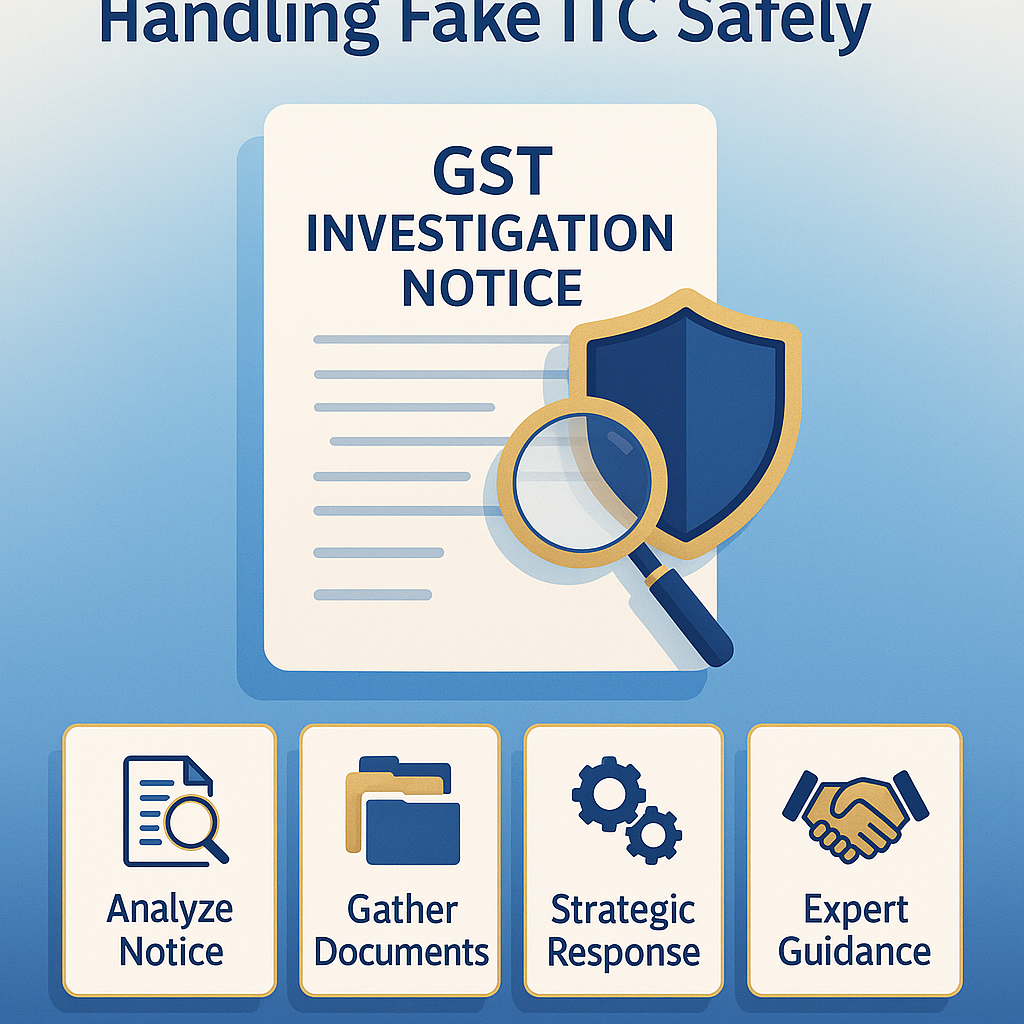
- Analyze the Notice: Decode the legal jargon and understand the exact nature of the allegations.
- Draft a Legally Sound Reply: Prepare a comprehensive, factual, and persuasive response that addresses all concerns.
- Represent You: Act as your authorized representative before the GST authorities, handling all communications and hearings.
- Ensure Compliance: Guide you through the process to ensure you meet all legal requirements and deadlines, significantly improving your chances of a favourable resolution.
Understanding the Potential Consequences of a GST Investigation in India
The outcome of a GST investigation can vary widely, depending on the specifics of your case and the strength of your response. It’s important to be aware of the potential scenarios, from the best case to the most severe.
Best-Case Scenario: Case Dropped
If you can provide sufficient and convincing evidence—such as valid tax invoices, e-way bills, proof of payment, and proof of receipt of goods—to establish the genuineness of your transactions, the GST authorities will be satisfied. They will then issue an order dropping the proceedings, and the case will be closed with no further action.
Common Outcomes: Tax Demand and Penalties
If the department successfully proves that the ITC you claimed was ineligible, you will be required to reverse it. This typically results in a demand order for:
- Reversal of the ITC: You must pay back the amount of wrongly claimed credit.
- Payment of Interest: Interest will be levied on the ITC amount from the date it was claimed until the date it is paid back.
- Penalty: A penalty will be imposed. The amount can be substantial, often ranging from 15% to 100% of the tax amount, depending on whether the error was unintentional or fraudulent.
Severe Consequences for Fraud: Prosecution and Arrest
For cases involving deliberate fraud, collusion, or high-value fake ITC claims, the consequences of GST investigation in India can be extremely severe. The GST Act has stringent provisions for such offenses.
- Prosecution: The department can initiate criminal proceedings against the business owners or directors.
- Imprisonment: If found guilty of fraud, the law provides for imprisonment for a term that can extend up to five years, along with a hefty fine.
- Arrest: In high-value fraud cases, GST officers have the power to arrest the individuals involved even during the investigation stage.
Conclusion
A GST investigation notice can be daunting, but it doesn’t have to be a disaster. By following a structured approach, you can navigate the process effectively. Remember the key steps: Verify the notice’s authenticity, Gather all supporting documents, Draft a detailed and factual reply with professional help, and Cooperate with the authorities. This systematic process is the foundation of successful GST notice management.
Ultimately, the best defense is a good offense. Maintaining robust GST compliance, conducting due diligence on your suppliers, and keeping meticulous records are the most effective ways to prevent such notices in the first place. Don’t underestimate The Importance of Accurate Record-Keeping to Prevent GST Demand Notices. Don’t let a notice derail your business.
Facing a GST notice? Don’t navigate it alone. Contact TaxRobo’s expert team today for professional GST Investigation Notice Handling and the peace of mind that comes from having an expert in your corner.
Frequently Asked Questions (FAQs)
1. Can I simply ignore a GST investigation notice?
Answer: Absolutely not. Ignoring a notice is one of the worst mistakes you can make. It can lead to an ex-parte order (a decision made in your absence), which will likely be against you. This can result in higher penalties, attachment of your bank accounts, and the blocking of your electronic credit ledger, paralyzing your business operations.
2. What is the time limit to respond to a GST notice for fake ITC?
Answer: The time limit for responding will be clearly specified in the notice itself. Typically, this period ranges from 7 to 15 days from the date of issuance. It is crucial to respect this deadline. If you need more time to gather documents, you should formally request an extension from the issuing officer.
3. This seems complex for individuals. Is this a GST compliance guide for individuals too?
Answer: Yes. This guide is relevant for anyone with a GST registration, including salaried individuals who run a small business, work as freelancers, or have a proprietorship on the side. The GST law applies equally to all registered persons, regardless of the scale of their operations. Therefore, this GST compliance guide for individuals provides the essential steps everyone must follow.
4. What if my supplier is fake, but my purchase was genuine?
Answer: This is a very challenging situation that many honest taxpayers face. The burden of proof to establish the transaction’s genuineness falls heavily on you, the recipient. You will need to provide strong, irrefutable evidence like proof of payment through banking channels, e-way bills showing vehicle details and movement of goods, delivery challans signed upon receipt, and inventory records. Professional assistance from a tax expert is invaluable in these cases to build a robust defense.
5. How can TaxRobo help me with a fake ITC investigation notice?
Answer: TaxRobo’s team of seasoned GST experts provides end-to-end support. We will meticulously analyze the notice, assist you in collating all necessary documentary evidence, draft a legally sound and persuasive reply, and represent your case before the GST authorities. Our goal is to handle the entire process professionally, ensuring your rights are protected and striving for the most favorable outcome for your business.