
GST Audit Notice for E-Invoice Compliance – Reply Format
Receiving a notice from the GST department can be stressful for any business owner. But what do you do when it’s an E-Invoice compliance notice? As the government tightens regulations and lowers the turnover threshold for e-invoicing, these notices are becoming increasingly common. An e-invoice is a standard, machine-readable invoice format that is authenticated by the government’s Invoice Registration Portal (IRP) in real-time. The primary goal is to ensure tax transparency and curb evasion. For business owners, this means that a timely, accurate, and well-drafted reply to any notice is absolutely crucial to avoid hefty penalties and further legal complications. This detailed guide from TaxRobo will provide you with a step-by-step process and a clear reply format for GST compliance, empowering you to handle any E-Invoice compliance notice India with confidence and precision.
Understanding E-Invoicing: A Quick Refresher for Businesses
Before drafting a reply, it’s essential to have a clear understanding of the e-invoicing system and why the GST department is focusing so heavily on it. This system was introduced to standardize the way B2B invoices are reported to the tax authorities, creating a seamless flow of data for return filing and ITC claims. When an invoice is successfully uploaded to the IRP, it is digitally signed and assigned a unique Invoice Reference Number (IRN) along with a QR code. This authenticated invoice becomes the valid document for all GST-related purposes, automatically populating the GSTR-1 of the supplier and the GSTR-2A/2B of the recipient. This automation leaves little room for manual errors or manipulation, which is why compliance is non-negotiable for applicable businesses. You can learn more with our guide on How to File GST Returns Online: A Step-by-Step Guide of the GST Filing Process & Procedure.
What are the E-Invoice Compliance Requirements India?
The core of E-Invoice compliance requirements India is the mandatory generation of an IRN for specific transactions. The system requires businesses to generate and authenticate all their B2B (Business-to-Business), SEZ (Special Economic Zone), and Export invoices through the official IRP. The key factor determining applicability is the aggregate annual turnover of the business. Initially rolled out for large corporations, the government has progressively lowered this threshold to bring more businesses into the fold. As of the latest update, businesses with an aggregate turnover exceeding ₹5 crore in any preceding financial year (from 2017-18 onwards) are required to comply. You can find the most up-to-date rules and thresholds on the official GST Portal. This wide net means many small and medium-sized businesses are now under the purview of e-invoicing. For a detailed breakdown, see the GST E-Invoice Rules 2025 – Applicability, Limits, Latest Notifications.
Common Reasons for Receiving a Non-Compliance Notice
GST officers use advanced data analytics to compare the information you file in your GSTR-1 with the data available on the e-invoice portal. Any mismatch or deviation can trigger a notice. Some of the most common reasons include:
- Failure to Generate IRN: The most frequent issue is issuing a standard B2B tax invoice to a customer without generating a corresponding IRN from the IRP, even though your business falls under the mandatory threshold.
- Data Mismatches: There might be discrepancies between the data reported in the e-invoice (like invoice value, tax amounts, or recipient GSTIN) and the data uploaded in your GSTR-1 return for the same period.
- Using Manual Invoices: Continuing to issue manual or software-generated invoices without the authenticated IRN and QR code for applicable transactions is a direct violation.
- Technical Failures: Sometimes, an IRN generation might fail due to technical glitches in your ERP/accounting software or connectivity issues with the IRP, and these errors were not rectified in a timely manner.
- Incorrect Reporting of B2C Invoices: While e-invoicing is not for B2C transactions, errors in classifying invoices as B2B instead of B2C in your returns can lead to a perceived shortfall in IRN generation.
Decoding Your GST Notice: What to Look For
When you receive a notice, the first step is to read it carefully without panicking. The document contains specific information that you need to identify to formulate an effective response. Think of it not as an accusation, but as a query from the department seeking clarification on certain transactions. Understanding the structure and language of the notice is key to providing a targeted and satisfactory reply.
Key Information in the Notice
Look for these crucial details on the document. It’s a good practice to highlight them or note them down separately:
- Notice/Reference Number (DIN/RFN): This is a unique identifier for your case. You must quote this number in all your future correspondence.
- Date of Issue: This is the official date the notice was sent. Your deadline for reply is calculated from this date.
- Deadline for Reply: The notice will clearly state the date by which you must submit your response, typically within 15 or 30 days. Mark this on your calendar immediately.
- Specific Discrepancy: The notice will detail the exact issue. For instance, it might list specific invoice numbers for which an IRN was not found or highlight a mismatch in turnover between two data sources.
- Contact Information of the Issuing Officer: The designation and address of the proper officer will be mentioned. Your reply must be addressed to this specific officer.
Legal Sections Commonly Cited
The notice will often cite specific sections of the CGST Act, 2017. While the legal language can be intimidating, understanding the gist is helpful. Here are a couple of common sections you might see:
- Section 61 (Scrutiny of Returns): This is a preliminary check. If an officer finds a discrepancy during the scrutiny of your GST returns, they may issue a notice asking for an explanation. It is a soft notice, and a proper explanation with supporting documents can often lead to the closure of the matter.
- Section 73/74 (Determination of Tax): These sections are more serious. Section 73 is invoked when there is a non-payment or short payment of tax without any intent to defraud. Section 74 is used for cases where the officer suspects tax evasion, fraud, or willful misstatement. A notice under these sections can lead to the demand for tax, interest, and penalties.
A Step-by-Step Guide to Responding: GST Notice Response Guidelines India
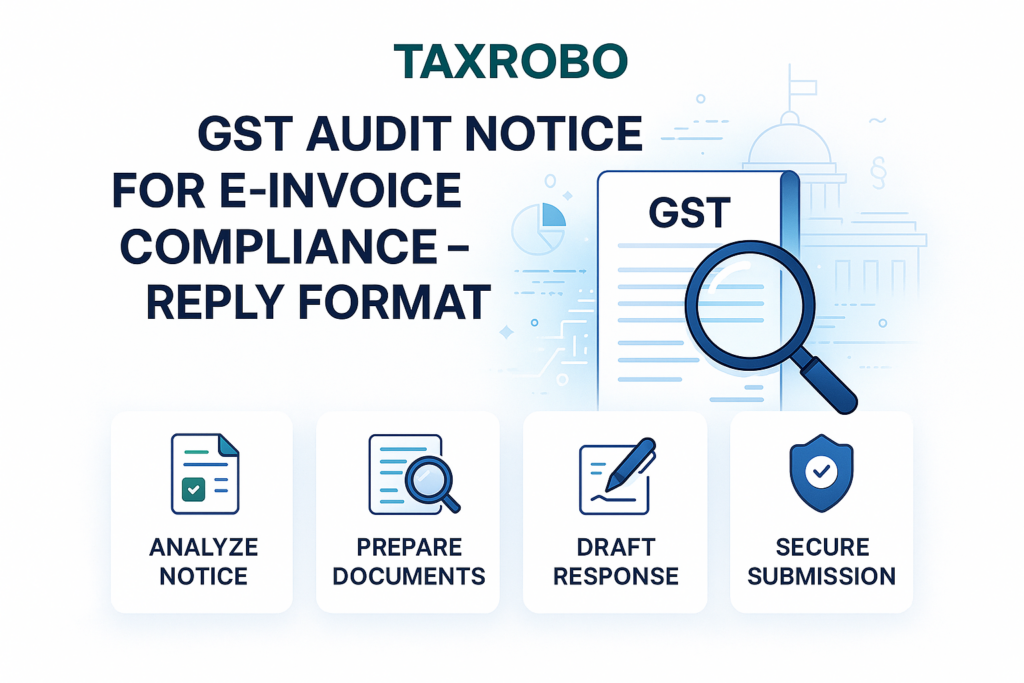
Once you have understood the notice, it’s time to prepare your response. Following a structured approach is the best way to ensure you cover all points and present your case clearly. These GST notice response guidelines India will help you build a comprehensive and professional reply.
Step 1: Acknowledge and Analyze
The single most important rule is do not ignore the notice. Ignoring it can lead to ex-parte orders where the officer decides the case based on the available information, almost always to the detriment of the taxpayer. Immediately note the deadline for submission. Read the notice multiple times to fully grasp the query. Is the department asking about a specific invoice? Or is it a general mismatch in turnover? Understanding the core issue will define your entire response strategy.
Step 2: Gather All Necessary Documents
Your reply is only as strong as the evidence you provide to support it. Before you start writing, compile a file with all relevant documents. This preparation ensures your response is factual and verifiable. Your checklist should include:
- A scanned copy of the GST notice you received.
- Your sales register for the period mentioned in the notice.
- Copies of the specific tax invoices that are under scrutiny.
- Copies of your GSTR-1 and GSTR-3B filings for the relevant tax period.
- If the issue was a technical error, gather any system logs, error screenshots, or communication with your software provider.
- A detailed reconciliation statement (e.g., in an Excel sheet) that clearly explains any differences between your records, your GSTR-1, and the e-invoice portal data. This is often the most critical document.
Step 3: Draft a Clear and Factual Reply
With your documents in hand, you can begin drafting the reply. Always maintain a formal and respectful tone. The best practice is to structure your reply in a point-by-point format, directly addressing each query raised in the notice. This makes it easy for the officer to understand your submission and verify your claims. Be concise and stick to the facts. Avoid emotional language or vague statements. Every claim you make should be backed by a document, which you should attach as an annexure. For instance, if you state that an invoice was B2C, attach a copy of the invoice as proof. This methodical approach is a hallmark of an effective GST response format for businesses.
Sample Reply Format for GST Compliance Notice on E-Invoicing
To make the process easier, here is a template you can adapt. This sample reply format for GST compliance covers all the essential components of a professional response. Remember to print this on your company letterhead.
[Your Company Letterhead]
Date: [Date of Reply]
To,
The Proper Officer,
[Designation and Address of the GST Officer as mentioned in the notice]Reference No.: [Notice Reference Number]
Date of Notice: [Date mentioned on the notice]
GSTIN: [Your GSTIN]
Legal Name: [Your Company’s Legal Name]Subject: Reply to Notice Regarding E-Invoice Compliance for the period [Mention Period]
Respected Sir/Madam,
This is with reference to the notice cited above, received by us on [Date of receipt], regarding alleged discrepancies in E-Invoice compliance. We have carefully reviewed the notice and would like to submit our point-wise reply as follows for your kind consideration:
1. Query from Notice: [Quote or summarize the first query from the notice, e.g., “Non-generation of IRN for Invoice No. XYZ dated DD/MM/YYYY.”]
Our Submission: [Provide your clear, factual response. For example: “We admit that due to a temporary technical glitch in our accounting software’s API connection to the IRP, the IRN for the said invoice was not generated on time. However, we have since rectified this and generated the IRN on [Date of Rectification]. A copy of the duly generated e-invoice with the IRN and signed QR code is attached as Annexure-A for your reference.”]
2. Query from Notice: [Quote or summarize the second query, e.g., “Discrepancy in taxable turnover reported in GSTR-1 vs. data on the e-invoice portal.”]
Our Submission: [Provide your response. For example: “The perceived discrepancy in turnover between our GSTR-1 and the e-invoice portal is because our total reported turnover in GSTR-1 includes both B2B and B2C supplies. E-invoicing is applicable only to our B2B supplies. A detailed reconciliation statement clarifying the B2B and B2C components of our turnover for the said period is attached as Annexure-B. This statement clearly shows that IRNs have been generated for all applicable B2B invoices.”]
We have attached the following supporting documents for your kind perusal and verification:
1. Annexure-A: Copy of rectified E-Invoice for Invoice No. XYZ.
2. Annexure-B: Turnover Reconciliation Statement for the period [Mention Period].We believe the above submissions and the attached documents satisfactorily clarify the queries raised in the notice. We have always strived to be fully compliant with all GST provisions and assure you of our continued diligence and full cooperation. In light of the above facts, we humbly request your good office to review our submission and consider dropping the proceedings.
Thanking you,
For [Your Company Name],
[Signature]
[Your Name]
[Your Designation]
What Happens After You Submit Your Reply?
Submitting the reply is not the end of the process. The GST officer will review your submission and the attached documents. Based on their assessment, one of three things can happen:
- Acceptance: If your explanation is clear and your documents are in order, the officer will be satisfied and drop the proceedings. You will typically receive a formal order (like Form GST ASMT-12 for a scrutiny notice) indicating that the matter is closed.
- Further Query: The officer might find your reply incomplete or may require additional clarification. In this case, they may send another communication asking for more specific documents or information.
- Personal Hearing: If the matter is complex or the officer is not fully convinced by your written reply, you may be called for a personal hearing. This is an opportunity to explain your case in person.
Navigating GST notices can be complex. If you’re unsure about your reply or need expert representation, TaxRobo’s team of GST professionals is here to help you ensure complete compliance.
Conclusion
An E-Invoice compliance notice should be treated with seriousness but not with fear. By understanding the E-Invoice compliance requirements India, carefully analyzing the notice, gathering the right documents, and drafting a clear, factual, and point-by-point reply, you can effectively address the department’s concerns. A structured response not only resolves the immediate issue but also demonstrates your commitment to being a compliant taxpayer. Taking a proactive and organized approach can save your business significant time, money, and unnecessary legal trouble in the long run.
Don’t let a GST notice disrupt your business. Contact TaxRobo today for expert assistance with GST filings, notice replies, and overall compliance management.
FAQs
1. What is the typical time limit to reply to a GST notice for e-invoice non-compliance?
Answer: The time limit is always specified in the notice itself, but it usually ranges from 15 to 30 days from the date of issue. It is absolutely crucial to check your specific notice for the exact deadline and adhere to it strictly to avoid adverse action.
2. What are the penalties for not complying with Indian e-invoicing rules?
Answer: Non-compliance can be costly. The penalty for not issuing a valid e-invoice is 100% of the tax due or ₹10,000, whichever is higher, for each individual invoice. Furthermore, an invoice without a valid IRN is not considered a legal tax invoice, which means your customer cannot claim Input Tax Credit (ITC) on it, potentially damaging your business relationships. For more details, explore our GST Input Tax Credit (ITC) Full Guide 2025 – Eligibility, Limits & Common Issues.
3. Can I request an extension for submitting my reply?
Answer: Yes, in most cases, you can file for an extension of time with your jurisdictional GST officer. You must submit a written request for an adjournment, citing a valid and genuine reason for the delay (e.g., gathering complex data or key personnel being unavailable). This request should be made well before the original due date expires.
4. Does e-invoicing apply to B2C (Business to Customer) invoices?
Answer: No, as of now, e-invoicing is mandatory only for B2B (Business to Business) invoices, exports, and supplies to SEZ units for businesses whose aggregate turnover exceeds the specified threshold. It does not apply to B2C invoices, for which you can continue to issue regular invoices.