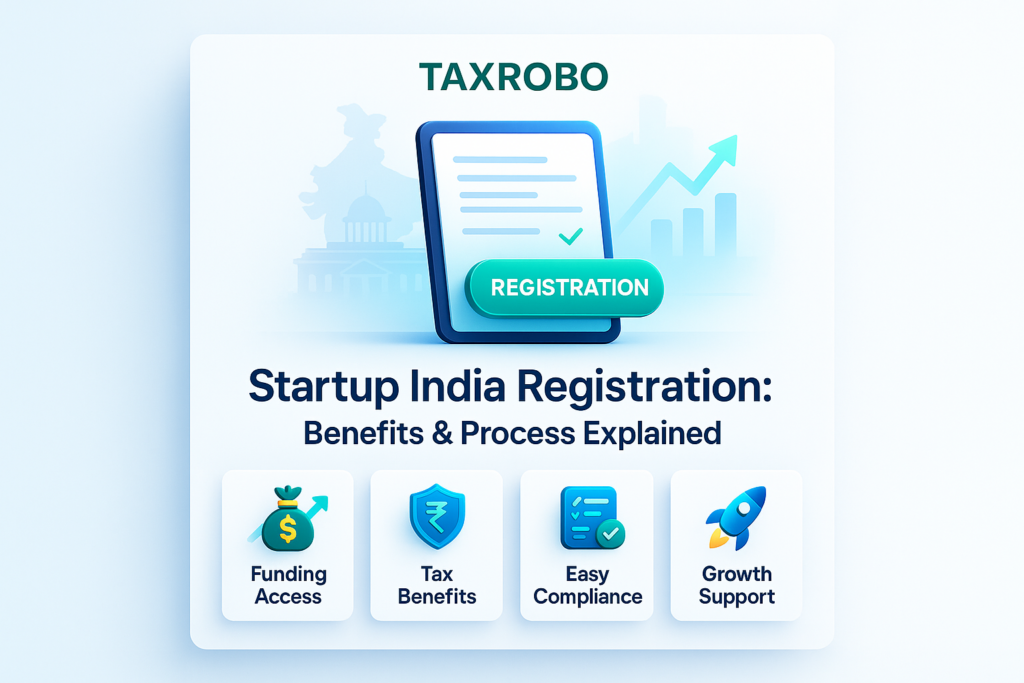

Startup India Registration: Benefits and Process Explained
Have a game-changing business idea? Turning it into a government-recognized startup in India opens up a world of opportunities that can significantly accelerate your growth journey. The Government of India’s Startup India initiative is a flagship program meticulously designed to build a strong ecosystem for nurturing innovation and entrepreneurship across the country. This comprehensive guide will walk you through the significant startup registration benefits and explain the simple startup India registration online process step-by-step. We’ll cover everything you need to know about how to register a startup in India, transforming your innovative concept into a recognized and thriving enterprise.
What is a DPIIT-Recognized Startup?
Before diving into the benefits, it’s crucial to understand what the government officially considers a “startup.” In this context, a startup is not just any new business; it’s an entity that has been officially recognized by the Department for Promotion of Industry and Internal Trade (DPIIT), a central government department under the Ministry of Commerce and Industry. This formal recognition is the golden key that unlocks the entire suite of benefits, incentives, and support systems offered under the Startup India scheme. Gaining this status signals to investors, government bodies, and the market that your business has met specific criteria related to innovation and scalability.
To be eligible for DPIIT recognition, your business must meet the following conditions:
- Type of Entity: Your business must be incorporated as a Private Limited Company, a Registered Partnership Firm, or a Limited Liability Partnership (LLP). Sole proprietorships are not eligible for this recognition. For a detailed breakdown, see our guide on Comparing Business Structures: Private Limited, LLP, OPC & More.
- Age of Entity: The entity must be less than 10 years old from its date of incorporation or registration. This ensures that the benefits are targeted toward new and emerging businesses.
- Annual Turnover: The company’s annual turnover must not have exceeded ₹100 crore in any of the financial years since its inception. This cap keeps the focus on early-stage ventures.
- Original Entity: The startup must be an original entity and not formed by splitting up or reconstructing an already existing business. The goal is to promote genuinely new ventures, not just rebrand old ones.
- Objective: The business must be working towards innovation, development, or improvement of products, processes, or services. Alternatively, it must have a scalable business model with a high potential for employment generation or wealth creation. This is the most critical criterion, as the scheme aims to foster groundbreaking ideas.
Unlocking Growth: The Top Startup Registration Benefits in India
Securing DPIIT recognition is more than just getting a certificate; it’s about gaining a competitive edge and accessing a support system designed to help you succeed. The advantages of startup registration India are substantial and cover financial, regulatory, and networking aspects of building a business. Let’s explore the key benefits in detail.
1. Significant Tax Exemptions and Savings
One of the most attractive benefits of registering a startup in India is the relief from tax burdens during the crucial early years. This financial breathing room allows founders to reinvest profits back into the business for product development, marketing, and expansion. For more detailed strategies, explore our guide on Top Tax Planning Strategies for Startups and SMEs.
- Income Tax Exemption (Section 80-IAC): Eligible startups can avail a coveted tax holiday for 3 consecutive financial years out of their first 10 years of incorporation. This means 100% of the profits earned during the chosen three-year period are exempt from income tax. To claim this benefit, the startup must be a Private Limited Company or an LLP incorporated after April 1, 2016, and must obtain a separate certificate of eligibility from the Inter-Ministerial Board (IMB). This exemption can result in massive savings, providing a significant capital boost when it’s needed most.
- Capital Gains Tax Exemption (Section 54GB): The scheme also provides tax relief for investors. This is a key
advantage of startup registration Indiaas it helps attract funding. Under this provision, investors can get an exemption on long-term capital gains if they sell a residential property and reinvest the proceeds into the equity shares of an eligible startup. This encourages high-net-worth individuals to channel their investments into the startup ecosystem, providing founders with access to crucial early-stage capital.
2. Access to Funding Opportunities (Fund of Funds)
Capital is the lifeblood of any startup, and the Startup India initiative directly addresses this challenge through a dedicated fund. The government has established a ₹10,000 crore Fund of Funds for Startups (FFS), which is managed by the Small Industries Development Bank of India (SIDBI). This fund does not invest directly into startups but operates by providing capital to SEBI-registered Alternative Investment Funds (AIFs), commonly known as venture capital funds. These AIFs then invest in eligible startups, creating a ripple effect of funding availability. Being a DPIIT-recognized startup significantly enhances your credibility and visibility, making it much easier to attract the attention of these government-backed AIFs as well as other angel investors and venture capitalists who see the recognition as a mark of quality and potential.
3. Simplified Compliance and Labour Laws
Navigating the complex web of regulatory compliance can be a daunting and expensive task for new businesses. The Startup India scheme simplifies this by allowing startups to self-certify their compliance with certain laws for a period of 3 to 5 years from their date of incorporation. This means no inspections will be conducted under these laws unless a complaint is filed with credible evidence. This self-certification applies to:
- 6 Labour Laws: Including The Building and Other Constructions Workers’ (Regulation of Employment & Conditions of Service) Act, 1996 and The Inter-State Migrant Workmen (Regulation of Employment & Conditions of Service) Act, 1979.
- 3 Environmental Laws: Including The Water (Prevention & Control of Pollution) Act, 1974 and The Air (Prevention & Control of Pollution) Act, 1981.
This reduction in regulatory burden saves startups immense time, effort, and money, allowing founders to focus on their core business activities instead of getting bogged down in paperwork.
4. Easy Access to Government Tenders
The government is one of the largest purchasers of goods and services in the country, and securing a government contract can provide a massive boost to a young company. The Startup India scheme provides recognized startups with preferential treatment in public procurement processes. Key benefits include an exemption from the typical requirements of “prior experience” or “prior turnover” that often disqualify new companies from bidding. Furthermore, startups are often exempted from submitting an earnest money deposit (EMD) when applying for tenders. This levels the playing field, allowing innovative startups to compete for large-scale projects and list their products on the Government e-Marketplace (GeM) portal, which is an exclusive platform for public procurement.
5. Rebates on Intellectual Property (IP) Registration
For innovative startups, protecting intellectual property like patents, trademarks, and designs is paramount. However, the process can be expensive and time-consuming. You can learn more about how to Secure Your Brand’s Future Trademark Your Brand – Registration, Benefits & The Cost of Neglect. The startup business registration benefits India extend to making IP protection more affordable and accessible. Recognized startups are eligible for:
- An 80% rebate on the official filing fees for Patents.
- A 50% rebate on the official filing fees for Trademarks.
In addition to the financial rebates, the government has also set up a panel of facilitators to assist startups with the filing process at reduced costs. Furthermore, patent applications filed by startups are fast-tracked for examination, significantly reducing the time it takes to get a patent granted. This robust support helps startups secure their most valuable assets—their ideas.
6. Networking and Incubation Opportunities
The Startup India initiative is not just about financial and regulatory benefits; it’s also about building a vibrant community. The official Startup India portal acts as a central hub connecting startups, investors, mentors, incubators, and accelerators. By registering, you gain access to a vast network of experienced professionals and potential partners. The government regularly organizes and supports various events, boot camps, and competitions, such as the National Startup Awards, which provide invaluable platforms for startups to showcase their innovations, gain exposure, receive mentorship, and connect with key industry players and potential investors.
The Startup Registration Process in India: A Step-by-Step Guide
Now that you understand the compelling benefits, let’s walk through the steps to register a startup in India. The entire process is designed to be user-friendly and is conducted online.
Step 1: Incorporate Your Business
Before you can apply for Startup India recognition, your business must exist as a legal entity. This is the foundational step. You must choose one of the following business structures and complete its registration process:
- Private Limited Company: Registered through the Ministry of Corporate Affairs (MCA).
- Limited Liability Partnership (LLP): Registered under the LLP Act, 2008.
- Partnership Firm: Registered under the Indian Partnership Act, 1932.
This step involves obtaining a Director Identification Number (DIN), a Digital Signature Certificate (DSC), and filing the necessary incorporation forms like SPICe+. If you need assistance with this crucial first step, TaxRobo’s expert team can handle the entire company registration process for you seamlessly.
Step 2: Register on the Startup India Portal
Once your business entity is legally incorporated, the next step is to create a profile on the official government portal.
- Visit the official Startup India website: Startup India Official Portal.
- Click on the ‘Register’ button and create a profile by entering basic details like your name, email address, and mobile number.
- Your account will be verified through a One-Time Password (OTP) sent to your registered email or mobile number.
Step 3: Complete the DPIIT Recognition Application Form
This is the core of the registration process for startups in India. After creating your profile and logging in, navigate to the dashboard and click on the ‘DPIIT Recognition’ or ‘Get Recognized’ option. You will be directed to an online application form where you need to provide detailed information about your business. Be prepared to submit the following:
- Entity Details: Your company’s Incorporation/Registration Number, Date of Incorporation, PAN, and registered office address.
- Director/Partner Details: Information about all the directors or partners of the entity.
- Details of Authorised Representative: The contact information of the person responsible for the application.
- Startup Activities Information: A detailed section where you must explain your business activities, the problem it solves, its uniqueness, and its potential for creating wealth or employment.
- Supporting Documents: You will need to upload a copy of your Certificate of Incorporation/Registration. You should also upload a brief write-up or a pitch deck that clearly explains how your business is innovative or has a scalable model. This document is critical for a successful application.
Step 4: Receive Your Recognition Certificate
After you have filled out the form and uploaded all the necessary documents, submit the application. The DPIIT officials will review your application to ensure it meets all the eligibility criteria. This review process is usually quick, and if all your details are correct, you can expect a response within 2 to 7 working days. Once your application is approved, you will receive an email notification. The DPIIT recognition certificate, which comes with a unique recognition number, will be issued digitally, and you can download it directly from your profile on the Startup India portal.
Conclusion
The journey from a simple idea to a thriving business is filled with challenges, but the Startup India scheme provides a powerful launchpad to make that journey significantly smoother and more successful. By understanding and leveraging the vast array of startup registration benefits—from game-changing tax holidays and easier funding access to simplified compliance and IP protection—entrepreneurs can build a strong foundation for their ventures. Completing the registration process for startups in India is a strategic first move that not only validates your business concept but also provides the essential tools and support needed for sustainable growth and scalability in a competitive market.
Feeling overwhelmed? Let the experts handle it for you. TaxRobo simplifies the entire process, from company incorporation to getting your DPIIT recognition certificate, ensuring you meet all compliance requirements so you can focus on what you do best: building your business. Contact us today to get your startup registered!
Frequently Asked Questions (FAQs)
1. Is a sole proprietorship eligible for Startup India registration?
Answer: No. To be eligible for DPIIT recognition and avail the benefits of the Startup India scheme, your business must be legally registered as a Private Limited Company, a Limited Liability Partnership (LLP), or a Partnership Firm. Sole proprietorships and other unregistered business structures are not eligible.
2. How long does the entire Startup India registration process take?
Answer: The timeline can be broken into two parts. First, incorporating your business entity (Pvt Ltd, LLP, etc.) can take anywhere from 7 to 15 days, depending on government processing times. Once your company is incorporated, the second part—the DPIIT recognition application itself—is usually processed very quickly, typically within 2 to 7 working days, provided all your documents and information are accurate and in order.
3. Do I need a patent to prove my startup is “innovative”?
Answer: While having a patent is a very strong indicator of innovation and can certainly help your application, it is not mandatory. You can demonstrate innovation through other means. A detailed write-up or pitch deck explaining how your product, process, or service is unique, solves a critical problem in a novel way, or significantly improves upon an existing solution is often sufficient to meet the innovation criterion.
4. Can I apply for tax benefits immediately after getting the recognition certificate?
Answer: Not automatically. The DPIIT recognition certificate makes you eligible to apply for the tax exemption under Section 80-IAC. After receiving the recognition certificate, you must submit a separate application to the Inter-Ministerial Board (IMB) through the Startup India portal. The IMB will then assess your startup’s innovation and scalability to grant the final certificate of eligibility for the tax holiday.