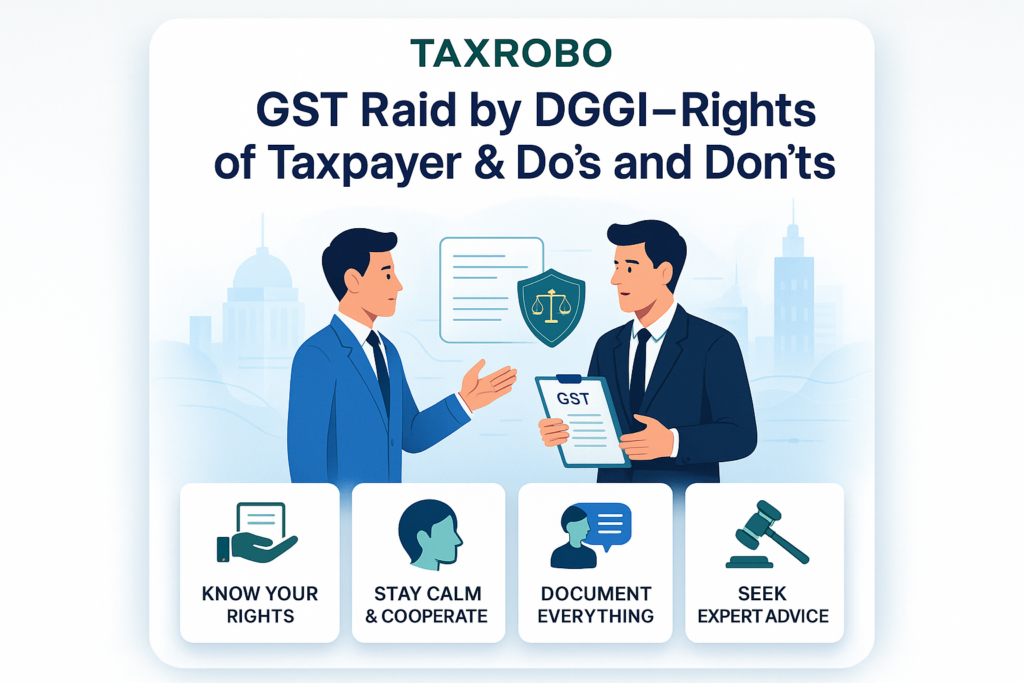

GST Raid by DGGI – Rights of Taxpayer & Do’s and Don’ts
An unexpected knock on your business premises door from tax authorities can be unsettling. But knowledge is your best defense. Facing an inspection or search from the Directorate General of GST Intelligence (DGGI) can be an intimidating experience for any business owner. This comprehensive guide is designed to demystify the process and empower you by clearly outlining the fundamental taxpayer rights during DGGI raids. We will explore the correct procedures authorities must follow and provide a practical checklist of do’s and don’ts to help you navigate the situation calmly and legally. Understanding these DGGI raid guidelines for Indian citizens is the first step in protecting your business and ensuring your rights are upheld throughout the entire process.
What is a DGGI Raid and Why Does It Happen?
Before delving into your rights, it’s essential to understand the context of a DGGI raid, which is formally known as a ‘search and seizure’ operation, and to know the Difference Between GST Audit, Inspection, Search & Seizure Explained. This knowledge helps in appreciating the gravity of the situation and the importance of proper compliance. The DGGI is not a random visitor; its actions are typically based on specific information and data analysis, making it crucial for every taxpayer to understand the triggers and the legal framework that governs these operations. A clear comprehension of the GST raid procedures for taxpayers in India can significantly reduce panic and enable a more structured response from the business owner.
The Role of the DGGI in GST Compliance
The Directorate General of GST Intelligence (DGGI) is the apex intelligence and investigative agency for matters related to the Goods and Services Tax (GST). Its primary mandate is to detect and curb tax evasion across the country. The DGGI acts on specific, credible intelligence to investigate complex cases involving fake invoices, fraudulent claims of Input Tax Credit (ITC), misclassification of goods or services, and clandestine removal of goods without paying GST. The ultimate goal of the DGGI is not to harass honest taxpayers but to protect government revenue, ensure a level playing field for compliant businesses, and maintain the integrity of the GST system by penalizing those who try to defraud it.
Common Triggers for a GST Search and Seizure Operation
A DGGI search is not a random event. It is usually initiated based on red flags identified through data analytics or specific information from whistleblowers. Understanding these triggers can help businesses maintain better compliance and avoid coming under the scanner.
- Significant Mismatch in Returns: Large and persistent discrepancies between the data declared in GSTR-1 (outward supplies), GSTR-3B (summary return and tax payment), and GSTR-2A/2B (auto-populated inward supplies) often indicate fraudulent ITC claims or suppressed turnover.
- Credible Information or Complaints: The department often acts on specific intelligence received from other government agencies, market sources, or whistleblowers regarding undisclosed income, fake billing rackets, or systematic tax evasion.
- Unusually High ITC Claims: A business claiming an exceptionally high amount of Input Tax Credit that is not commensurate with its reported turnover or nature of operations is a major red flag for the authorities.
- Non-filing of GST Returns: A taxpayer who has collected GST from customers but has failed to file returns and deposit the tax with the government for an extended period is likely to face scrutiny and enforcement action.
- Circular Trading and Shell Companies: Engaging in complex transactions with multiple shell companies, entities with a history of fraud, or those involved in circular trading (passing on ITC without any actual supply of goods or services) is a direct trigger for DGGI investigation.
The Legal Basis: Power of Inspection, Search, and Seizure
The authority for DGGI officers to conduct these operations is not arbitrary; it is firmly rooted in law. Section 67 of the Central Goods and Services Tax (CGST) Act, 2017, grants a proper officer, not below the rank of Joint Commissioner, the power to authorize an inspection, search, and seizure. This authorization is given only when there is a ‘reason to believe’ that a taxpayer has suppressed transactions, claimed excess ITC, or is involved in activities to evade tax. This legal backing ensures that the powers are not misused and are exercised only in genuine cases of suspected tax fraud, providing a structured framework for the entire operation. It is vital for taxpayers to be aware of the specific Powers of GST Officers During Investigation (Section 67, 70, 74 Explained).
Know Your Rights: A Comprehensive Guide to Taxpayer Rights During DGGI Raids
Facing tax officials can be stressful, but it’s crucial to remember that you are protected by law. Knowing your rights is the first and most critical step toward ensuring a fair and just process. These taxpayer protections during GST raids are not mere suggestions; they are legal safeguards designed to prevent harassment, ensure due process is followed, and maintain a balance of power between the authorities and the citizen. When you understand taxpayer rights in GST raids, you can confidently cooperate with the investigation while simultaneously ensuring that the officers operate strictly within their legal boundaries. These are not just taxpayer rights but the fundamental rights of citizens during tax raids in India.
The Right to See the Search Warrant
Before allowing any officer to enter your premises, you have the absolute right to ask for and inspect the Search Warrant. This is the most important document that validates the entire operation. A raid conducted without a valid warrant is illegal. When you are presented with the warrant, you must calmly and carefully check for the following details: it must be in writing, signed by a competent authority (Joint Commissioner or above), and bear the official seal. Furthermore, the warrant must clearly specify the name of the taxpayer and the full address of the premises to be searched. If these details are incorrect or missing, you have the right to point it out.
The Right to be Treated with Dignity and Respect
The law mandates that all tax officers must conduct themselves professionally and respectfully during the search operation. They cannot use abusive language, threats, or intimidation tactics to coerce you. Your personal dignity must be respected at all times. The law provides specific protections for women; a personal search of a female can only be conducted by another female officer, with strict regard to decency. If you feel that any officer is behaving in an unprofessional or threatening manner, you have the right to report this behavior to the senior-most officer of the search team and, if necessary, to higher authorities after the raid.
The Right to Have Independent Witnesses Present
To ensure transparency and fairness in the search proceedings, the law requires the presence of two independent and respectable witnesses from the locality. The officers are legally obligated to call these witnesses before the search begins. The entire search operation, including the preparation of the inventory of seized items (Panchnama), must be conducted in their presence. The role of these witnesses is to be impartial observers of the proceedings. You have the right to insist on their presence before the search commences, as this is a crucial safeguard against any procedural irregularities.
The Right to Obtain a ‘Panchnama’
A ‘Panchnama’ is one of the most critical documents created during a raid. It is a detailed list or inventory of all the documents, books of account, cash, stock, jewelry, and any other assets that are seized or sealed by the officers during the operation. This document must be prepared on the spot and must be signed by the lead officer of the search team, the taxpayer (or their representative present), and both independent witnesses. You have an undeniable right to demand and receive a copy of the signed Panchnama before the officers leave your premises. This document serves as the official record of everything taken from you.
The Right Against Forced Confession
This is a cornerstone of your rights. During the investigation and recording of your statement, you cannot be coerced, threatened, intimidated, or forced to admit to any tax liability or sign any statement against your will. Any statement you give must be completely voluntary. If you feel pressured to accept a tax liability that you dispute, you have the right to refuse. The purpose of recording a statement is to gather facts, and you should only state facts that are true to your knowledge. A statement extracted under duress holds weak evidentiary value in the eyes of the law.
The Right to Consult a Tax Professional
While the search operation itself will not be halted for your consultant or lawyer to arrive, you absolutely have the right to contact them. You can inform your tax professional or lawyer about the ongoing raid and seek their advice over the phone. Their guidance can be invaluable in understanding the process, framing your responses to questions, and ensuring that your rights are being protected. The officers cannot deny you the right to make a phone call to your consultant, as legal counsel is a fundamental right.
The Right to Get Copies of Seized Documents
If the DGGI team seizes your original books of account, files, or other critical documents, it can significantly disrupt your business operations. The law recognizes this and provides you with the right to request photocopies or digital copies of the seized documents. The officers are generally obligated to provide these copies to you. This ensures that you have the necessary records to continue your business and to prepare your defense in response to any notice that may be issued later.
A Practical Checklist: Do’s and Don’ts for Taxpayers in Raids
Navigating a DGGI raid requires a calm and composed approach. Your behavior during the search can significantly influence the process and its outcome. This practical list of do’s and don’ts for taxpayers in raids serves as a quick reference guide to help you manage the situation effectively while protecting your legal rights.
✅ The Do’s: How to Cooperate and Protect Yourself
- Do remain calm and cooperative. Panicking or becoming hostile will only escalate the situation and complicate matters for you. A calm demeanor allows you to think clearly.
- Do verify the identity cards of all officers in the search team and carefully inspect every detail of the Search Warrant before allowing them entry.
- Do insist on the mandatory presence of two independent witnesses from the locality before the search begins. This is your legal right and ensures transparency.
- Do answer all questions asked by the officers truthfully and accurately. If you do not know the answer to a particular question, it is better to say so rather than speculating or providing incorrect information.
- Do carefully read every line of any statement that is recorded before you sign it. You have the right to make corrections if you feel your words have been recorded inaccurately or out of context.
- Do ensure you obtain a signed copy of the Panchnama, which details every single item, document, and asset seized by the authorities. This is your official record.
❌ The Don’ts: Critical Mistakes to Avoid
- Don’t panic, get into an argument, or physically obstruct the officers from performing their duties. Such actions can lead to serious legal consequences.
- Don’t attempt to hide, destroy, delete, or tamper with any documents, digital data, books of account, or other potential evidence once the raid has begun. This is a serious offense.
- Don’t sign any blank papers or any statement that you do not agree with, especially under pressure or coercion. Politely state your refusal to sign anything that is factually incorrect.
- Don’t make any informal cash payments or agree to any unofficial “settlements” with the officers. All tax payments must be made through official channels and documented properly.
- Don’t voluntarily surrender or confess to a tax liability on the spot without consulting with your tax advisor. Tax determination is a detailed legal process, not an on-the-spot negotiation.
What Happens After the DGGI Raid? Understanding the Next Steps
The end of the search operation is not the end of the matter; it is the beginning of the legal process. Understanding the subsequent steps is crucial for preparing a strong and effective response. The DGGI raids impact on taxpayers extends far beyond the day of the search, involving summons, notices, and legal proceedings. Being prepared for this aftermath is as important as handling the raid itself.
Summons and Statement Recording
Following the raid, you or your key employees (like the accountant or director) may receive a summons under Section 70 of the CGST Act. A summons is a legal notice compelling a person to appear before the issuing officer to give evidence or produce documents. It is mandatory to honor the summons. Knowing how to prepare a proper GST Summons Notice – How to Respond Legally Without Mistakes is critical at this stage. During this appearance, your statement will be recorded under oath. This statement has significant evidentiary value in a court of law, so it is crucial to be truthful and seek professional advice before appearing.
Scrutiny and Issuance of a Show Cause Notice (SCN)
The DGGI officers will meticulously scrutinize the documents, data, and assets seized during the raid, along with the statements recorded. If their analysis leads them to believe that there has been tax evasion, they will issue a formal Show Cause Notice (SCN). The SCN is a detailed document that outlines the allegations against you, the legal provisions that have allegedly been violated, and the proposed tax demand, along with interest and penalty. The SCN will ask you to “show cause” as to why this demand should not be confirmed. You will be given a specific timeframe (usually 30 days) to file a detailed written reply.
How TaxRobo Can Help You Navigate the Aftermath
Facing the post-raid proceedings can be overwhelming. This is where expert professional guidance becomes indispensable. At TaxRobo, our team of seasoned tax experts and legal professionals can provide comprehensive support to navigate this challenging phase.
- Drafting a precise and legally sound response to the Show Cause Notice, addressing each allegation with factual evidence and legal precedents.
- Representing you before the tax authorities during personal hearings and other proceedings to effectively present your case.
- Helping you collate and organize evidence to build a strong defense and support the claims made in your SCN reply.
- Ensuring your business is fully compliant with all GST provisions moving forward to minimize the risk of future issues.
Conclusion
Facing a GST raid can be a daunting experience, but understanding the taxpayer rights during DGGI raids is your strongest asset and first line of defense. By staying calm, cooperating within the legal framework, and diligently following the essential do’s and don’ts, you can ensure that the entire process is conducted fairly and in accordance with the law. Always remember the fundamentals: verify the warrant, insist on the presence of independent witnesses, carefully review any document before signing, and never sign a statement under duress. Proactive compliance is always the best defense against such actions. If you need expert assistance in responding to a tax notice or want a comprehensive GST compliance check for your business, contact the experts at TaxRobo today.
Frequently Asked Questions (FAQs) about Taxpayer Rights During DGGI Raids
Q1: Can DGGI officers conduct a search at any time of the day or night?
A: As a general rule, search operations are conducted from sunrise to sunset. However, if a search has already started during the day and is still ongoing, it can legally continue after sunset until the proceedings are complete.
Q2: What should I do if the officers do not have a valid Search Warrant?
A: You have the right to politely deny them entry. A search conducted without a valid, signed, and sealed Search Warrant is illegal. In such a situation, you should not allow the search and immediately contact your legal or tax advisor for guidance.
Q3: Can the officers seize my personal mobile phone or the office server?
A: Yes, if the officers have reason to believe that your electronic devices, including mobile phones, laptops, or servers, contain data or evidence relevant to the tax evasion investigation, they have the power to seize them. Ensure any such seizure is properly documented with all details in the Panchnama.
Q4: Am I required to pay tax on the spot during a raid?
A: No. You cannot be forced or coerced to pay any tax on the spot during a raid. The law has a detailed procedure of issuing a Show Cause Notice, allowing you to reply, holding a personal hearing, and then passing a final order (adjudication). Any payment made during a raid should be strictly voluntary and properly documented as such.
Q5: How can I ensure my business is prepared and compliant to minimize raid risks?
A: The best way to minimize risks is through robust compliance. Maintain meticulous records of all transactions, perform regular and timely reconciliations of GSTR-1, GSTR-3B, and ITC registers, file all returns on time, and be cautious about dealing with suspicious or non-compliant suppliers. A professional GST audit or health check by a firm like TaxRobo can help identify and rectify potential compliance gaps before they become major issues. For official guidelines and updates, you can always refer to the GST Portal.