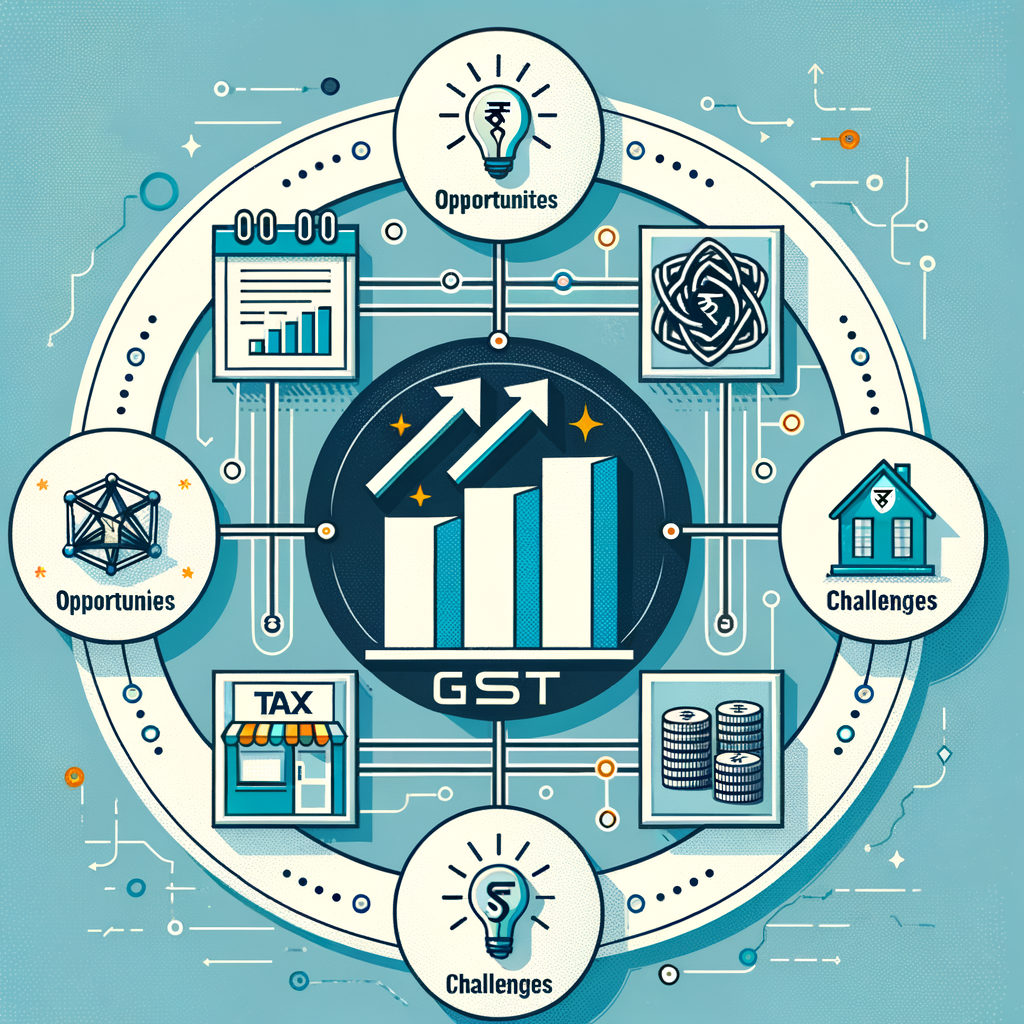

Understanding the Impact of GST on SMEs: Opportunities and Challenges
Since its rollout in 2017, the Goods and Services Tax (GST) has been a monumental shift in India’s financial landscape. For Small and Medium Enterprises (SMEs), which form the backbone of our economy, this change has been particularly profound. While GST was introduced with the promise of a simplified, unified tax regime, many SME owners still find its rules and compliance requirements complex to navigate. This guide aims to provide a clear and balanced view of the impact of GST on SMEs, breaking down the significant opportunities it offers for growth and the real-world challenges it poses. Understanding the impact of GST on SMEs India is the first step towards leveraging it for long-term success.
What is GST? A Quick Refresher for SMEs
At its core, GST is a single, destination-based tax applied to the supply of goods and services. For an SME, this means replacing a multitude of confusing indirect taxes with one comprehensive tax. This shift simplifies accounting and compliance, allowing business owners to focus more on their core operations rather than navigating a web of different tax laws.
The Pre-GST vs. Post-GST Tax Landscape
Before GST, businesses had to grapple with a complex tax structure that included Value Added Tax (VAT), Central Sales Tax (CST), Service Tax, Excise Duty, and various other state-level cesses. This system created a “tax on tax” or cascading effect, where tax was levied on a value that already included a previous tax, inflating the final cost for the consumer and complicating credit claims for businesses. GST subsumed most of these indirect taxes, streamlining the entire process under a single umbrella.
| Feature | Pre-GST Regime | Post-GST Regime |
|---|---|---|
| Tax Structure | Multiple taxes (VAT, Service Tax, Excise, etc.) | Single tax (GST) |
| Tax on Tax | Cascading effect was common | Eliminated through Input Tax Credit (ITC) |
| Market Access | Fragmented market with state-level barriers | Unified national market |
| Compliance | Multiple registrations and returns for different taxes | Single registration and unified returns |
Understanding the Components: CGST, SGST, and IGST
GST is divided into three main components, and understanding them is crucial for every business owner:
- CGST (Central GST): This is the tax collected by the Central Government on an intra-state sale (i.e., a transaction happening within the same state). For example, if a manufacturer in Maharashtra sells goods to a retailer in Maharashtra, CGST will be applicable.
- SGST (State GST): This is the tax collected by the State Government on the same intra-state sale. In the example above, along with CGST, SGST will also be levied. The revenue is collected by the state where the transaction occurs.
- IGST (Integrated GST): This is the tax collected by the Central Government on an inter-state sale (i.e., a transaction between two different states). If a wholesaler in Maharashtra sells goods to a dealer in Karnataka, only IGST will be applicable. This system simplifies cross-border trade for SMEs by eliminating the need to deal with the varying tax laws of different states.
GST Benefits for Small Businesses in India: The Opportunities
While the transition to GST had its teething problems, the long-term benefits for SMEs are undeniable. The new regime has unlocked several opportunities for small businesses to grow, become more competitive, and expand their reach. The primary GST benefits for small businesses in India revolve around simplification, cost reduction, and market expansion.
Simplified Tax Structure & Reduced Cascading Effect
The “One Nation, One Tax” philosophy has replaced a complex web of indirect taxes with a single, unified system. This simplification reduces the compliance burden on SMEs, who no longer need to worry about different state VAT laws, service tax rules, and excise duties.
The most significant benefit here is the introduction of the Input Tax Credit (ITC). In simple terms, ITC allows a business to reduce the tax it pays on its sales (output tax) by the amount of tax it has already paid on its purchases (input tax). This mechanism completely eliminates the cascading “tax-on-tax” effect, which was a major cost inflator in the pre-GST era. By ensuring that tax is levied only on the value added at each stage, ITC lowers the cost of production and makes goods and services cheaper for the end consumer, making SMEs more competitive.
Creation of a Unified National Market
Before GST, India was a fragmented market. Different states had different tax rates and regulations, and moving goods across state lines involved paying entry taxes like Octroi and dealing with cumbersome paperwork at checkpoints. This created significant logistical hurdles for SMEs wanting to sell outside their home state.
GST has dismantled these fiscal barriers, creating a truly unified national market. An SME in Tamil Nadu can now sell its products to a customer in Punjab with the same ease as selling to a customer next door, with a single IGST rate applicable. This has opened up a massive customer base for small businesses, enabling them to scale their operations beyond local or regional boundaries.
Improved Logistics and Supply Chain Efficiency
The creation of a unified market has had a direct positive impact on logistics. The removal of interstate checkpoints has drastically reduced the transit time for goods. The introduction of the electronic e-way bill system has further streamlined the movement of goods, replacing manual checks with a digitized, transparent process. For SMEs, this means:
- Faster delivery times to customers across the country.
- Lower transportation costs due to reduced waiting times and optimized routes.
- More efficient inventory management as businesses can maintain leaner supply chains.
Enhanced Credibility and Ease of Doing Business
Operating within the formal GST framework enhances a business’s credibility and professionalism. A GST registration number (GSTIN) is now a key identifier for businesses. Being GST-compliant signals to larger corporations, suppliers, and financial institutions that your business is legitimate and transparent. This can lead to better business opportunities, easier access to credit from banks and NBFCs, and a stronger reputation in the market. If you are starting your entrepreneurial journey, securing a GST registration is a critical step towards building a credible enterprise. A professional service like TaxRobo’s Company Registration service can help you navigate this process smoothly.
GST Challenges and Opportunities for SMEs: Navigating the Hurdles
Despite the numerous benefits, the journey with GST has not been without its challenges. For many SMEs, the transition involved a steep learning curve and required significant changes to their business processes. Recognizing these hurdles is the first step toward overcoming them and turning challenges into opportunities for improvement.
The Compliance Burden
One of the most significant challenges for SMEs is the increased compliance burden. The GST regime requires regular and timely filing of multiple returns, such as GSTR-1 (details of outward supplies) and GSTR-3B (a summary return and tax payment), which is detailed in our guide on How to File GST Returns Online: A Step-by-Step Guide of the GST Filing Process & Procedure. Failure to file on time attracts late fees and penalties, adding to the cost of doing business. The SME tax implications of GST India are not just about the tax rate but also about the procedural discipline required. For small business owners who often wear multiple hats, keeping up with these deadlines can be a constant struggle.
Technology Adoption and Digital Literacy
GST is a technology-driven system. Everything from generating invoices and e-way bills to filing returns is done online through the GST portal. This digital-first approach posed a major challenge for many small businesses, especially those in semi-urban and rural areas that were accustomed to manual bookkeeping. The initial cost of purchasing accounting software and training staff, coupled with a lack of digital literacy, created a significant entry barrier. However, this challenge also presented an opportunity for businesses to modernize their operations, improve efficiency, and gain better financial insights through technology.
Working Capital Blockage
While ITC is a major benefit, procedural delays can sometimes lead to working capital blockages. If a supplier fails to upload an invoice on time, the recipient cannot claim ITC, leading to a temporary cash flow crunch. Similarly, delays in receiving GST refunds can block a significant amount of an SME’s working capital, affecting its ability to pay suppliers, meet operational expenses, and invest in growth. Concepts like the Reverse Charge Mechanism (RCM), where the recipient of goods or services is liable to pay the tax, can also impact cash flow for small businesses.
Complexity of GST Regulations
Although GST aimed for simplification, its regulations can still be complex. Understanding the nuances of different tax slabs (5%, 12%, 18%, 28%), correctly classifying goods and services under the HSN/SAC code system, and keeping track of the frequent amendments and notifications to the GST regulations affecting SMEs India can be a daunting task. An incorrect classification or misinterpretation of a rule can lead to incorrect tax payments and future disputes with the tax authorities.
Actionable Strategies for SMEs to Thrive in the GST Era
Navigating the GST landscape successfully requires a proactive approach. By adopting the right strategies and tools, SMEs can not only overcome the challenges but also fully leverage the opportunities that GST presents. Here are some actionable steps you can take.
Leverage the GST Composition Scheme
For smaller businesses, the government has provided a simpler alternative called the Composition Scheme. This scheme is designed to reduce the compliance burden. You can learn the specifics by Understanding the Composition Scheme Under GST.
- Eligibility: It is available to businesses whose annual turnover is below a prescribed limit (currently ₹1.5 crore for most states and ₹75 lakhs for certain special category states).
- Benefits: Businesses under this scheme pay tax at a fixed, lower rate on their turnover and have to file only one quarterly return.
- Trade-off: They cannot issue tax invoices, cannot collect tax from customers, and are not eligible to claim Input Tax Credit (ITC).
This scheme is ideal for SMEs dealing directly with consumers (B2C) who don’t need to pass on ITC benefits.
Embrace Technology and Automation
The best way to manage GST compliance is to embrace technology. Investing in a reliable, user-friendly accounting and billing software can automate many tedious tasks. A good software can help you:
- Create GST-compliant invoices effortlessly.
- Automatically reconcile your purchases with your suppliers’ filings to ensure accurate ITC claims.
- Generate error-free GST returns with a few clicks.
- Maintain a digital record of all your transactions for easy auditing.
This one-time investment can save countless hours and prevent costly compliance errors in the long run.
Maintain Meticulous Records
In the GST regime, accurate record-keeping is non-negotiable. Your ability to claim ITC is directly dependent on the invoices from your suppliers. Therefore, it is crucial to maintain meticulous records of all your business transactions:
- Every sales invoice issued.
- Every purchase invoice received.
- All debit and credit notes.
- All expense receipts.
Keeping these records organized and readily accessible will make your return filing process seamless and will be invaluable in case of a departmental audit. This practice is a core component of Maintaining Accurate Accounting Records for Tax Purposes.
Stay Informed and Seek Professional Guidance
GST laws and procedures are subject to frequent changes and amendments. Business owners should make an effort to stay updated through official sources like the GST portal. However, interpreting these changes and understanding their impact on your specific business can be challenging. This is where professional guidance becomes invaluable. Partnering with a tax expert can take the entire burden of compliance off your shoulders. Professionals can handle everything from accurate return filing to representing you before tax authorities, allowing you to focus completely on growing your business.
Feeling overwhelmed by GST regulations? Let TaxRobo be your partner in compliance. Our expert team simplifies the entire process, ensuring you are always compliant and can maximize your ITC benefits. Explore our TaxRobo’s GST Filing Services and take the stress out of GST.
Conclusion
The impact of GST on SMEs is undoubtedly a mix of significant opportunities and substantial challenges. On one hand, it has created a unified national market, reduced the cascading effect of taxes through ITC, and improved logistical efficiencies. On the other hand, it has introduced challenges related to compliance, technology adoption, and working capital management. The key to success in this new era lies in a proactive approach. By embracing technology, maintaining diligent records, and seeking expert guidance when needed, small and medium enterprises can navigate the complexities of GST. Ultimately, with the right strategy, SMEs can overcome the initial hurdles and leverage the GST framework as a powerful catalyst for long-term growth and success.
Feeling overwhelmed by GST regulations? Let TaxRobo be your partner in compliance. Contact our experts today for a hassle-free GST journey!
Frequently Asked Questions (FAQs)
Q1: What is the GST registration threshold for small businesses in India?
A: For businesses exclusively supplying goods, the threshold for GST registration is an annual turnover of ₹40 lakhs (₹20 lakhs for special category states). For businesses providing services (or both goods and services), the threshold is ₹20 lakhs (₹10 lakhs for special category states). It’s always best to check the latest thresholds on the official GST Portal.
Q2: How does Input Tax Credit (ITC) actually benefit my SME?
A: Input Tax Credit (ITC) is the heart of GST and a major benefit. It allows you to claim a credit for the GST you paid on your business inputs (like raw materials, office supplies, or professional services) against the GST you collect on your sales. For example, if you collected ₹10,000 in GST from your customers but paid ₹6,000 in GST on your purchases, you only need to pay the difference of ₹4,000 to the government. This prevents double taxation and reduces your final tax liability, directly lowering your business costs.
Q3: Is the Composition Scheme a good option for all small businesses?
A: The Composition Scheme is not a one-size-fits-all solution. It is highly beneficial for SMEs with a high volume of retail (B2C) transactions, such as small restaurants, retailers, and traders, due to its simple compliance and lower tax rate. However, it’s not suitable for businesses that make inter-state sales, sell through e-commerce operators, or primarily deal with other businesses (B2B), as they cannot claim ITC. You must carefully assess whether the benefit of simpler compliance outweighs the inability to claim ITC for your specific business model.
Q4: What are the main GST returns an SME needs to file?
A: For a regular taxpayer, the two most important and frequent returns are GSTR-1 and GSTR-3B. GSTR-1 is a statement of all your outward supplies (sales) and is typically filed monthly (or quarterly for those in the QRMP scheme). GSTR-3B is a monthly summary return where you declare your total sales, ITC claimed, and pay the final tax liability. In addition to these, there is an annual return, GSTR-9, which consolidates the information filed in your monthly/quarterly returns throughout the year. For more details, you can read our guide on the Types of GST Returns.