
Prosecution Under GST – When a Criminal Case is Filed
The term ‘prosecution’ can be daunting for any business owner. While you diligently file your GST returns, the fear of severe legal action can be unsettling. But when it comes to Goods and Services Tax (GST), understanding what triggers a criminal case prosecution is the first step toward complete compliance and peace of mind. While GST is primarily a tax law focused on collection and remittance, certain severe and deliberately fraudulent violations can cross the line from a civil penalty into criminal territory, leading to serious consequences including imprisonment. This article will demystify the concept of prosecution under GST for business owners in India. We’ll break down what it is, which specific offences can trigger such a severe action, the official step-by-step process involved, and most importantly, how you can ensure your business remains compliant and protected from these grave repercussions. For small and medium-sized business owners, knowing where the line is drawn between a minor error and a criminal offence is absolutely crucial for sustainable and fearless growth.
What is a Criminal Case Prosecution Under GST?
In the simplest terms, “prosecution” under GST is the formal initiation of legal proceedings in a court of law against a taxpayer. This is not about a simple notice or a monetary fine; it is a serious legal action taken when the tax authorities have substantial evidence that the taxpayer has willfully committed a fraudulent act to evade taxes. It’s essential to understand the clear distinction between a penalty and prosecution, as they are not interchangeable. They represent two different levels of response to non-compliance, reserved for different kinds of violations.
- Penalty: A penalty is a monetary fine imposed for procedural lapses, delays, or minor non-compliance. Common examples include late filing of GST returns, errors in invoices, or minor discrepancies in tax calculations. These are typically handled departmentally and are meant to encourage timely and accurate compliance without involving the criminal justice system.
- Prosecution: A criminal case prosecution, on the other hand, is a legal trial initiated in a criminal court for severe offences. It is not an automatic consequence of every mistake. It is reserved for cases where there is clear intent (mens rea, or a guilty mind) to defraud the government. A successful prosecution can result in both hefty fines and imprisonment, creating a permanent legal record for the offender.
The key insight for every business owner is that the GST department does not launch a prosecution for minor, unintentional errors. This extreme measure is a tool to combat deliberate, large-scale tax evasion and fraudulent activities that undermine the integrity of the entire tax system. It is a signal that the taxpayer’s actions have been identified not just as a mistake, but as a crime against the state.
When is a Criminal Case Filed Under GST? Top Offences to Avoid
The grounds for initiating legal action are not arbitrary; they are clearly defined within the GST law to ensure fairness and transparency. The question of when criminal case is filed GST is answered specifically in Section 132 of the Central Goods and Services Tax (CGST) Act, 2017. This section meticulously lists the offences that are considered grave enough to warrant prosecution. For any business owner, being aware of these red lines is the best way to steer clear of trouble. These offences are not about accidental miscalculations; they involve deliberate actions with the intent to deceive the tax authorities. Here are the most common offences that can lead to a criminal case.
Issuing Invoices Without Supply of Goods/Services
This is one of the most serious offences under GST. It involves the practice of creating “fake invoices,” where a business issues a tax invoice to another entity without actually supplying any goods or services. The primary purpose of this fraudulent act is to allow the receiving entity to wrongfully claim Input Tax Credit (ITC). This creates a chain of fake credit in the system, causing a significant loss to the government’s revenue. Tax authorities use advanced data analytics to detect such circular trading and fake billing rackets, and they pursue these cases with utmost severity due to the widespread damage they cause to the economy.
Fraudulent Claim of Input Tax Credit (ITC)
Input Tax Credit is the backbone of the GST system, but its fraudulent use is a major area of concern. A business may wrongfully claim ITC based on fake invoices received from a shell company, or on bills for goods and services that were never actually procured. This is a direct form of tax evasion, as it artificially reduces the business’s net tax liability. If a business claims ITC without being in possession of the actual goods or services or the corresponding tax invoice, it is a prosecutable offence. The government’s focus on matching ITC claims through GSTR-2A, 2B, and 3B is a direct measure to curb this practice.
Collecting GST but Not Depositing with the Government
When a business sells a product or service, it collects GST from the customer on behalf of the government. This collected amount is held in trust and must be deposited with the exchequer within the prescribed time. If a person collects tax but fails to deposit it with the government for a period exceeding three months from the due date, it is considered a serious breach of trust and a criminal offence. The law views this not just as tax evasion, but as the misappropriation of public funds, which invites stringent action, including prosecution.
Deliberate Tax Evasion and Fraudulent Refunds
This category covers a broad range of deliberate actions aimed at evading tax. This includes willfully suppressing sales figures to under-report turnover, falsifying financial records or books of accounts to reduce tax liability, or providing false information during audits and assessments. Another major offence in this category is claiming a refund of tax or ITC through fraudulent means. For instance, a business might use fake export documents to claim a GST refund, which is treated as a serious crime. Any act that involves a deliberate and conscious effort to defraud the government falls under this purview. This directly invokes the stringent measures outlined in Section 74 of the CGST Act: Dealing with GST Demand Notices Involving Fraud.
Obstructing or Preventing a Tax Officer
Cooperation with tax authorities during an audit, search, or inspection is a legal obligation. Any attempt to obstruct an officer from performing their duties is a prosecutable offence. This includes actions like tampering with or destroying material evidence, refusing to provide documents, or physically preventing an officer from entering the business premises to conduct their investigation. Such actions are seen as a direct attempt to conceal wrongdoing and interfere with the administration of justice, and are therefore treated with zero tolerance.
The Official Process: How a GST Criminal Case Prosecution Unfolds in India
The decision to launch a criminal case prosecution in India is not taken lightly or by a junior officer. It is a structured and hierarchical process governed by strict internal guidelines to prevent its misuse. The Central Board of Indirect Taxes and Customs (CBIC) has issued detailed GST prosecution guidelines India that every officer must follow. These guidelines ensure that only deserving cases involving significant fraud and clear intent are brought to court. For business owners, understanding this process can help demystify the actions of the tax department. The latest circulars and guidelines can often be found on the official CBIC website (www.cbic.gov.in).
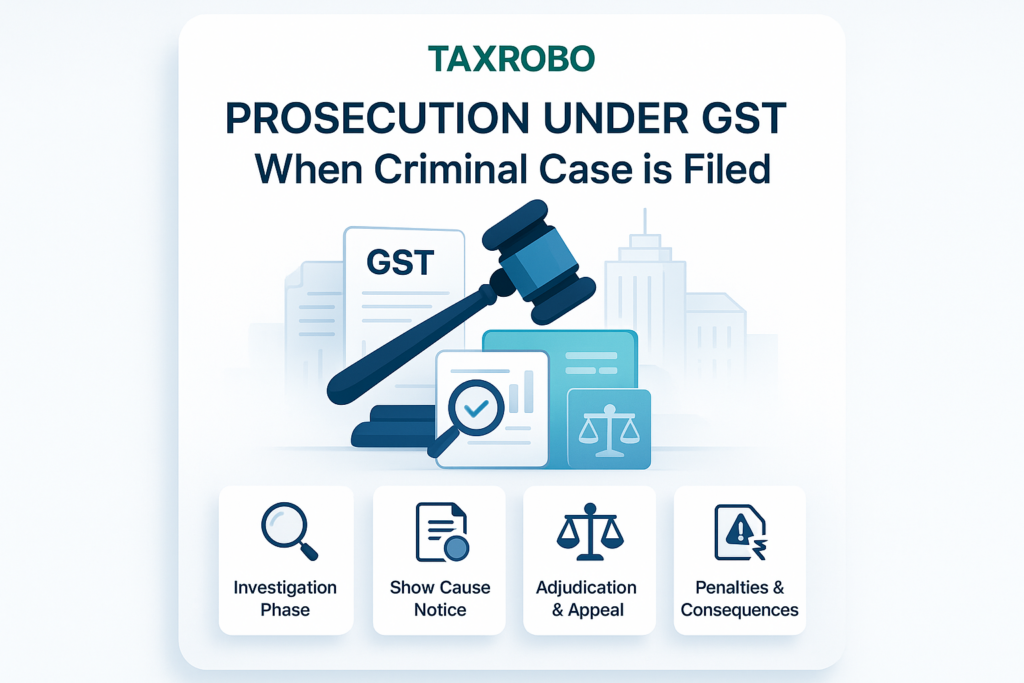
Here is a step-by-step breakdown of how GST prosecution cases India typically unfold:
Step 1: Investigation and Issuance of Notice
The process begins with the tax department conducting a detailed investigation, which could be in the form of an audit, a search and seizure operation, or scrutiny of returns. During this phase, officers gather evidence, record statements, and analyze financial documents. If they find substantial evidence pointing towards a serious, willful offence as listed in Section 132, they issue a Show Cause Notice (SCN) to the taxpayer. The SCN details the alleged offences, the evidence gathered, and the proposed tax demand and penalty. Knowing How to Respond to a GST Show Cause Notice: A Step-by-Step Guide is crucial for the taxpayer at this stage.
Step 2: Adjudication
After the SCN is issued, the adjudication process begins. This is a quasi-judicial proceeding where the taxpayer is given an opportunity to present their case, submit evidence, and argue against the department’s allegations. An adjudicating authority (a senior tax official) reviews the submissions from both sides. After a thorough hearing, this authority passes an “Order-in-Original,” which confirms the tax liability, interest, and penalties if the charges are upheld. This order is a critical document that forms the basis for any further action.
Step 3: Sanction for Prosecution
A penalty order alone does not mean prosecution will be launched. Prosecution is a separate, more severe step. After the adjudication order is passed, the case file is reviewed by a senior official, typically the Principal Commissioner or Commissioner of CGST/SGST. This authority examines the case on its merits, considering the amount of tax evasion, the nature of the fraud, the evidence of willful intent, and the guidelines issued by the CBIC. If the case is deemed fit for prosecution, this senior officer grants a formal sanction to initiate legal proceedings in court. This sanction is a mandatory prerequisite.
Step 4: Filing a Complaint in Court
Once the sanction is granted, the GST department files a formal complaint before a judicial Magistrate of the First Class. This act officially marks the beginning of the criminal case prosecution. The court then takes cognizance of the offence, and the legal trial proceeds according to the Code of Criminal Procedure (CrPC). The taxpayer is now an accused in a criminal case and must defend themselves in a court of law.
Punishments and Penalties: The Consequences of GST Offences
The punishments for offences under Section 132 of the CGST Act are severe and are directly linked to the monetary value of the tax evasion or fraudulent ITC claim. The law prescribes a tiered system of imprisonment and fines to ensure that the punishment is proportionate to the gravity of the crime.
Here is a summary of the punishments:
- Tax Evasion > Rs. 5 Crore: For high-value fraud where the amount of tax evaded or ITC wrongfully availed exceeds Rs. 5 crore, the punishment is imprisonment for a term which may extend to 5 years and a fine. This is a cognizable and non-bailable offence, meaning the accused can be arrested without a warrant and bail is not a right.
- Tax Evasion between Rs. 2 Crore and Rs. 5 Crore: If the amount involved is between Rs. 2 crore and Rs. 5 crore, the punishment is imprisonment for a term which may extend to 3 years and a fine.
- Tax Evasion between Rs. 1 Crore and Rs. 2 Crore: For offences where the amount is between Rs. 1 crore and Rs. 2 crore, the punishment is imprisonment for a term which may extend to 1 year and a fine.
It is also important to know about the concept of compounding of offences. This is a mechanism where an offender can pay a prescribed “compounding fee” to the government to settle the case and avoid a lengthy and stressful prosecution. However, compounding is not a right and is subject to several conditions. It is not available for certain serious offences or for repeat offenders.
How to Protect Your Business: A Checklist to Avoid GST Prosecution
As a business owner, your best defense against prosecution is robust and proactive compliance. The focus should always be on prevention rather than cure. Here is a practical checklist to help you safeguard your business.
Maintain Meticulous Records
Good bookkeeping is the foundation of GST compliance. Ensure you maintain accurate and up-to-date records of all your business transactions, including sales ledgers, purchase registers, expense documents, tax invoices, and bank statements. Clean, organized records not only make filing returns easier but also serve as your primary evidence of compliance during any departmental scrutiny.
File GST Returns on Time, Every Time
The non-negotiable rule of GST is to file your returns on schedule. Timely filing of GSTR-1 (outward supplies) and GSTR-3B (summary return and tax payment) is critical. A detailed walkthrough like our guide on How to File GST Returns Online: A Step-by-Step Guide of the GST Filing Process & Procedure can ensure accuracy and timeliness. Delays can attract interest and penalties, and consistent delays can flag your business for further investigation. If managing deadlines is a challenge, it’s wise to use professional help. TaxRobo’s expert GST Filing Services can ensure your compliance is always on track.
Verify Your Vendors
In the GST ecosystem, you are only as compliant as your weakest supplier. Before doing business with a new vendor, always verify their GSTIN on the official GST portal. Check their filing status and compliance history. This helps you avoid dealing with fake entities or non-compliant suppliers who might issue invalid invoices, putting your Input Tax Credit at risk. You can perform this check on the official GST Portal.
Never Engage in Fake Invoicing
This cannot be stressed enough. Never issue an invoice without an actual supply of goods or services, and never accept one. The short-term gain from fake ITC is not worth the long-term risk of financial ruin, imprisonment, and a criminal record. The tax authorities have sophisticated data analytics tools to detect these transactions, and the consequences are severe.
When in Doubt, Seek Professional Help
GST law can be complex, and it’s easy to get confused. Instead of making risky assumptions or relying on incomplete information, always consult with a tax professional. Whether it’s a complex transaction, an ITC eligibility question, or a notice from the department, getting expert advice can save you from costly mistakes.
TaxRobo’s team of experts can help you streamline your GST compliance and provide clarity on complex issues.
Conclusion
Understanding the provisions related to prosecution under GST is not about creating fear, but about empowering business owners with knowledge. The key takeaway is that the law distinguishes sharply between unintentional errors and deliberate fraud. A criminal case prosecution is the government’s strongest weapon against those who intentionally defraud the tax system. By maintaining diligent records, filing returns on time, verifying your business partners, and adhering to the law, you can ensure your business operates smoothly and without the threat of severe legal action. Avoiding a criminal case prosecution is entirely possible with disciplined financial practices and a firm commitment to transparency.
Don’t let GST compliance become a source of stress. Protect your business and secure your peace of mind. Contact TaxRobo’s experts today for a consultation on robust GST compliance and advisory services.
Frequently Asked Questions (FAQs)
Q1. Can a simple mistake in my GST return lead to criminal prosecution?
Answer: No. A criminal case prosecution is reserved for intentional, fraudulent activities like creating fake invoices or deliberately evading a significant amount of tax. Unintentional errors, such as a calculation mistake or a minor clerical error, are typically handled with notices, interest, and monetary penalties, not prosecution. The law requires evidence of willful intent to defraud.
Q2. What is the difference between a penalty and prosecution under GST?
Answer: A penalty is a monetary charge or fine imposed for non-compliance with procedural rules, like late filing or incorrect reporting. It is an administrative action. Prosecution, however, is the initiation of formal criminal proceedings in a court of law against the taxpayer for committing a serious offence, which can lead to both a hefty fine and imprisonment.
Q3. Are all offences under GST bailable?
Answer: No. While most GST offences are bailable, high-value fraud is treated more severely. Specifically, where the tax evasion amount or fraudulent ITC claim exceeds Rs. 5 crores, the offence is classified as cognizable and non-bailable. This means an arrest can be made without a warrant, and getting bail is at the discretion of the court.
Q4. Is it possible to settle a GST offence without going to court?
Answer: Yes, for certain offences, the GST law provides a mechanism called “compounding of offences.” This allows the taxpayer to pay a “compounding fee” to the government to settle the matter and avoid a lengthy prosecution process. However, compounding is not available for all offences, for repeat offenders, or for cases that have already been taken up for prosecution. It is subject to specific eligibility conditions and the discretion of the tax authorities.