
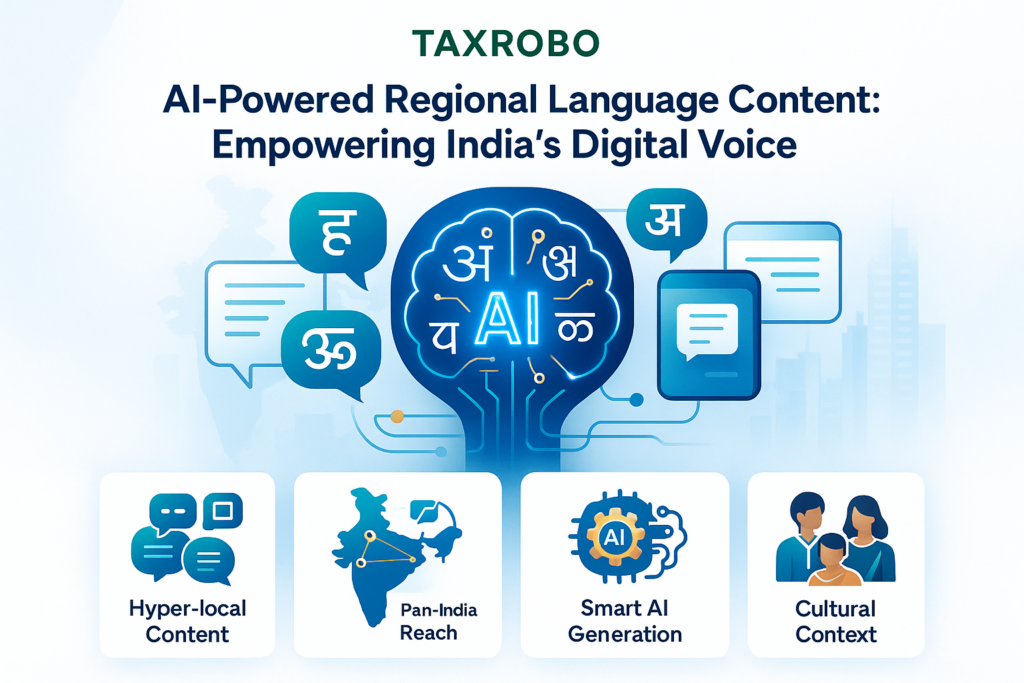

Unlocking India’s Diverse Markets: A Guide to Starting a Regional Language AI Content Agency
Did you know that over 500 million Indians prefer to consume content in their local language, a number that is growing exponentially every year? This massive, digitally-savvy audience represents a golden opportunity, yet most businesses struggle to connect with them. The primary roadblocks have always been the high cost, logistical complexity, and slow turnaround time of creating high-quality, localized content at scale. This is where a modern business model comes into play: the regional language content agency. By harnessing the power of Artificial Intelligence, entrepreneurs can now solve this problem efficiently and affordably. This comprehensive guide will walk you through this massive business opportunity, the services you can offer, and the crucial legal and financial steps—powered by TaxRobo’s expertise—to launch your own successful AI content agency India and tap into the heart of India regional language content.
Why is Now the Perfect Time to Launch a Regional Language AI Content Agency?
The digital landscape of India is undergoing a monumental shift, creating a fertile ground for innovative businesses that cater to its linguistic diversity. For aspiring entrepreneurs, the convergence of technology and market demand has opened a unique window of opportunity. Understanding the forces driving this change is the first step toward building a successful enterprise in this space. It’s not just about technology; it’s about being part of a larger socio-economic transformation that is redefining how businesses communicate with their customers across the nation.
The “Digital Bharat” Revolution
The “Digital Bharat” revolution is not just a government initiative; it’s a grassroots movement powered by the explosion of affordable smartphones and low-cost data plans. This has led to unprecedented internet penetration in Tier-2 and Tier-3 cities, bringing millions of new users online. These users think, speak, and search in their native tongues, creating a massive demand for content in languages like Hindi, Tamil, Telugu, Bengali, Marathi, Kannada, and more. For businesses, this means that an English-only strategy is no longer viable. To build trust, foster engagement, and ultimately drive sales, they must speak the language of their customers. Effective regional content marketing India is no longer a luxury but a fundamental requirement for growth, and your agency can be the bridge that connects brands to this burgeoning market.
The Power of AI in Content Creation
Traditionally, creating content for multiple regions was a slow and expensive process, requiring large teams of translators and writers. Artificial Intelligence has completely changed this equation. Modern AI tools can now generate, translate, and optimize content drafts in multiple languages at a speed that was previously unimaginable. The primary benefits for an agency are immense: it dramatically lowers operational costs, allows for massive scalability, and ensures a consistent tone of voice across different languages. This technological leap makes it possible for even a small startup team to offer large-scale AI content solutions for regional languages, competing with larger, traditional agencies on both price and efficiency. Your agency can leverage these tools to produce blog posts, social media updates, and website copy in a fraction of the time, passing on the value to clients.
Bridging the Communication Gap for Businesses
The core value proposition of your agency is simple yet powerful: you help businesses overcome the language barrier to unlock new markets. A diverse range of clients desperately needs these services. E-commerce platforms need localized product descriptions to improve conversion rates, local service businesses want to reach customers in their immediate vicinity through regional SEO, and tech startups need to translate their app interfaces and marketing materials to expand their user base. Digital marketers, too, are constantly seeking high-quality content to fuel their regional campaigns. By offering specialized regional language AI services and reliable AI writing services in regional languages, your agency becomes an indispensable partner for any business looking to thrive in the real, multilingual India.
Building Your Agency: A Step-by-Step Legal & Financial Blueprint
Launching your dream regional language content agency involves more than just mastering AI tools and hiring editors; it requires building a solid legal and financial foundation. This blueprint ensures your business is compliant, protected, and structured for sustainable growth from day one. Taking care of these crucial steps early on will prevent future complications and allow you to focus on what you do best: serving your clients.
Step 1: Defining Your Services and Niche
Before you can register your business, you must have a clear vision of what you will offer. The regional content market is vast, so niching down is a smart strategy to establish expertise and attract the right clients. First, decide which languages you will specialize in. You could focus on a geographical cluster, such as South Indian languages (Tamil, Telugu, Kannada, Malayalam) or the Hindi belt (Hindi, Bhojpuri, Marathi). Next, define the specific types of content you will produce.
Your service offerings could include:
- Blog Posts & Articles: For clients’ content marketing and SEO strategies.
- Social Media Captions: Short, engaging copy for platforms like Instagram, Facebook, and ShareChat.
- Website Copy & Landing Pages: Translating and localizing entire websites.
- Product Descriptions: For e-commerce businesses targeting regional buyers.
- Video Scripts & Subtitles: Catering to the booming video content market.
Structuring these offerings clearly as regional language content services India on your website and marketing materials will help you communicate your value effectively.
Step 2: Choosing the Right Business Structure in India
Choosing the Right Legal Structure for Your Business will impact your liability, taxation, and ability to raise funds. It’s a critical decision that should align with your long-term goals.
| Business Structure | Best For | Key Features | Liability |
|---|---|---|---|
| Sole Proprietorship | Individuals starting solo, testing the idea. | Easy and inexpensive to set up; minimal compliance. | Unlimited (Personal assets are at risk). |
| LLP | Two or more partners wanting flexibility. | A blend of partnership and company features. | Limited (Protects personal assets of partners). |
| Private Limited Co. | Entrepreneurs aiming for growth and funding. | Separate legal entity; credible to clients and investors. | Limited (Protects personal assets of shareholders). |
For a business with ambitions to scale, the Private Limited Company is often the preferred choice for a growing AI content writing agency. It projects a professional image, makes it easier to secure investment, and limits your personal financial risk.
Need help deciding? TaxRobo’s expert advisors can help you choose the best business structure for your goals and handle the entire registration process.
Step 3: Company Registration and Essential Licenses
Once you’ve chosen your business structure, the next step is formal registration. This process, detailed in our guide on How to Register a Company in India: Complete Process & Checklist, legitimizes your operations and ensures you are compliant with Indian corporate law. For a Private Limited Company or LLP, the key steps involve filings with the Ministry of Corporate Affairs (MCA).
The registration checklist includes:
- Obtaining Director Identification Number (DIN): A unique identification number for each director.
- Acquiring a Digital Signature Certificate (DSC): Required for electronically signing and submitting documents on the MCA portal.
- Filing for Name Approval: Submitting your proposed company name for approval to ensure it’s unique.
- Filing Incorporation Documents: Submitting the Memorandum of Association (MoA) and Articles of Association (AoA) along with other forms on the MCA portal.
After incorporation, you must apply for a business PAN (Permanent Account Number) and TAN (Tax Deduction and Collection Account Number). For detailed official procedures, you can refer to the Ministry of Corporate Affairs (MCA) portal.
Step 4: Understanding GST and Tax Compliance
Tax compliance is a non-negotiable aspect of running a legitimate business in India. For a service-based business like a content agency, understanding the Goods and Services Tax (GST) is paramount. GST registration is mandatory for any service provider whose aggregate annual turnover exceeds ₹20 lakhs (₹10 lakhs for special category states). However, many businesses opt for voluntary registration to work with larger corporate clients who require GST invoices to claim input tax credits.
Key GST terms to understand:
- GSTIN: Your unique 15-digit Goods and Services Tax Identification Number.
- CGST & SGST: Central and State GST, applicable on services provided within the same state.
- IGST: Integrated GST, applicable on services provided to a client in a different state.
As an agency, you will issue invoices with the appropriate GST and must file your GST returns monthly or quarterly, depending on your turnover. Timely filing is crucial to avoid hefty penalties and maintain a good compliance rating. For more information, you can visit the official GST Portal.
Feeling overwhelmed by taxes? TaxRobo specializes in hassle-free GST registration and filing, ensuring your business stays 100% compliant.
Key Strategies for Running a Successful AI Content Agency in India
Having a solid legal structure is just the beginning. To truly succeed and build a reputable brand, you need to implement strategies that focus on quality, profitability, and client acquisition. Running a successful agency is about blending cutting-edge technology with human intelligence and sharp business acumen.
The “Human-in-the-Loop” Quality Model
This is the single most important strategy for differentiating your agency. While AI is incredibly powerful for generating initial drafts, it can lack the cultural nuances, idioms, and emotional context that make content truly resonate with a local audience. Emphasize to your clients that AI is your tool, not a complete replacement for human expertise. Your core process must involve a “human-in-the-loop” model, where every piece of AI-generated content is meticulously reviewed, edited, and refined by a native-speaking editor. This quality control step ensures accuracy, eliminates cultural missteps, and adds a layer of polish that AI alone cannot achieve. This commitment to quality will build immense trust with your clients and justify your pricing.
Pricing Your AI Writing Services in Regional Languages
Setting the right price for your services is crucial for profitability and market positioning. You need to balance being competitive with valuing the expertise and quality control your agency provides.
Consider these common pricing models:
- Per-Word Basis: A simple and transparent model, common in the content industry. You can charge a base rate for AI generation and a higher rate that includes human editing and proofreading.
- Per-Project Fixed Fee: Ideal for well-defined projects like website content localization or a package of blog posts. This gives clients cost certainty.
- Monthly Retainer: The best model for long-term clients with ongoing content needs, such as monthly social media management or blog writing. This provides your agency with predictable revenue.
When starting, you might offer competitive pricing to build a strong portfolio of work and gather client testimonials. As you establish your reputation for quality, you can gradually increase your rates.
Marketing Your Agency
You can’t sell your services if potential clients don’t know you exist. A targeted marketing strategy is essential to attract the right kind of businesses.
- Build a Multilingual Website: Your website is your digital storefront. Showcase your capabilities by having your own site available in the key regional languages you serve. This is a powerful demonstration of your expertise.
- Leverage LinkedIn: LinkedIn is an excellent platform for B2B marketing. Connect with marketing heads, brand managers, and business owners. Share insightful content about the importance of regional content marketing India and engage in relevant industry conversations.
- Content Marketing: Practice what you preach. Create valuable blog posts and case studies on your own website about topics related to localization, reaching Tier-2/Tier-3 markets, and the ROI of regional content. This will attract inbound leads and establish you as a thought leader.
Conclusion
The digital transformation sweeping across India has created an unprecedented demand for localized communication. The rise of “Digital Bharat” combined with the power of artificial intelligence presents a remarkable business opportunity. Launching a regional language content agency is not just a viable business idea; it’s a chance to be at the forefront of this change, helping businesses connect with millions of new customers. By building a solid legal and financial foundation, focusing on a human-centric approach to quality, and marketing your services effectively, you can build a profitable and impactful enterprise.
Ready to turn this opportunity into a reality but feeling uncertain about the complex legal and tax requirements? Let TaxRobo be your trusted partner. We handle all the complexities of company registration, GST compliance, and accounting, so you can focus on what you do best—growing your regional language content agency. Contact us for a free consultation today and take the first step towards your entrepreneurial journey!
Frequently Asked Questions (FAQ)
1. Do I need to know all the regional languages to start this agency?
No, you don’t. Your role is that of an entrepreneur and a project manager. Your core strengths should be in building efficient workflows, understanding client needs, and managing your team. You will need to build a reliable network of freelance editors or part-time proofreaders who are native speakers of the languages you offer. Your job is to orchestrate the process using reliable AI tools and skilled human talent.
2. What is the minimum investment required to start an AI content agency India?
The initial investment is relatively low compared to many other businesses, which makes it an attractive option. Your primary costs will be a reliable laptop, a high-speed internet connection, and monthly or annual subscriptions to premium AI writing tools (like Jasper, Copy.ai), translation software, and grammar checkers. You should also budget a small amount for initial marketing expenses, such as setting up a website and running a few targeted ads.
3. Is GST registration mandatory for a new content writing agency?
GST registration becomes mandatory once your total annual turnover from services exceeds the government-prescribed threshold, which is ₹20 lakhs for most states and ₹10 lakhs for special category states. However, it is often advisable to register for GST voluntarily from the beginning. Many corporate clients will only work with GST-registered vendors because they need a GST invoice to claim Input Tax Credit (ITC), making it a business necessity for growth. Our Ultimate Guide to GST Registration for Small Businesses covers this topic in detail.
4. How can I ensure the AI-generated content is not generic and culturally insensitive?
This is the most critical challenge and where your agency’s value lies. The “human-in-the-loop” model is the solution. Every single piece of content generated by AI must be treated as a first draft. It must then go to a human editor who is a native speaker of the target language. This editor’s job is to check for cultural context, appropriate idioms, local nuances, and overall tone to ensure the final India regional language content is authentic, respectful, and engaging for the intended audience. This quality control step is your agency’s biggest differentiator.