
GST Notice for Scrap Dealers – Reverse Charge & Classification Issues
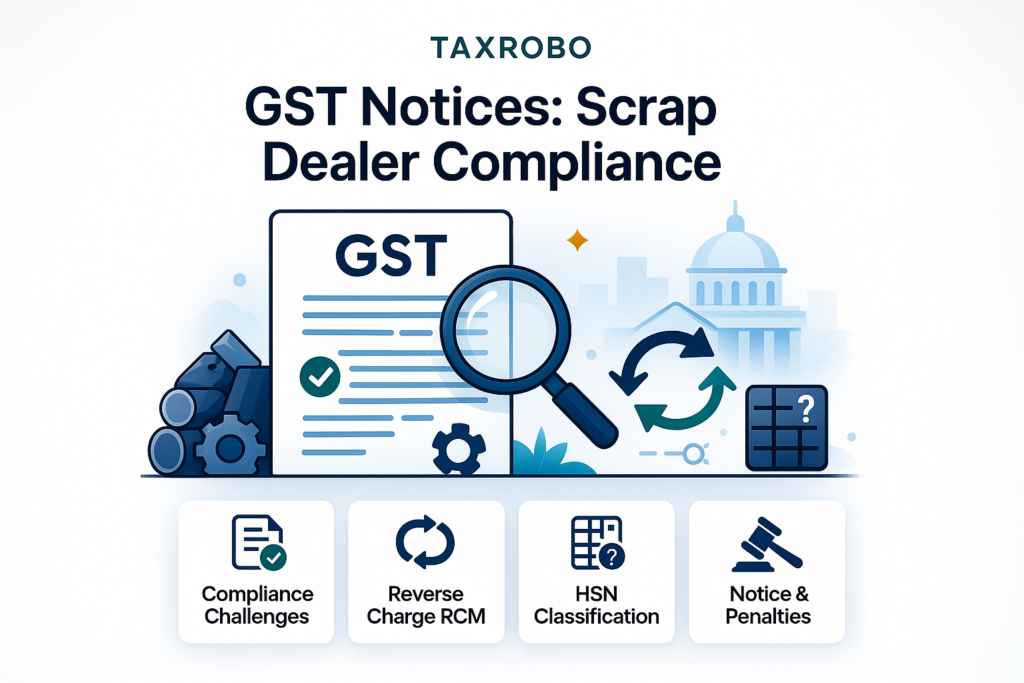
Have you, as a scrap dealer, recently received an unexpected communication from the GST department? You’re not alone. The scrap industry, with its complex web of transactions, is increasingly under the GST scanner, and many business owners are finding themselves grappling with official inquiries. The unorganised nature of the sector often leads to compliance gaps that can trigger scrutiny from tax authorities. This article is designed to demystify the common reasons behind a GST notice for scrap dealers, focusing on two of the most critical and often misunderstood areas: the Reverse Charge Mechanism (RCM) and HSN code classification. We will break down these complex topics into simple, understandable terms and provide actionable steps you can take to ensure robust compliance, handle any existing notices effectively, and safeguard your business from future complications.
Why the Scrap Industry is Under the GST Scanner
The Goods and Services Tax (GST) regime was introduced to formalise the economy and create a unified tax structure. However, certain sectors, by their very nature, pose unique challenges to this streamlined system. The scrap and waste management industry is a prime example, attracting significant attention from tax authorities due to its operational complexities and historical compliance patterns. Understanding why your business might be under review is the first step toward building a more resilient and compliant operation.
The Unorganised Nature of Scrap Business in India
A significant portion of the scrap supply chain in India operates in the unorganised sector. The primary source of materials often involves unregistered suppliers, such as individual households, small-scale ‘kabadiwalas,’ and informal waste collectors who do not fall under the GST registration threshold. This creates a major compliance gap. When registered scrap dealers purchase materials from these unregistered sources, the traditional tax collection mechanism—where the supplier charges GST—breaks down. This makes it incredibly difficult for tax authorities to track the entire supply chain, verify the flow of goods, and ensure that the appropriate tax is paid at each stage of value addition. This inherent lack of transparency and formal documentation is a primary reason the department is actively monitoring transactions within the industry to prevent tax evasion and ensure proper GST compliance for scrap businesses.
Common Triggers for a GST Notice for Scrap Dealers
A GST notice is not a random occurrence; it is usually triggered by specific red flags identified by the department’s data analytics systems. By cross-referencing various returns and data points, the system can quickly spot inconsistencies that suggest a potential underpayment of tax. For scrap dealers, the most common triggers include:
- Mismatch between GSTR-1 and GSTR-3B: Discrepancies between the outward supplies you declared in GSTR-1 and the summary figures reported in GSTR-3B are a major red flag.
- Discrepancies between GSTR-2A/2B and your ITC claims: Claiming more Input Tax Credit (ITC) in your GSTR-3B than what is reflected in your GSTR-2A or GSTR-2B (auto-populated from your suppliers’ filings) will almost certainly lead to a notice.
- Failure to pay tax under the Reverse Charge Mechanism: This is a critical and frequently overlooked compliance point for scrap dealers who purchase goods from unregistered suppliers.
- Incorrect HSN code usage and GST rate application: Using the wrong HSN code for different types of scrap can result in applying a lower GST rate, leading to a notice for the differential tax amount.
- Non-filing or delayed filing of GST returns: Consistent delays or failure to file your GST returns signals non-compliance and will prompt departmental action.
Decoding the Reverse Charge Mechanism (RCM) for Scrap Dealers
One of the most frequent reasons for a GST notice for scrap dealers is the non-payment or incorrect handling of the Reverse Charge Mechanism (RCM). This concept fundamentally alters the tax payment responsibility and is central to ensuring compliance when dealing with the unorganised sector. Many businesses falter here not due to an intent to evade tax, but simply due to a lack of clear understanding of its application and procedural requirements. For a detailed overview, our guide on the Reverse Charge Mechanism (RCM) Under GST – Latest Applicability Chart 2025 is a valuable resource. Getting RCM right is non-negotiable for a smooth and compliant operation in the scrap industry.
What is the Reverse Charge Mechanism in Simple Terms?
Under the normal GST system, the supplier of goods or services is responsible for collecting GST from the buyer and depositing it with the government. However, the Reverse Charge Mechanism flips this responsibility. Under RCM, the recipient of the goods or services becomes liable to pay the GST directly to the government. The supplier, in this case, does not charge any GST on their invoice. This mechanism was specifically designed for situations where the supplier is unregistered or falls within a specific category of services, making it easier for the government to collect tax from the organised, registered buyer rather than chasing countless small, unorganised sellers. For scrap dealers, this means that when you buy scrap from an unregistered person, the onus is on you to calculate and pay the applicable GST.
When Does RCM Apply to Scrap Purchases?
The applicability of the reverse charge mechanism for scrap dealers primarily falls under Section 9(4) of the CGST Act, which mandates that a registered person must pay GST on a reverse charge basis when they purchase goods or services from an unregistered supplier. While the scope of Section 9(4) has been limited to specific goods and services for most businesses, its principle is a cornerstone of compliance in the scrap trade. A classic and unavoidable example is when a registered scrap dealer or recycling company purchases used metal scrap, old newspapers, or plastic waste from an unregistered individual, a household, or a small street-corner vendor who is not registered under GST. In this transaction, the registered dealer must pay the GST on the value of the purchased scrap directly to the government.
Compliance Checklist for RCM
Properly complying with RCM involves more than just paying the tax; it requires a systematic documentation and reporting process. Following this checklist can help you avoid notices related to RCM defaults:
- Identify All Unregistered Purchases: Systematically segregate and maintain a clear record of all purchases made from unregistered suppliers throughout the tax period.
- Calculate GST Liability: Determine the correct HSN code and applicable GST rate for the scrap purchased and calculate the total GST amount payable on the value of these transactions.
- Pay GST in Cash: The GST liability under RCM must be paid in cash through an electronic cash ledger. You cannot use your available Input Tax Credit (ITC) to discharge this liability. This payment should be reflected correctly in your GSTR-3B return.
- Issue a Self-Invoice: Since the unregistered supplier cannot issue a tax invoice, you are required to issue a “self-invoice” for the purchase. This document is crucial for your records and for claiming ITC later.
- Claim Input Tax Credit (ITC): The GST you paid under RCM can be claimed as ITC in the subsequent month’s GSTR-3B, subject to the standard conditions that the goods are used for business purposes. This ensures the tax paid does not become a cost to your business.
Solving HSN Code & Classification Issues for Scrap Dealers
Beyond RCM, the second major hurdle leading to a GST notice is the incorrect classification of goods using the Harmonized System of Nomenclature (HSN) code. The scrap business deals with a vast variety of materials, from different metals and plastics to complex e-waste. Each category has a specific HSN code, which in turn dictates the applicable GST rate. To avoid these issues, refer to a comprehensive HSN & SAC Code Complete Guide – Choosing the Correct Code for GST to ensure accuracy. A simple error in classification can lead to a significant underpayment of tax, accumulating over time and resulting in a demand notice with interest and penalties.
Why HSN Code Classification is Crucial
The HSN code is the foundation of GST rate determination. It’s a globally recognised system for classifying goods, and in the GST framework, it ensures that a uniform tax rate is applied to the same product across the country. For a scrap dealer, correctly identifying the HSN code for a particular lot of scrap is not just an administrative task; it’s a critical compliance requirement. If you classify high-value metal scrap under a code meant for low-value plastic scrap, you might inadvertently apply a 5% GST rate instead of the correct 18%. The GST department’s analytics can easily detect such patterns, especially if your sales declarations seem inconsistent with industry norms, triggering a notice to recover the differential tax amount. Addressing these classification issues for scrap dealers proactively is key to avoiding financial strain.
Common Classification Issues for Scrap Dealers
The diverse nature of scrap material is the primary source of classification challenges. It’s often difficult to precisely categorise mixed lots of scrap. Common issues include differentiating between ferrous scrap (iron and steel) and more valuable non-ferrous scrap (copper, aluminium), which may have different HSN codes or reporting requirements. Similarly, the broad category of “plastic scrap” can include various polymers, each potentially having a distinct classification. E-waste presents an even greater challenge, as it can be a complex mix of plastics, metals, and hazardous components, making a single, correct HSN classification difficult. These ambiguities can lead to unintentional errors, but from the tax department’s perspective, it results in a revenue loss that must be investigated.
GST Rates and HSN Codes for Common Scrap Materials
To bring clarity, here is a simplified table with indicative HSN headings and GST rates for common scrap materials. It’s crucial to remember that these are for guidance only, and you should always verify the latest rates and specific HSN codes on the official GST portal before filing.
| Scrap Type | Example HSN Chapter/Heading | Indicative GST Rate |
|---|---|---|
| Metal Scrap (Iron & Steel) | 7204 | 18% |
| Plastic Scrap | 3915 | 5% |
| Paper Scrap | 4707 | 5% |
| E-waste | 8549 | 5% / 18% (depending on type) |
This classification system is a core part of the GST regulations for waste management in India, designed to formalise and correctly tax the entire recycling and waste processing ecosystem.
How to Respond to a GST Notice: A Step-by-Step Guide
Receiving a GST notice can be intimidating, but it doesn’t have to be a crisis. A structured and timely response is the key to resolving the issue efficiently. Ignoring a notice or providing an incomplete reply can escalate the problem, leading to penalties and legal complications. For a more detailed breakdown of different notice types, our guide on How to Handle GST Notices – ASMT-10, DRC-01, DRC-07 Explained Simply can be an invaluable resource. Follow these steps to handle the process professionally.
Step 1: Analyse the Notice Thoroughly
The first and most important step is to read the notice carefully from start to finish. Do not panic. Understand the specific reason it was issued. Is it related to an RCM shortfall, an HSN code mismatch, an ITC claim discrepancy, or something else? Identify the tax period in question and, most importantly, note the deadline for submitting your response. The notice will specify the date by which you need to file your reply or appear before the officer. Missing this deadline can result in an ex-parte order being passed against you, which assumes the department’s claims are correct.
Step 2: Reconcile Your Records
Once you understand the issue, your next step is to gather all the relevant financial and tax documents for the period in question. This includes your purchase and sales invoices, especially those from unregistered suppliers, self-invoices for RCM transactions, GSTR-1, GSTR-2B, and GSTR-3B filings, payment challans for tax deposited, and stock registers. Meticulously reconcile your books of accounts with the data reported in your GST returns. This process will help you identify the exact source of the discrepancy raised in the notice and determine whether it’s a clerical error, a misunderstanding of the law, or a genuine shortfall.
Step 3: Draft a Clear and Factual Reply
Your response should be professional, clear, and directly address the points raised in the notice. Prepare a point-by-point rebuttal or explanation for each query. If the department is correct and there has been a shortfall, admit it and provide proof of payment for the differential tax along with interest. If you believe your position is correct, state your case clearly and logically. Crucially, attach all supporting documents as annexures to your reply. This evidence, such as copies of invoices, reconciliation statements, or legal provisions supporting your HSN classification, will substantiate your claims and strengthen your position significantly.
Step 4: Seek Professional Assistance
While a simple notice might be manageable on your own, complex issues involving RCM, HSN classification, or large tax demands warrant professional help. A poorly drafted reply can lead to further questions and complications. Consulting with GST experts is a wise investment. Professionals like the team at TaxRobo can help you draft a legally sound and accurate response, represent your case before the tax authorities, and navigate the complexities of the law, minimising your risk of penalties and ensuring a favourable resolution.
Proactive Measures for GST Compliance for Scrap Businesses
The best way to handle a GST notice is to prevent it from being issued in the first place. Adopting a proactive approach to GST compliance for scrap businesses not only saves you from the stress of dealing with the tax department but also builds a stronger, more transparent, and more profitable business in the long run.
Maintain Impeccable Records
In the world of GST, documentation is everything. Make it a non-negotiable business practice to maintain meticulous records. This means issuing proper invoices for every sale, creating self-invoices for every RCM purchase, and keeping detailed registers for stock, purchases, and sales. It’s especially important to maintain separate, clear records for transactions with registered versus unregistered suppliers. Using reliable accounting software and keeping digital backups of all documents will ensure that you can quickly retrieve any information needed for reconciliation or in response to a departmental query.
Conduct Regular GST Audits
Don’t wait for the tax department to find errors in your filings. Conduct periodic internal GST audits—quarterly or semi-annually—to review your compliance procedures. This internal check can help you identify potential issues like incorrect HSN usage, missed RCM payments, or ITC claim errors. Catching and rectifying these mistakes proactively, perhaps by paying the tax difference through Form DRC-03, demonstrates good faith and can save you from hefty penalties and interest charges down the line.
Stay Updated
GST laws and regulations are dynamic and subject to change. It is crucial to stay informed about any amendments, circulars, or notifications that may impact your business. This is particularly relevant for GST regulations for waste management in India, as rates and rules can be updated. Make it a habit to follow official government sources for the most accurate information. You can bookmark the official GST Council website and the CBIC portal to stay abreast of the latest developments.
Conclusion
Navigating the complexities of GST is a significant challenge for any scrap dealer, but it is not an insurmountable one. Understanding the nuances of the Reverse Charge Mechanism and ensuring the correct HSN classification for your materials are the two most powerful steps you can take to avoid regulatory issues. Proactive compliance, built on a foundation of meticulous record-keeping, regular self-audits, and staying informed, is the most effective defense against receiving a GST notice for scrap dealers. By treating compliance as an integral part of your business operations rather than a burden, you can focus on what you do best—running and growing your business.
Navigating GST compliance can be complex. Don’t let a notice disrupt your business. Contact TaxRobo’s expert team today for end-to-end GST filing, notice management, and advisory services.
Frequently Asked Questions about GST for Scrap Dealers
1. Q: Do I need to pay GST under RCM if I buy scrap from a household?
A: Yes, if you are a registered dealer buying scrap from an unregistered person (like an individual from a household), you are liable to pay GST under the reverse charge mechanism for scrap dealers. You must calculate the GST on the purchase value, pay it to the government in cash, and issue a self-invoice for the transaction.
2. Q: What is the penalty for not responding to a GST notice for scrap dealers?
A: Failure to respond to a GST notice can have serious consequences. The officer may pass an ex-parte order based on the information available to them, confirming the tax demand. This can be followed by penalties, which can be a significant percentage of the tax due, interest charges, and further legal recovery proceedings from the GST department.
3. Q: Can I claim Input Tax Credit (ITC) on the GST I pay under RCM?
A: Yes, one of the key features of RCM is that the GST you pay is not a final cost. The GST paid in cash under the reverse charge mechanism can be claimed as ITC in your GST return for the subsequent month. This ITC can then be used to offset your future output GST liability, provided the purchased scrap is used for your business purposes and you comply with all other ITC conditions.
4. Q: How can I find the correct HSN code for my scrap material?
A: You can use the HSN code finder tool available on the official GST portal. However, due to the complexities involved, the best approach is to consult with a GST professional. They can help you accurately classify your materials based on their type, composition, and form, thereby helping you avoid classification issues for scrap dealers and ensuring you apply the correct tax rate.