
How to Reply to GST Summons from DGGI – Step-by-Step Guide
Receiving a formal notice from a tax authority can be unsettling, and a summons from the Directorate General of GST Intelligence (DGGI) is one such notice that demands your immediate and careful attention. This document is a legal call to action, and understanding how to formulate a reply to a GST summons is crucial for any business owner or individual in India. The DGGI is the primary intelligence and investigation agency for all matters related to the Goods and Services Tax, and a summons from them indicates that you are required to assist in an ongoing inquiry. This blog provides a clear, actionable guide on how to handle this situation. We will walk you through the entire process, from understanding the summons to preparing your response, ensuring you manage the situation correctly and confidently. Remember, a proper and timely response is not just a legal obligation but is also fundamental to protecting your business interests and ensuring compliance.
What is a GST Summons and Why Did You Receive One?
Before diving into the response process, it is essential to understand what a GST summons is and the potential reasons behind its issuance. This knowledge will demystify the document and provide the necessary context for your next steps. The entire DGGI summons response process in India begins with a clear comprehension of the authority’s role and the nature of their inquiry. Being informed allows you to approach the situation with a level head, transforming anxiety into a structured plan of action. It’s a formal, legally binding document that compels your presence and cooperation, and treating it with the seriousness it deserves is the first step toward a successful resolution.
Understanding the DGGI and Its Authority
The Directorate General of GST Intelligence (DGGI) operates under the administrative control of the Central Board of Indirect Taxes and Customs (CBIC), which is the apex body for managing indirect taxes in India. The DGGI is empowered by law to conduct investigations into cases of tax evasion and other GST-related offenses. The authority to issue a summons is granted under Section 70 of the Central Goods and Services Tax (CGST) Act, 2017. This section gives authorized GST officers the power to summon any person whose attendance they consider necessary, either to give evidence or to produce a document or any other thing in an inquiry. A summons legally obligates you to appear before the designated officer at the specified time and place. To understand the full scope of their authority, it is useful to be aware of the Powers of GST Officers During Investigation (Section 67, 70, 74 Explained). The proceedings under a summons are deemed to be ‘judicial proceedings’ within the meaning of the Indian Penal Code, which means that providing false information can lead to severe legal consequences. For more information on the governing body, you can visit the official CBIC website.
Common Reasons for Receiving a DGGI Summons
Receiving a summons doesn’t automatically mean you have committed a wrongdoing; you might be a person of interest who can provide crucial information for an ongoing investigation. However, for a small business owner or individual, the summons is often triggered by specific data anomalies or compliance gaps that raise red flags in the GST ecosystem. Understanding these common triggers can provide insight into the focus of the DGGI’s inquiry.
- Significant Discrepancies: A major reason is a noticeable mismatch between the sales data reported in your GSTR-1 (statement of outward supplies) and the summary figures declared in your GSTR-3B return. If your declared turnover in GSTR-1 is significantly higher than the turnover on which you have paid tax in GSTR-3B, it signals potential underpayment of taxes.
- Suspicious Input Tax Credit (ITC) Claims: The GST system is heavily reliant on the seamless flow of ITC. The DGGI actively investigates cases where businesses claim ITC from non-existent, fake, or fraudulent suppliers who issue invoices without the actual supply of goods or services. For a comprehensive understanding, refer to our GST Input Tax Credit (ITC) Full Guide 2025 – Eligibility, Limits & Common Issues. If your business is found in such a transaction chain, even as a recipient, you may be summoned.
- Suspected Tax Evasion: This is a broad category that includes activities like misclassifying goods or services to pay a lower tax rate, undervaluing supplies to reduce the tax liability, or not paying GST on certain taxable supplies altogether. Data analytics and intelligence gathering often point the DGGI toward such cases.
- Extended Non-Filing of Returns: Consistently failing to file your GST returns for a long period is a major compliance failure. It indicates to the tax authorities that the business may not be operational or is deliberately avoiding its tax obligations, prompting an investigation.
- Third-Party Association: You might be summoned not because your business is the primary target, but because you are a director, employee, supplier, or major customer of another business that is under investigation. In such cases, the DGGI requires your testimony or documents to build a comprehensive picture of the primary entity’s operations.
First Steps After Receiving a DGGI Summons
The moment you receive a sealed envelope containing a DGGI summons, your immediate actions can set the tone for the entire process. It’s natural to feel anxious, but a calm and methodical approach is your best ally. Panicking can lead to hasty decisions and mistakes that could complicate the situation. The goal is to carefully analyze the document, verify its legitimacy, and begin preparing your response. Responding to a DGGI summons in India requires a structured approach right from the outset, and these initial steps are designed to ensure you start on the right foot.
Don’t Panic: How to Analyze the Summons Document
The first rule is to remain calm and read the entire document thoroughly, from start to finish. A summons is a highly structured document containing specific details that you need to understand completely. Pay close attention and verify the following key pieces of information, creating a checklist to ensure you haven’t missed anything:
- Your Details: Check that your name (or your company’s name) and address are correctly mentioned. Any discrepancy, however minor, should be noted.
- Issuing Authority: Identify the specific office and the name and designation of the officer who has issued the summons.
- Summons Reference Number: Every official document will have a unique reference number and a date of issue. Note these down, as you will need them for all future correspondence.
- Legal Provision: The summons must mention the legal section under which it has been issued, which is typically Section 70 of the CGST Act, 2017.
- Appearance Details: The document will clearly state the date, time, and exact address of the office where you are required to appear.
- Required Information/Documents: This is the most critical part. The summons will list the specific documents you need to bring or the nature of the information you are expected to provide. This gives you a clear indication of the inquiry’s focus.
How to Verify the Authenticity of the Summons
In an era of increasing financial fraud, it is essential to ensure that the notice you have received is genuine. The CBIC has implemented a system to bring transparency and prevent harassment by unauthorized individuals. A critical element to check for is the Document Identification Number (DIN). As per a CBIC circular issued in 2019, any communication from the GST department, including a summons, must have a computer-generated DIN. If a summons is issued without a DIN, it may be considered invalid unless it falls under specific exceptional circumstances which must be recorded in writing.
Actionable Tip: Look for the DIN on the summons document. It is usually printed prominently on the top right or bottom of the notice. You can then use this DIN to verify the genuineness of the communication on the CBIC’s online portal. This simple check protects you from falling prey to fraudulent notices and ensures you are responding to a legitimate request from the tax authorities.
A Step-by-Step Guide: How to Prepare Your Reply to a GST Summons
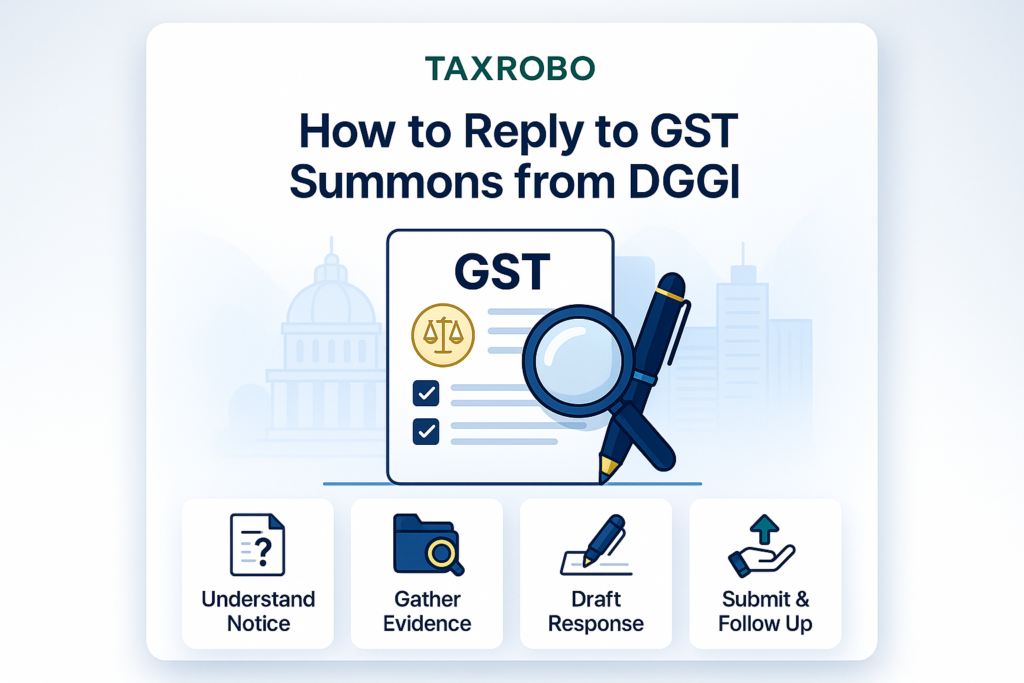
Once you have analyzed and verified the summons, the next phase involves meticulous preparation. How you prepare will directly impact the outcome of the inquiry. This is not merely about showing up on the designated day; it’s about presenting a well-organized, factually accurate, and legally sound case. This detailed step-by-step reply to summons in India will guide you through the preparation process, ensuring you cover all your bases and approach the personal appearance with confidence. A structured approach is the best way to formulate your reply to a GST summons.
Step 1: Immediately Consult a Tax Professional
This is the most critical step and should be taken without any delay. While you might be tempted to handle the matter yourself to save costs, the complexities of GST law and the serious nature of a DGGI inquiry make expert guidance indispensable. You should immediately seek advice from a qualified chartered accountant (CA) or a tax lawyer who specializes in GST litigation and representation. A professional brings immense value by helping you interpret the summons correctly, understanding the underlying legal implications, and identifying the precise scope of the inquiry. They can assist in preparing a legally robust response, compiling the documentation in a structured manner, and anticipating the questions the officers are likely to ask. An expert can also accompany you to the DGGI office and represent your case effectively, ensuring your rights are protected throughout the process.
TaxRobo’s team of GST experts is here to guide you through every step of the DGGI summons response process in India.
Step 2: Collate and Organize All Required Documents
The summons will explicitly list the documents you need to produce. Your task is to gather these documents methodically and organize them for easy reference. Create a master file, either physical or digital, and arrange all the paperwork logically, perhaps chronologically or by category. This not only helps you prepare for the hearing but also presents a professional and organized front to the authorities. Common documents requested include:
- GST Registration Certificate: The foundational document of your business’s GST identity.
- Filed GST Returns: Copies of all relevant returns, such as GSTR-1, GSTR-3B, and the annual return GSTR-9, for the period under investigation. If you need a refresher, our guide on How to File GST Returns Online: A Step-by-Step Guide of the GST Filing Process & Procedure can be very helpful.
- Tax Invoices: Complete records of both sales (outward supply) and purchase (inward supply) invoices.
- Bank Statements: All business-related bank account statements for the period under scrutiny, which help correlate transactions with your GST returns.
- Financial Records: Your ledger accounts, trial balance, and profit and loss statements.
- Relevant Contracts: Any agreements, contracts, or work orders that are relevant to the transactions being investigated.
Pro Tip: Never submit your original documents. Always provide photocopies and carry the originals with you for verification. It is also wise to prepare a covering letter that lists all the documents you are submitting and get a signed and stamped acknowledgment receipt from the officer. This creates a formal record of your submission.
Step 3: Preparing for the Personal Appearance
The summons requires you to appear in person to give a statement, which will be recorded by the officer. Your statement is considered formal evidence, so how you conduct yourself and what you say is of utmost importance. Preparation is key to navigating this stage successfully.
- Review the Facts: Before the appearance, sit down with your tax professional and thoroughly review all the documents and facts of the case. Ensure you have a clear and consistent understanding of all the transactions in question.
- Anticipate Questions: Based on the summons and the documents requested, try to anticipate the potential questions the officer might ask. Rehearse your answers to ensure they are truthful, concise, and factual.
- Answer Truthfully: Under oath, you are legally bound to state the truth. Avoid any speculation, assumptions, or providing false information, as this constitutes perjury and is a punishable offense. If you do not know the answer to a question, it is better to say so than to guess.
- Understand Your Rights: You have the right to have your lawyer or CA available for consultation, even if they are not permitted inside the room during the recording of the statement. If you feel pressured or coerced, you can request a short break to consult with your advisor.
Know Your Rights and Obligations When Responding to DGGI Summons
Navigating a tax inquiry can be intimidating, but it is crucial to remember that the process is governed by law, and you have certain rights as a taxpayer. At the same time, you have legal obligations that you must fulfill. Understanding this balance empowers you to handle the situation with confidence and compliance. This comprehensive how to reply to summons guide India would be incomplete without outlining your legal position.
Your Rights as a Taxpayer
Being aware of your rights ensures you are treated fairly throughout the investigation and helps prevent any potential overreach by the authorities.
- Right to Courteous Treatment: You have the right to be treated with courtesy and respect by the investigating officers. The proceedings should be conducted in a professional manner.
- Right to a Copy of Your Statement: After your statement is recorded, you have the right to read it carefully and request a copy for your records. Ensure the recorded statement accurately reflects what you said before signing it.
- Right to Retract a Statement: If you believe a statement was given under duress, coercion, or misunderstanding, you have the right to retract it later. However, this is a complex legal step and must be done immediately with sound advice from your lawyer.
- Right to Clarity: You have the right to understand the questions being asked. If a question is unclear, you can politely ask the officer to rephrase or clarify it before you answer.
Your Legal Obligations
Just as you have rights, you also have specific legal duties when you receive a summons. Fulfilling these obligations is non-negotiable and is essential for avoiding further legal complications.
- Mandatory Attendance: Ignoring a summons is a serious offense. Section 174 of the Indian Penal Code deals with non-attendance in obedience to an order from a public servant. Failure to appear can lead to penalties, fines, and even imprisonment. Attending the summons is mandatory.
- Truthful Testimony: As the proceedings are considered ‘judicial proceedings’, you are legally obligated to speak the truth. Providing false statements or fabricating evidence is a punishable offense under the Indian Penal Code.
- Production of Documents: You must produce the documents and records that have been requested in the summons. If you are unable to produce a specific document, you must provide a valid legal reason for your inability to do so.
Conclusion
A GST summons from the DGGI is undoubtedly a serious legal document that requires your full and immediate attention. However, it is not a reason to panic. The key is to approach it with a calm, methodical, and informed strategy. The first and most crucial step is to stay calm, carefully verify the summons’s authenticity, and immediately consult a tax expert. A structured approach to document collection, combined with thorough preparation for the personal appearance, is paramount to navigating the inquiry successfully. A well-prepared and transparent reply to a GST summons can help resolve the matter efficiently and protect your business from unnecessary complications.
Navigating a DGGI summons can be complex, and the stakes are high. Don’t risk your business by handling it alone. Contact TaxRobo’s expert team today for end-to-end assistance, from document preparation and strategic advice to legal representation. Let us help you manage your DGGI summons response with the confidence and expertise you deserve.
Frequently Asked Questions (FAQs)
Q1. Can I ignore a GST summons from the DGGI?
Answer: Absolutely not. Ignoring a summons is a punishable offense under Section 174 of the Indian Penal Code, which can lead to fines or even imprisonment. It is a legal obligation to attend the proceedings as required. Failing to appear will only aggravate the situation and invite stricter action from the authorities.
Q2. Do I need a lawyer to reply to a GST summons?
Answer: While it is not legally mandatory to hire a lawyer or a CA, it is highly advisable. A tax professional with experience in handling such matters can help you understand the complex nuances of the case, ensure your rights are protected at every stage, and assist in preparing a factual and legally sound response. Their expertise can be invaluable in achieving a favorable outcome.
Q3. What should I do if I cannot attend the summons on the scheduled date?
Answer: You must formally request an adjournment from the issuing officer. Do not simply fail to appear. Write a letter or an email to the officer well in advance of the scheduled date, clearly stating the reason for your inability to attend (e.g., a medical emergency, a prior unavoidable commitment with proof) and suggest an alternative date for your appearance. It is at the officer’s discretion to grant the adjournment.
Q4. Can the DGGI officer arrest me when I appear for the summons?
Answer: A summons is primarily an instrument for inquiry, investigation, and evidence gathering. An arrest is an extreme measure. The power to arrest under Section 69 of the CGST Act is used only in serious cases of tax fraud involving specified monetary thresholds and where the officer has a ‘reason to believe’ that the person has committed a cognizable and non-bailable offense. Therefore, an appearance for a summons does not automatically or usually lead to an arrest.