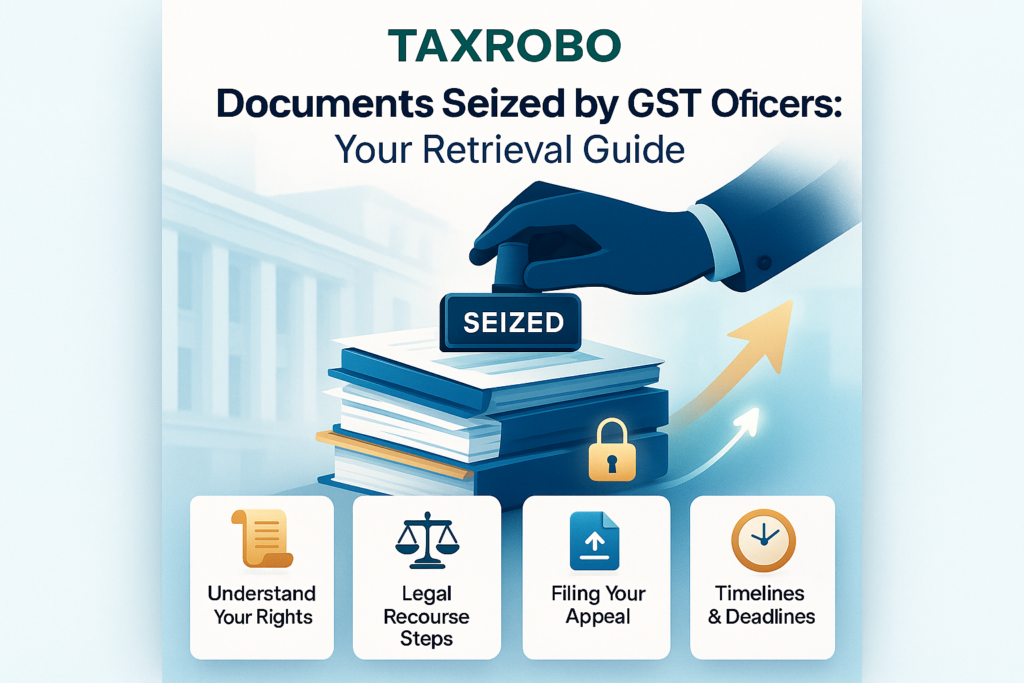

Documents Seized by GST Officers – Your Complete Guide on How to Get Them Back
Introduction: A GST Raid Can Be Stressful, But You Have Rights
Imagine this: you’re in the middle of a busy workday when officers from the GST department arrive for an inspection. The situation can quickly become overwhelming, especially if it ends with them taking your business records. For any small business owner, having documents seized by officers can be a deeply stressful and confusing experience. It can halt your daily operations, disrupt your accounting, and leave you worried about what comes next. This guide is here to cut through that confusion. We will provide a clear, step-by-step roadmap on the legal procedure to get back seized documents in India. Knowing your rights under the GST law is the first and most crucial step toward resolving the situation calmly and efficiently. This article will empower you with the knowledge to handle the process, from the moment the officers arrive to the final recovery of your valuable files.
Understanding Why GST Officers Seize Documents and Goods
A search and seizure operation by the GST department is not a random event. It is an enforcement action taken when tax authorities have a strong reason to suspect serious non-compliance. The primary goal is to gather evidence to investigate potential tax evasion, fraudulent claims of input tax credit, or other violations of the GST law. Understanding the “why” behind the seizure can help you better navigate the situation. For instance, if officers suspect that invoices are being issued without the actual supply of goods, they will look for account books, ledgers, and computer records to substantiate their case. The entire process is about uncovering evidence, which is why they take possession of documents they deem relevant. Answering the question of “documents seized during GST raid how to retrieve” begins with understanding the legal framework that allows the seizure in the first place, ensuring you can challenge it correctly if necessary.
The Legal Basis: Section 67 of the CGST Act, 2017
The power of GST officers to conduct inspections, searches, and seizures is granted under Section 67 of the Central Goods and Services Tax (CGST) Act, 2017. This section is the legal foundation for such actions. It specifies that an officer, not below the rank of a Joint Commissioner, can authorize a search and seizure in writing if they have “reasons to believe” that a taxable person has suppressed transactions, claimed excess input tax credit, or engaged in activities to evade tax. During such a search, the authorized officer can seize goods they believe are liable for confiscation and any books of account, documents, computer files, or other records that they consider relevant evidence for proceedings under the Act. For a detailed legal reference, you can view the official act on the CBIC website.
Reference: The Central Goods and Services Tax Act, 2017
Your First Response: Immediate Steps to Take When Documents Are Seized by Officers
The moments during and immediately after a GST search are critical. How you respond can significantly impact the entire recovery process. Panic and confusion are natural, but having a clear checklist of actions can provide direction and protect your rights. This section outlines the immediate, practical steps you must take to ensure the situation is handled professionally and documented correctly from the very beginning.
1. Do Not Panic and Cooperate Professionally
The single most important thing to do is to remain calm. Cooperating with the officers is essential; any attempt to obstruct their search, hide documents, or tamper with evidence can lead to severe penalties under the GST law. While you must cooperate, you also have the right to verify the officers’ credentials. Politely ask to see their official identity cards and the search authorization letter (often called a search warrant). This document confirms that they have the legal authority to conduct the search and seizure at your premises. Maintaining a professional and composed demeanor sets a constructive tone and ensures the process proceeds as smoothly as possible.
2. Insist on a Seizure Memo (Form GST INS-02)
This is a non-negotiable step. The officers are legally obligated to prepare a detailed inventory of every single document, file, computer hard drive, and item they seize. This inventory is recorded in a document called a Seizure Memo, officially known as Form GST INS-02. Before the officers leave your premises, you must be provided with a copy of this memo. Carefully review it to ensure it accurately lists everything that has been taken. If there are any discrepancies, point them out immediately. The seizure memo is your official proof of what was seized, and it forms the basis of your application for recovery. The process of getting back seized documents in India starts with this proper, official documentation of what was taken.
3. Document Everything: Request Photocopies or Digital Copies
Losing your business records, even temporarily, can cripple your operations. You still need to file returns, manage payroll, and conduct your day-to-day business. The GST law recognizes this. Under Section 67(5) of the CGST Act, you have the right to take copies or extracts of the seized records. It is crucial to make this request formally, either on the spot or immediately afterward in writing. Ask the officers if you can make photocopies or take digital images of the key documents before they are taken away. If they do not allow it at that moment, they are still obligated to provide you with copies later. Having these copies ensures business continuity while your original documents seized by officers are under examination.
The Official Procedure to Get Back Seized Documents in India
Once the GST officers have left with your documents, the process moves from immediate response to a formal recovery procedure. The law provides a clear timeline and method for getting your records back. Following this seized documents recovery process India diligently is key to a successful and timely resolution. This involves formal communication with the department and a clear understanding of the legal deadlines that they are required to follow.
Step 1: Filing a Formal Application for Provisional Release
Your first formal action should be to submit a written application to the proper GST officer (the one who authorized the seizure or their superior) requesting the return of your seized documents. This letter should be professional and precise. In it, you must refer to the Seizure Memo (Form GST INS-02) and its reference number. Clearly state the reasons why you need the documents back urgently. For example, explain that the seized ledgers, invoices, and accounting files are essential for filing your monthly GST returns, managing accounts payable and receivable, and carrying out daily business operations. A well-drafted application that logically explains the operational necessity of the documents can often speed up the process of their provisional release.
Step 2: The Six-Month Rule Under Section 67(7)
This is the most critical timeline you need to be aware of. Section 67(7) of the CGST Act states that the department cannot hold onto your seized documents indefinitely. The law mandates that if a show-cause notice is not issued to you within six months from the date of the seizure, the documents must be returned. A show-cause notice is a formal document from the department detailing the charges against you and asking you to explain why a penalty should not be levied. The law does allow a senior officer to extend this six-month period for another six months, but only for valid reasons that must be communicated in writing. Keeping a strict watch on this six-month deadline is fundamental to understanding how to recover seized documents India, as it provides a legal endpoint to the department’s holding period.
Step 3: What to Do If No Notice is Issued
If the six-month period (or the extended one-year period) expires and you have not received any show-cause notice, the GST department is legally obligated to return your documents. At this point, you should send a formal reminder letter to the concerned GST authority. In this letter, you should cite Section 67(7) of the CGST Act and state that the statutory period for retaining the documents has lapsed without the issuance of a notice. Politely but firmly request the immediate return of all items listed in the original seizure memo. This official communication puts the department on record and strengthens your position if you need to take further legal action.
Advanced Scenarios: When to Seek Legal Help for Seized Documents
While the initial application process can often be handled by the business owner, there are situations where the complexity or lack of response from the department necessitates professional intervention. Knowing when to escalate the matter and seek expert guidance is crucial to protect your interests. Getting legal help for seized documents India can be the difference between a swift resolution and a prolonged, stressful battle.
Filing a Writ Petition in High Court
What happens if the department ignores your requests and refuses to return your documents even after the legal time limit of six months (or the extended period) has passed? In such cases of non-compliance by the authorities, your next recourse is the judiciary. You can file a writ petition in the jurisdictional High Court. A writ petition is a formal request to the court to issue an order compelling the government department to perform its legal duty—in this case, to return the documents seized by officers as required by law. The court will examine the facts, including the date of seizure and the expiry of the statutory period, and can direct the GST department to return your documents immediately.
Why Consulting a Tax Professional is a Good Idea
Navigating the complexities of GST law, drafting effective legal communications, and representing your case before tax authorities can be daunting. This is where a tax professional or a GST consultant becomes invaluable. Experts understand the nuances of the law, are experienced in dealing with the department, and can ensure that your applications and communications are legally sound and effective. They can guide you through the entire process, help you gather the necessary documentation, and represent you if the matter needs to be escalated. Engaging a professional not only saves you time and reduces stress but also significantly increases the chances of a favorable outcome. An expert from TaxRobo can provide you with all the necessary GST documents recovery tips and handle the entire process on your behalf.
Conclusion: Safeguarding Your Business and Recovering Your Documents
Having your business documents seized by officers is a serious challenge, but it is a manageable one if you are equipped with the right knowledge and a clear plan of action. The GST framework, while giving powers to authorities, also provides clear rights and remedies to the taxpayer. By understanding these rights and following the correct procedure, you can protect your business and ensure your essential records are returned.
To summarize the key takeaways:
- Stay Calm and Cooperative: Your initial response sets the tone. Cooperate professionally while being aware of your rights.
- Secure the Seizure Memo: Always insist on a copy of Form GST INS-02. It is your most important piece of evidence.
- Apply Formally: Submit a written application for the provisional release of your documents, clearly stating your business needs.
- Track the Timeline: The six-month rule under Section 67(7) is your legal safeguard. Monitor it closely.
- Seek Expert Help: When faced with delays or complex legal issues, do not hesitate to consult a tax professional.
Facing issues with seized documents or need expert guidance on GST compliance? Contact the experts at TaxRobo today for a consultation. We can help you navigate the entire seized documents recovery process and ensure your rights are protected.
Frequently Asked Questions (FAQ)
1. Can GST officers take original documents?
Yes, under Section 67(2) of the CGST Act, authorized officers have the power to seize original books of account, documents, and electronic records if they have reason to believe that these are relevant evidence for an investigation. However, Section 67(5) grants you the right to request and be provided with copies or extracts of these seized records.
2. How long can GST officers keep my seized documents?
According to Section 67(7) of the CGST Act, seized documents must be returned if no show-cause notice is issued within six months from the date of seizure. This period can be extended by a proper officer for another six months, but only for valid reasons recorded in writing. After this period, they are legally bound to return them.
3. What is the difference between seizure and confiscation?
Seizure is a temporary action where the department takes possession of goods or documents for the purpose of investigation. The ownership of the items still rests with you. Confiscation, on the other hand, is a permanent action taken after a legal process (adjudication) proves wrongdoing. It involves the government taking permanent ownership of the goods. The process discussed in this article is for recovering seized items before they reach the stage of confiscation.
4. Do I need a lawyer for getting back seized documents in India?
For the initial stages, such as drafting and submitting an application for provisional release, you may be able to handle it yourself. However, if the department is unresponsive, if the six-month deadline passes without action, or if the case involves complex legal arguments, seeking legal help for seized documents in India from an experienced tax consultant or a lawyer is highly recommended to ensure your rights are effectively enforced.