
Can a Partnership Firm Claim ITC Under GST? The Complete Guide for 2023
Introduction
Are you running a partnership business and wondering about GST? One of the most common questions we hear is, ‘Can a partnership firm claim ITC (Input Tax Credit)?’ In the complex world of tax compliance, knowing the answer is crucial for your business’s financial health. The short answer is a resounding yes. A registered partnership firm is treated as a distinct legal entity under the GST regime and is fully eligible to claim ITC, provided it meets certain conditions. Understanding how to correctly claim this credit is not just about following rules; it’s about optimizing your cash flow, significantly reducing your tax liability, and ensuring your business remains competitive and compliant. This comprehensive guide will break down the essential rules, eligibility criteria, and step-by-step processes for you.
Understanding the Basics: Partnership Firms and GST
What is a Partnership Firm Under Indian Law?
Before diving into the specifics of GST, it’s important to understand what a partnership firm is. As defined by the Indian Partnership Act, 1932, a partnership is a business structure where two or more individuals agree to share the profits of a business carried on by all or any of them acting for all. For tax purposes, and especially under the Goods and Services Tax (GST) framework, the firm itself is considered the “taxable person.” This is a key distinction. The GST registration, liabilities, and credits are all in the name of the firm, not the individual partners. This legal separation is the foundation upon which its ability to claim ITC is built.
How GST Law Views a Partnership Firm
Under the GST regime, the legal structure of your business—be it a partnership, a private limited company, or a sole proprietorship—does not fundamentally alter your core obligations and benefits. Once a partnership firm obtains a GST registration number (GSTIN), it is treated on par with any other registered business entity. The law is designed to be uniform and focuses on the nature of the business transactions rather than the type of business. The key takeaway here is that GST law is concerned with whether goods or services are being supplied “in the course or furtherance of business.” This principle forms the bedrock of ITC eligibility and ensures that the GST rules for partnership firms are consistent with those for other taxpayers.
The Core Question: A Partnership Firm’s Eligibility to Claim ITC
So, let’s address the main point directly: a partnership firm can claim ITC on the goods and services it purchases, as long as these inputs are used or intended to be used for its business operations. This is one of the most significant advantages of the GST system. But what exactly is Input Tax Credit?
What is ITC?
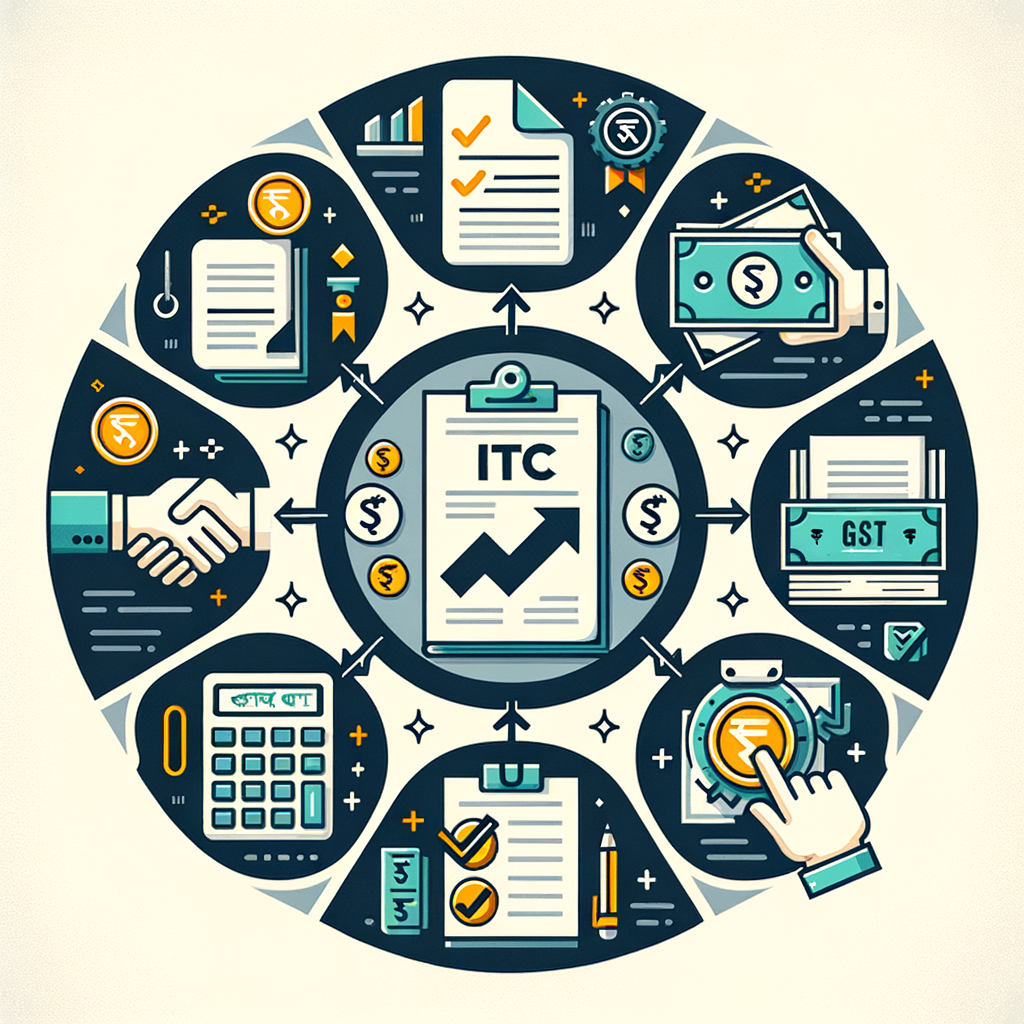
Input Tax Credit, or ITC, is a mechanism designed to prevent the cascading effect of taxes (tax on tax). In simple terms, it allows a business to reduce the GST it has to pay on its sales (output tax) by the amount of GST it has already paid on its purchases (input tax).
A Simple Example:
Imagine your partnership firm manufactures and sells custom furniture.
- Purchases (Inputs): You buy wood, varnish, and tools for ₹50,000. On this purchase, you pay 18% GST, which amounts to ₹9,000. Your total purchase cost is ₹59,000.
- Sales (Outputs): You use these materials to create furniture and sell it to a customer for ₹1,00,000. You charge 18% GST on this sale, which is ₹18,000.
- Claiming ITC: Instead of paying the full ₹18,000 in output tax to the government, you can use the ₹9,000 you already paid on your inputs as a credit.
- Net Tax Payable: Your final tax liability to the government is just the difference: ₹18,000 (Output Tax) – ₹9,000 (Input Tax Credit) = ₹9,000.
This process ensures that tax is levied only on the value added at each stage of the supply chain, making your business more cost-efficient.
The Four Golden Rules: Partnership Firm ITC Claim Rules in India
For a partnership firm to successfully claim ITC, it must strictly adhere to the conditions laid out in Section 16 of the Central Goods and Services Tax (CGST) Act, 2017. Think of these as the four golden rules of ITC. Missing even one can lead to the denial of your claim.
Condition 1: Possession of a Valid Tax Invoice or Debit Note
The primary evidence for any ITC claim is a valid tax document. Your firm must be in possession of a tax invoice, debit note, or another prescribed document issued by your supplier. This invoice isn’t just a piece of paper; it must contain specific details as per GST rules, including:
- The GSTIN of both the supplier and your firm.
- A unique invoice number and date.
- A clear description of the goods or services.
- The Harmonized System of Nomenclature (HSN) code for goods or Service Accounting Code (SAC) for services.
- The total value of the supply and the exact amount of tax charged (CGST, SGST, or IGST).
Without a compliant invoice in the firm’s name, your ITC claim will be rejected during scrutiny.
Condition 2: Actual Receipt of Goods or Services
You cannot claim ITC on an invoice for goods or services that your firm has not actually received. The law requires the physical or deemed receipt of the inputs. This rule prevents fraudulent claims based on fake invoicing. An interesting aspect here is the “Bill to, Ship to” model. For instance, if your firm (the “Bill to” party) instructs a supplier to deliver goods directly to one of your clients (the “Ship to” party), it is considered a deemed receipt by your firm, and you are still eligible to claim ITC on that purchase.
Condition 3: Tax Paid to the Government by the Supplier
This is one of the most critical and often challenging conditions. The ITC you claim is only valid if your supplier has actually paid the tax they collected from your firm to the government by filing their GSTR-3B return. If your supplier defaults on their tax payment, your ITC can be disallowed. To safeguard your business, it is crucial to verify your supplier’s compliance. You can do this by regularly checking your GSTR-2A (a dynamic statement) and GSTR-2B (a static statement for each month) on the official GST Portal. These statements show the invoices your suppliers have uploaded, giving you visibility into your eligible credit.
Condition 4: The Firm Has Filed Its GST Return
Finally, the chain of compliance ends with you. To avail the credit, your partnership firm must have filed its own GST return, primarily the Form GSTR-3B, for the relevant tax period. It is in this return that you declare your summary of purchases, sales, and the ITC you are claiming. This is the final step in the process of how partnership firms can claim ITC India and transfer the credit amount to your Electronic Credit Ledger for use against future tax liabilities. For a complete walkthrough, our article on How to File GST Returns Online: A Step-by-Step Guide of the GST Filing Process & Procedure can be very helpful.
A Practical Guide to Claiming ITC for Partnership Firms in India
Understanding the rules is one thing; implementing them is another. Here is a practical, step-by-step guide for claiming ITC for partnership firms in India.
Step 1: Ensure Your Firm is GST Registered
This is the non-negotiable first step. Input Tax Credit is a benefit available only to a “registered taxable person.” If your partnership firm is not registered under GST and does not have a valid GSTIN, you cannot claim any ITC on your business purchases. The specifics of the GST Registration for Partnership Firm – Threshold, Documents & Process are crucial to get right from the start.
Step 2: Meticulous Record-Keeping
Successful ITC management begins with disciplined bookkeeping. You must maintain an organized system for all your business-related purchase documents, including tax invoices, debit notes, receipts for expenses, and customs documents (like a Bill of Entry in case of imports). Digital records are highly recommended as they are easier to access, reconcile, and present during audits.
Step 3: Reconcile GSTR-2B with Your Purchase Register
Before you file your monthly GSTR-3B, a critical activity is reconciliation. The GST Portal auto-generates a statement called GSTR-2B for your firm, which lists all the invoices uploaded by your suppliers for that month. You must meticulously compare the details in your GSTR-2B with your own purchase register. This reconciliation helps you:
- Identify any missing invoices that your supplier has not uploaded.
- Find any discrepancies in invoice values or tax amounts.
- Ensure you only claim ITC that is reflected in your GSTR-2B, thereby avoiding notices from the tax department.
Step 4: Claim Eligible ITC in Form GSTR-3B
Once your reconciliation is complete, the final step is to claim the eligible ITC in your GSTR-3B return. This is done in Table 4: Eligible ITC. You need to accurately report the total ITC available, including credit on imports, reverse charge supplies, and other domestic purchases. Once you file your return and offset your liabilities, the claimed ITC is formally credited to your firm’s Electronic Credit Ledger on the GST Portal.
Blocked Credits: When Partnership Firm GST ITC Eligibility is Denied
It is a common misconception that you can claim ITC on every single business expense. Section 17(5) of the CGST Act lists specific goods and services on which ITC is “blocked,” meaning you cannot claim credit even if you have a valid invoice and have paid GST. Our detailed guide on Blocked Credits Under Section 17(5): What ITC Cannot Be Claimed? covers these in greater detail. Understanding these restrictions is vital for accurate partnership firm GST ITC eligibility India.
Common examples of blocked credits relevant to most small businesses include:
- Motor Vehicles: GST paid on the purchase of motor vehicles with a seating capacity of 13 persons or less (including the driver) is generally blocked, unless your firm is in the business of supplying such vehicles, transporting passengers, or imparting driving training.
- Food and Beverages: Expenses on food, beverages, outdoor catering, and beauty treatments are not eligible for ITC.
- Memberships: Fees for club memberships, health clubs, and fitness centres are blocked.
- Employee-Related Expenses: ITC on life insurance or health insurance for employees is not available unless it is a legal obligation for the employer.
- Construction Services: GST paid on works contract services for the construction of an immovable property (like an office building) is blocked, except for plant and machinery.
- Disposed Goods: ITC cannot be claimed on goods that are lost, stolen, destroyed, written off, or given away as free samples or gifts.
Conclusion: Empower Your Partnership with Smart ITC Management
To summarize, the ability for a partnership firm claim ITC is not just a provision but a powerful tool for financial efficiency. By understanding and following the rules, you can ensure your business reaps the full benefits of the GST regime. The core of successful ITC management rests on the four golden rules: possessing a valid tax invoice, receiving the goods or services, ensuring your supplier has paid the tax, and filing your own GST returns on time. A proactive approach to record-keeping and regular reconciliation with GSTR-2B is non-negotiable for staying compliant and maximizing your credit.
Navigating the partnership firm ITC claim rules India can still feel complex, with nuances around blocked credits and vendor compliance. Don’t let compliance worries slow down your business growth. TaxRobo’s expert GST services ensure you claim every eligible credit correctly and on time, keeping your business audit-ready. Contact us today for a free consultation!
Frequently Asked Questions (FAQs)
1. Can a partner claim ITC on expenses made in their personal capacity for the firm?
Answer: No. This is a very important distinction. ITC can only be claimed by the registered entity, which is the partnership firm. For a claim to be valid, the purchase invoice must be issued in the firm’s name and bear its GSTIN. Expenses incurred by a partner personally, even if for business purposes, are not eligible for ITC unless they are properly reimbursed by the firm with a corresponding invoice addressed to the firm.
2. What happens if our supplier doesn’t upload an invoice or files their return late?
Answer: If your supplier fails to upload an invoice or files their GSTR-1 return late, that invoice will not appear in your GSTR-2B for that specific tax period. According to current GST rules, you can only claim ITC that is reflected in your GSTR-2B. This makes diligent vendor management and follow-up a crucial part of your ITC strategy. It’s wise to work with compliant suppliers to avoid losing legitimate credit.
3. Is there a time limit for claiming ITC?
Answer: Yes, there is a strict time limit. For any invoice or debit note pertaining to a financial year, the ITC must be claimed by the earlier of two dates:
- The due date of filing the GSTR-3B for the month of November of the following financial year.
- The date of filing the relevant annual return (GSTR-9) for that financial year.
If you miss this deadline, the credit for that invoice is permanently lost.
4. Does an unregistered partnership firm have to worry about ITC?
Answer: An unregistered partnership firm operates outside the GST credit chain. It cannot collect GST from its customers on its sales, and consequently, it cannot claim any ITC on the GST it pays for its purchases. All the GST paid on inputs becomes a cost for the business. The benefits of Input Tax Credit are exclusively available to businesses that are registered under the GST law.