
10 D2C Product Ideas for Indian Gen Z in 2026 | TaxRobo
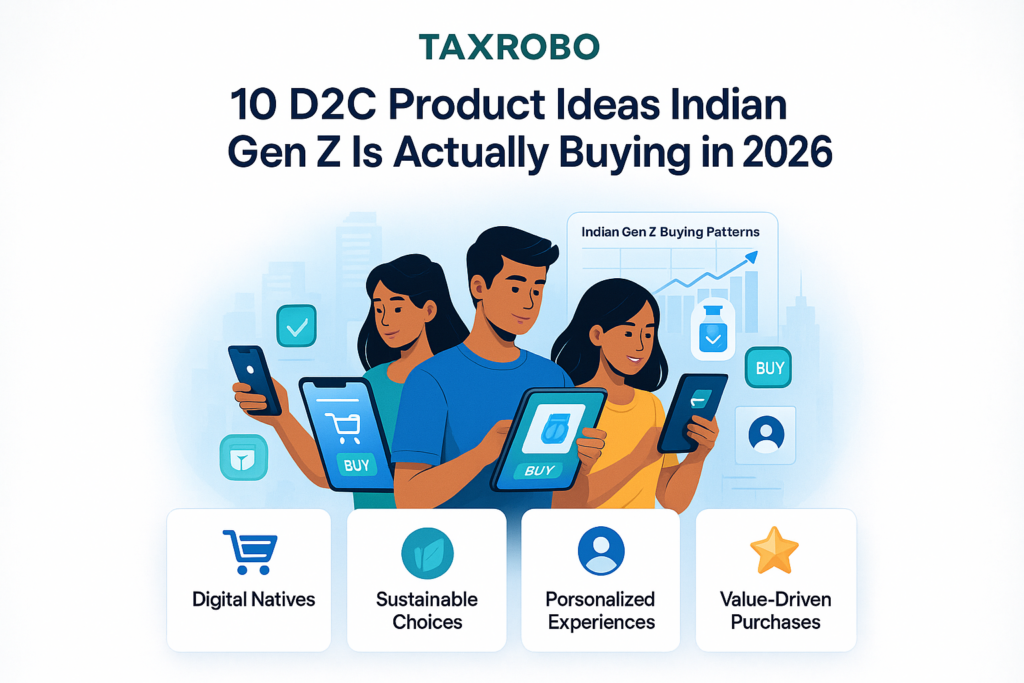
India’s Gen Z, a dynamic cohort of over 375 million individuals, is rapidly becoming the most influential consumer group in the country. With their increasing purchasing power and digital-first mindset, they are reshaping the retail landscape. For aspiring entrepreneurs, this presents a golden opportunity, and the Direct-to-Consumer (D2C) model is the perfect vehicle to connect with this audience. This guide unveils 10 forward-thinking D2C product ideas India‘s digitally-native generation is set to embrace in 2026, helping you tap into the significant buying trends for Gen Z India.
Why Indian Gen Z is the Future of the D2C Market in India
Before diving into product ideas, it’s crucial to understand the psyche of the Gen Z consumer. Unlike previous generations, their purchasing decisions are driven by a unique set of values. The consumer behavior of Gen Z India is deeply rooted in authenticity, sustainability, and personalization. They don’t just buy products; they buy into brands that reflect their identity and beliefs. Their lives are seamlessly integrated with social media platforms like Instagram and YouTube, which serve as primary channels for brand discovery, product research, and community building. This digital fluency makes them the ideal audience for D2C brands that can communicate directly and transparently. As the D2C market India 2026 is projected to soar, understanding these Indian Gen Z shopping preferences is not just an advantage—it’s a necessity for survival and growth.
Top 10 D2C Product Ideas Indian Gen Z Will Love in 2026
To capture the attention and loyalty of this discerning demographic, your product must be more than just functional; it must be meaningful. Here are the top D2C product areas poised for success.
1. Sustainable & Circular Fashion
The backlash against fast fashion is growing stronger. Gen Z is actively seeking alternatives that are kind to the planet. This trend opens up a massive opportunity for D2C brands focused on circularity and sustainability. Think beyond just organic cotton. Consider launching a line of apparel made from innovative recycled materials like PET bottles, or an upcycled collection that gives pre-loved clothing a new, stylish life. A D2C brand in this space can build immense trust by being transparent about its supply chain, showcasing ethical manufacturing processes, and offering take-back programs for old garments. This approach directly appeals to the core values of the conscious consumer, making it one of the most promising Gen Z product trends in India.
2. Hyper-Personalized Wellness & Nutrition
The one-size-fits-all approach to health and wellness is obsolete for Gen Z. They crave solutions tailored to their unique bodies, lifestyles, and goals. This is where D2C brands can excel by leveraging technology to offer hyper-personalization. Imagine a brand that provides customized vitamin and supplement packs based on an online health quiz. Other powerful future product ideas India could include protein blends formulated for specific fitness objectives (e.g., endurance running vs. weightlifting) or a subscription-based skincare service that curates products based on a user’s uploaded selfie and skin analysis. This level of customization shows that a brand truly understands and caters to the individual, fostering deep customer loyalty.
3. Niche Hobby & DIY Kits
In a hyper-digital world, the appeal of tangible, offline experiences is stronger than ever. Gen Z is actively seeking ways to disconnect, learn new skills, and create something with their hands. D2C brands can cater to this by offering curated hobby and Do-It-Yourself (DIY) kits. The possibilities are endless: terrarium-making kits for budding plant parents, artisanal coffee brewing sets for the home barista, modern calligraphy kits for creative expression, or even a complete “Podcasting Starter Pack” with a quality microphone and acoustic foam. These products offer not just an item, but an experience, making them highly shareable on social media and perfect for building a community around your brand.
4. Functional & Healthy “Guilt-Free” Snacks
The snacking landscape is evolving. For Gen Z, a snack isn’t just a hunger-buster; it’s an opportunity for a nutritional boost. They are looking for “guilt-free” options that are both delicious and functional. The best D2C products for Indian Gen Z in this category will go beyond basic baked chips. Think plant-based protein bars with clean ingredients, sparkling beverages infused with adaptogens like Ashwagandha for stress relief, or gourmet flavoured Makhana (fox nuts) using unique Indian spices. The key is to focus on transparent ingredient lists, functional benefits (e.g., energy, focus, relaxation), and bold, exciting flavours that stand out from the mass-market competition.
5. Eco-Friendly & Smart Home Gadgets
Gen Z’s love for technology is matched only by their concern for the environment. D2C product ideas at the intersection of these two passions are set to succeed. This category isn’t about complex home automation systems but rather about simple, smart, and sustainable gadgets for personal spaces. Consider products like smart water bottles that track hydration and glow to remind you to drink, portable solar-powered chargers for their devices, minimalist smart lighting that saves energy, or desk accessories and speakers made from recycled plastics and sustainable wood. The winning formula is a combination of sleek design, practical utility, and a clear commitment to environmental responsibility.
6. Digital & Mental Wellness Subscriptions
Mental well-being is a top priority for Gen Z, who are open about discussing and managing their mental health. D2C brands can offer immense value by providing tools and products that support this journey. A subscription box model works exceptionally well here. Imagine a monthly box curated around a theme like “Mindfulness” or “Digital Detox,” containing items like guided journals, aromatherapy essential oils, stress-relief teas, and affirmation cards. Digital products are also a huge opportunity, such as subscriptions to guided meditation apps, access to online therapy platforms, or digital planners specifically designed to help manage stress and improve work-life balance.
7. Artisanal Non-Alcoholic Beverages
The “sober curious” movement is gaining significant traction among young adults. Many in Gen Z are choosing to drink less alcohol or abstain entirely, but they still want sophisticated, flavourful beverage options for social occasions. This opens a fantastic market for artisanal non-alcoholic drinks. These are not your average sugary sodas. We’re talking about craft-brewed kombucha with exotic fruit infusions, premium botanical-infused iced teas, convincing non-alcoholic alternatives to gin and whiskey for mocktails, and complex sparkling juices. Strong branding, elegant packaging, and a focus on unique flavour profiles are key to making these D2C product ideas India‘s Gen Z will proudly sip and share.
8. Tech-Infused Athleisure Wear
Athleisure—the trend of wearing athletic-style clothing in everyday settings—is here to stay. For Gen Z, it represents a lifestyle of comfort, health, and activity. The next evolution of this trend is tech-infused athleisure. D2C brands can innovate by creating apparel that does more. This could include workout tops with built-in UV protection for outdoor activities, leggings made from anti-odour or sweat-wicking smart fabrics, or jackets with strategically integrated, waterproof pockets for smartphones and earbuds. The marketing should focus not just on the style, but on how the technology enhances the wearer’s active and connected lifestyle.
9. Conscious Pet Care Products
For many Gen Z individuals, pets are not just animals; they are family members. These “pet parents” are willing to spend a premium to ensure their furry companions receive the best care possible, with a strong emphasis on health and sustainability. This creates a thriving market for conscious pet care products. Successful D2C ideas include organic and grain-free pet food with transparently sourced ingredients, biodegradable pet waste bags, and durable toys made from natural, non-toxic materials like hemp or recycled rubber. A brand that communicates a deep love and respect for animals will resonate strongly with this audience.
10. Gamified E-Learning & Skill-Building Tools
Gen Z has a strong desire for continuous learning and self-improvement, but they expect the process to be engaging and interactive. Traditional, passive learning methods don’t appeal to them. This is where gamified e-learning comes in as one of the most potent future product ideas India will see. D2C brands can create digital products and platforms that make learning fun. Think of a language-learning app that uses leaderboards and daily challenges to motivate users, a coding platform that teaches programming through interactive game-like modules, or a financial literacy course that presents complex concepts like investing and budgeting in a simplified, gamified format.
Turning Your D2C Idea into a Legal Business
A brilliant idea is the first step. The next is building a solid legal foundation for your D2C business. Neglecting compliance can lead to serious legal and financial trouble down the road. Here’s how to start right.
Step 1: Choose the Right Business Structure
The legal structure you choose for your business will impact everything from your liability and taxes to your ability to raise funds. It’s a critical first decision. For a detailed breakdown, see our guide on Choosing the Right Legal Structure for Your Business.
| Feature | Sole Proprietorship | One Person Company (OPC) | Limited Liability Partnership (LLP) | Private Limited Company (Pvt. Ltd.) |
|---|---|---|---|---|
| Owner(s) | 1 | 1 | Minimum 2 | Minimum 2 |
| Liability | Unlimited | Limited | Limited | Limited |
| Compliance | Very Low | Moderate | Moderate | High |
| Best For | Testing an idea, small scale | Solo founders, limited risk | Partners, service businesses | Startups seeking funding & scaling |
| Funding Potential | Very Low | Low | Moderate | High |
Actionable Tip: For most scalable D2C brands that plan to seek investment, a Private Limited Company is the most suitable structure. It offers limited liability protection and is preferred by venture capitalists.
Step 2: Secure Your GST Registration
For any e-commerce or D2C business, Goods and Services Tax (GST) is non-negotiable. You can learn more about GST for E-commerce Businesses: Key Considerations. If you are selling goods across state lines (which is the nature of online business), you must have a GST registration from day one, regardless of your turnover.
- CGST & SGST: Central GST and State GST are levied on sales made within the same state.
- IGST: Integrated GST is levied on sales made between different states (e.g., from a warehouse in Maharashtra to a customer in Karnataka).
Securing your GSTIN (GST Identification Number) is essential for issuing proper invoices, claiming input tax credits, and operating legally. You can learn more and register on the official GST Portal.
Step 3: Protect Your Brand with Trademark Registration
In the crowded D2C marketplace, your brand is your most valuable asset. Your name, logo, and tagline are what differentiate you from the competition. Secure Your Brand’s Future Trademark Your Brand – Registration, Benefits & The Cost of Neglect. Trademark registration gives you the exclusive legal right to use your brand identity in connection with your products. It prevents competitors from using a confusingly similar name or logo, protecting your reputation and customer base.
Actionable Tip: Filing for a trademark should be one of your first steps after deciding on a name. It’s a proactive measure to prevent costly legal disputes and rebranding efforts later on. A strong, protected brand is the foundation of a successful D2C business.
Conclusion
The Indian Gen Z market represents an ocean of opportunity for forward-thinking entrepreneurs. The key to success lies in understanding and aligning with their core values. The most successful D2C product ideas in India will be those built on pillars of authenticity, sustainability, personalization, and community. From conscious pet care to hyper-personalized wellness, the potential to create a brand that resonates is immense. However, a great idea is only half the battle. Building a legally compliant and structurally sound business is what will ensure long-term growth and success.
Ready to turn your vision into a reality? From company registration and GST filing to trademark protection, TaxRobo is your trusted partner. Contact our experts today to start your D2C journey on the right foot.
Frequently Asked Questions (FAQs)
1. What is the expected growth of the D2C market in India by 2026?
The D2C market in India is on an explosive growth trajectory. Market research reports from various firms project the market to exceed $100 billion by 2025-2026. This rapid expansion of the D2C market India 2026 is fueled by increasing internet penetration, digital payment adoption, and, most importantly, the rising disposable income and unique shopping habits of the Gen Z population.
2. What are the most important factors influencing Indian Gen Z shopping preferences?
The most critical factors shaping Indian Gen Z shopping preferences are:
- Brand Authenticity: They prefer brands that are transparent, have a clear mission, and engage in genuine conversations.
- Sustainability & Ethics: A brand’s commitment to environmental and social responsibility is a major decision-driver.
- Personalization: They expect products and marketing messages tailored to their individual needs and tastes.
- Social Proof: Reviews from real users and recommendations from trusted influencers on social media heavily influence their buying decisions.
3. Is GST registration mandatory for a new online D2C business in India?
Yes, absolutely. According to GST law, any business engaged in the interstate supply of goods (selling from one state to another) is required to register for GST, irrespective of its annual turnover. Since virtually all online D2C brands sell to customers across India, GST registration is mandatory from the very first day of operations. It is a critical compliance requirement for legally running an online store.