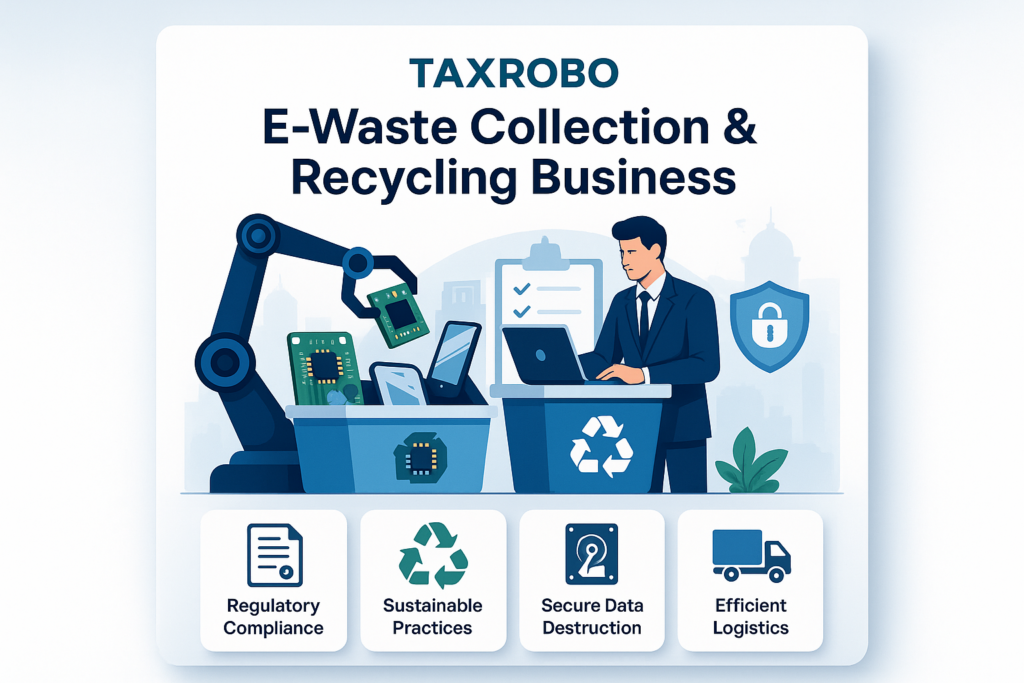

E-Waste Collection & Recycling Business: Your 2024 Guide to Starting Up in India
India is currently the third-largest generator of electronic waste in the world, producing millions of tonnes annually. This staggering volume of discarded gadgets presents a significant environmental challenge, but it also unveils a massive opportunity for savvy entrepreneurs. Starting an e-waste collection recycling business is not just about profit; it’s about building a sustainable enterprise that addresses a critical national issue. E-waste, which includes everything from old mobile phones and laptops to refrigerators and televisions, contains hazardous materials like lead and mercury that can poison our soil and water if not disposed of correctly. This guide provides a comprehensive roadmap for launching your own venture in this growing sector, covering everything from legal compliance to business models and taxation. By establishing effective e-waste management solutions in India, you can turn electronic trash into treasure while contributing to a cleaner, greener future.
Understanding the E-Waste Business Landscape in India
Before diving into the operational aspects of setting up your business, it is essential to grasp the fundamentals of the e-waste landscape in India. This involves understanding what legally constitutes e-waste and recognizing the immense market potential that is driven by both economic and environmental factors. The government’s push towards a circular economy, coupled with increasing consumer awareness, has created a fertile ground for new businesses to thrive. Success in this sector depends on a solid foundation of knowledge about the materials you’ll be handling and the market forces at play.
What Qualifies as E-Waste?
Under the E-Waste (Management) Rules, electronic waste is broadly categorized into several streams, ensuring that a wide range of products is covered. The primary categories include Information technology and telecommunication equipment, and consumer electricals and electronics. This isn’t just about high-tech gadgets; it encompasses a vast array of everyday items that have reached the end of their useful life. Common examples of e-waste that you will encounter include:
- IT Equipment: Laptops, desktop computers, servers, printers, keyboards, and computer mice.
- Telecommunication Devices: Mobile phones, smartphones, chargers, landline phones, and fax machines.
- Consumer Electronics: Televisions (CRT, LCD, LED), refrigerators, washing machines, air conditioners, and microwaves.
- Small Electronics: Digital cameras, headphones, power banks, and electronic toys.
The Market Opportunity: Profit Meets Purpose
The potential in an e-waste recycling business India is twofold, offering a unique blend of financial returns and positive social impact. Economically, e-waste is a rich source of valuable materials. Discarded circuit boards and components contain precious metals like gold, silver, copper, and palladium, which can be extracted and sold, creating a lucrative revenue stream. The demand for these recovered materials is consistently high, reducing the reliance on virgin mining. Beyond the profits, the business contributes significantly to environmental sustainability by preventing toxic substances from polluting landfills and promoting a circular economy. Furthermore, this sector is a significant creator of green jobs, providing employment opportunities in collection, segregation, dismantling, and recycling, thereby supporting local economies.
Navigating the E-Waste Recycling Regulations in India
The e-waste sector in India is not a free-for-all; it is a highly regulated industry governed by stringent rules to ensure environmental safety and accountability. Compliance is not merely a suggestion—it is a mandatory prerequisite for legally operating and succeeding in the e-waste collection recycling business. These regulations are designed to streamline the process, from collection to final disposal, and to hold every stakeholder accountable. Aspiring entrepreneurs must familiarize themselves with the e-waste recycling regulations India to avoid heavy penalties and build a reputable, long-term venture. The Central Pollution Control Board (CPCB) and State Pollution Control Boards (SPCBs) are the key authorities that oversee and enforce these rules.
The E-Waste (Management) Rules, 2022: Key Highlights
The cornerstone of e-waste governance in India is the E-Waste (Management) Rules, 2022. These rules have introduced several critical concepts that shape the industry’s structure and responsibilities. The most significant of these is Extended Producer Responsibility (EPR), a policy principle that makes producers (manufacturers, importers) financially and physically responsible for the treatment or disposal of their products after consumers discard them. As a recycler or collector, you will often work with producers to help them fulfill their EPR targets. The rules clearly define the roles and responsibilities for different entities:
- Producers: Responsible for financing and organizing a system for e-waste management.
- Recyclers: Responsible for environmentally sound processing of e-waste.
- Dismantlers: Handle the initial segregation and dismantling of components before they are sent for final recycling.
- Refurbishers: Repair and extend the life of used electronic equipment.
For the most current and detailed information, it is always advisable to consult the official CPCB portal for e-waste guidelines.
Essential Licenses and Authorizations
To operate legally, you must secure a series of licenses and authorizations from environmental authorities. These permits confirm that your facility and operations meet the prescribed environmental and safety standards. The process can be rigorous, so it’s crucial to start early and ensure all your documentation is in order. The primary requirements include:
- Authorization from the State Pollution Control Board (SPCB): This is the main license required for handling e-waste, whether you are a collector, dismantler, or recycler. You must apply to the SPCB of the state where your facility is located.
- Consent to Establish (CTE): This permit is required before you begin constructing your facility or installing any machinery. It certifies that your proposed plant meets all pollution control norms.
- Consent to Operate (CTO): Once your facility is set up, you must obtain a CTO before commencing any business operations. This confirms that the facility is compliant and ready to operate without causing environmental harm.
It’s important to note that specific documentation and procedural requirements can vary slightly from one state to another, so always check with your local SPCB.
A Step-by-Step Guide to Launching Your E-Waste Venture
Starting a business in the e-waste sector requires careful planning and strategic execution. From selecting the right business model that fits your budget to ensuring your operations are legally and logistically sound, each step is critical to your success.
Step 1: Choose Your Business Model
Your entry into the e-waste market will largely be defined by your initial investment capacity and business goals. There are three primary models to consider:
- Collection-Centric Model: This is the most accessible entry point with the lowest initial investment. In this model, your primary role is to act as an aggregator. You can set up e-waste collection points in India at strategic locations or offer a mobile e-waste collection service India where you pick up waste from households and businesses. The collected e-waste is then sold to larger, authorized dismantlers or recyclers for a profit.
- Dismantling & Segregation Model: This is a step up from simple collection. It involves setting up a facility where collected e-waste is manually or semi-automatically dismantled. Components like plastic casings, circuit boards, wires, and metals are segregated. These segregated materials fetch a higher price from specialized recyclers compared to mixed e-waste.
- Integrated Recycling Model: This is the most capital-intensive model, suitable for well-funded e-waste recycling startups India. It involves investing in advanced machinery and technology to perform end-to-end recycling, including the extraction of precious metals and the processing of hazardous materials. While it requires significant investment, it also offers the highest profit margins.
Step 2: Register Your Business Entity
A formal legal structure is non-negotiable for credibility, legal protection, and scalability. The choice of entity impacts your liability, compliance burden, and ability to raise funds.
| Feature | Sole Proprietorship | Limited Liability Partnership (LLP) | Private Limited Company |
|---|---|---|---|
| Owner Liability | Unlimited | Limited to capital contribution | Limited to share value |
| Compliance | Minimal | Moderate (Annual Filings) | High (Board Meetings, Audits) |
| Fundraising | Difficult | Moderate | Easiest (Can issue shares) |
| Best For | Single founder, collection-only | Partners, medium-scale operations | Startups seeking investment, large scale |
Choosing the Right Legal Structure for Your Business is crucial. TaxRobo’s experts can help you register your company seamlessly, ensuring you start on the right legal footing.
Step 3: Secure Your Location and Infrastructure
The location of your facility is a critical decision. It must be situated in an area zoned for industrial activities, as per local municipal guidelines, to avoid future legal complications. Key factors to consider are proximity to urban centers (your primary source of e-waste) and good transportation links. The infrastructure you need will depend on your business model. For a collection center, you will need secure storage bins, a weighing scale, basic safety gear (gloves, masks), and a small office space. For a dismantling unit, you’ll require a larger covered area, workbenches, and specialized tools. It is vital to design your facility layout following the best e-waste recycling practices India to ensure operational efficiency and worker safety.
Step 4: Plan Your Logistics and Collection Strategy
A robust collection network is the lifeblood of your e-waste business. Your strategy should be tailored to your target audience.
- Business-to-Consumer (B2C): Focus on tapping into residential sources. You can organize collection drives in housing societies, partner with Resident Welfare Associations (RWAs), or place drop-off bins in community centers and electronic markets. An app-based or on-call pickup service can also be highly effective.
- Business-to-Business (B2B): This involves providing professional e-waste disposal services in India to institutional clients. Target large corporations, IT parks, government offices, banks, and universities, as they are bulk generators of e-waste and are legally required to dispose of it responsibly through authorized channels. A reliable transportation system with vehicles appropriate for carrying electronic goods safely is essential for both models.
Managing Your Finances: GST and Taxation Essentials
Proper financial management is key to the profitability and sustainability of your e-waste business. Understanding the Goods and Services Tax (GST) framework is particularly important, as it impacts your pricing, cash flow, and overall compliance.
GST Registration and Compliance
Any business whose aggregate turnover exceeds the prescribed threshold (₹40 lakhs for goods in most states) must mandatorily register for GST. For startups, Launching Your Startup Right – Mastering GST Registration in India provides a detailed roadmap. The registration process is online and requires documents like your PAN card, Aadhaar card, proof of business address, and bank account details. Once registered, you are required to file regular GST returns (monthly or quarterly) and maintain proper records of all your transactions. GST can be complex. Let TaxRobo handle your GST registration and monthly filings so you can focus on growing your business.
Understanding HSN Codes and GST Rates for E-Waste
Under the GST regime, all goods are classified using the Harmonized System of Nomenclature (HSN) code. E-waste and its various components have specific HSN codes, and the GST rate applicable depends on this code. For instance, electrical and electronic waste and scrap typically fall under HSN Chapter 85, which attracts a GST rate of 18%. It is crucial to use the correct HSN code on your invoices to charge the right amount of tax and avoid future disputes with tax authorities. Consulting a tax professional is highly recommended to ensure accurate classification for the different types of materials you handle.
Leveraging Input Tax Credit (ITC)
One of the biggest advantages of the GST system is the concept of Input Tax Credit (ITC). To understand its full scope, refer to our GST Input Tax Credit (ITC) Full Guide 2025 – Eligibility, Limits & Common Issues. As a registered business, you can claim ITC on the GST you pay for your business expenses (inputs). This means the tax paid on the purchase of machinery, rent for your facility, transportation services, professional fees, and other operational costs can be deducted from your final GST liability on your sales. For example, if you paid ₹18,000 in GST on your expenses and collected ₹50,000 in GST from your sales, you only need to pay the government the difference (₹32,000). Properly managing ITC is essential for optimizing your cash flow and reducing your tax burden.
Marketing Your E-Waste Business
In a growing market, effective marketing is essential to stand out and build a steady pipeline of e-waste. Your marketing efforts should highlight your commitment to environmental responsibility and the convenience of your services.
Building a Brand Identity
Your brand should communicate trust, professionalism, and eco-consciousness. Start with a simple, memorable business name and a professional logo that reflects the “green” nature of your work. Develop a clear tagline that communicates your mission, such as “Recycling Today for a Better Tomorrow” or “Your Responsible E-Waste Partner.” This identity should be consistent across all your marketing materials, from your website to your collection vehicles.
Digital Marketing for Local Reach
An online presence is crucial for reaching both individual and corporate clients. Create a simple, user-friendly website that clearly explains the services you offer, the types of e-waste you accept, and how customers can contact you. The most powerful tool for local marketing is Google My Business (GMB). Listing your business on GMB will help you appear in local search results when people search for terms like electronic waste recycling companies India in your area. Use social media platforms like Facebook and Instagram to share educational content about the importance of e-waste recycling and to announce upcoming collection drives in different localities.
Offline Networking and Partnerships
Don’t underestimate the power of traditional networking. Build relationships with businesses that are natural sources of e-waste. Partner with local electronic retail stores and mobile repair shops to place collection bins or posters. Reach out to corporate H.R. or facility managers to pitch your B2B e-waste disposal services. Participating in local trade fairs, environmental events, and community gatherings is an excellent way to raise awareness about your brand and educate the public on the importance of responsible e-waste disposal.
Conclusion
The challenge of mounting e-waste in India is simultaneously one of the most promising business opportunities of our time. Launching an e-waste collection recycling business allows you to build a profitable enterprise while playing a crucial role in protecting our environment. The journey involves several key steps: thoroughly understanding the market, meticulously complying with the e-waste recycling regulations India, choosing a business model that aligns with your resources, and establishing sound financial and marketing strategies. While the path has its complexities, particularly in navigating the legal landscape, the potential rewards—both financial and environmental—are immense. This venture is not just about managing waste; it’s about creating value, conserving resources, and building a sustainable future for India.
Ready to turn trash into treasure? From company incorporation to GST compliance, TaxRobo provides end-to-end solutions to help you launch and grow your e-waste business. Get in touch with our experts today!
Frequently Asked Questions (FAQs)
Q1. How much capital is needed to start an e-waste collection business in India?
Answer: A basic collection-only model can be started with a relatively low investment (₹2 – ₹5 lakhs), which would cover the costs of licenses, a small transport vehicle, storage bins, and initial marketing. However, a full-fledged recycling plant involving dismantling and material extraction requires significant capital (upwards of ₹50 lakhs) for purchasing land, setting up the facility, and acquiring specialized machinery.
Q2. Do I need a special pollution control license just to collect e-waste?
Answer: Yes, absolutely. Even if your business model is limited to only collecting and storing e-waste without any processing, you are required to obtain an “Authorization” from your State Pollution Control Board (SPCB). You will be registered as an “E-waste Collection Centre” under the E-Waste (Management) Rules, and you must comply with the prescribed guidelines for safe storage and handling.
Q3. Who are the main customers for a B2B e-waste disposal service?
Answer: The primary customers for B2B services are bulk waste generators who are obligated under the EPR framework to ensure their e-waste is managed responsibly. This includes large corporations (especially IT and tech companies), government departments, banks and financial institutions, hospitals (for their electronic medical equipment), and educational institutions like schools and universities.
Q4. What are the biggest challenges for e-waste recycling startups in India?
Answer: The key challenges include navigating the complex and often changing regulatory landscape, which requires constant vigilance. There is also stiff competition from the large, unorganized informal sector, which often operates without adhering to safety or environmental norms. Other significant hurdles are the high initial capital investment required for setting up a proper recycling facility and the logistical complexity of creating efficient and widespread collection networks to ensure a steady supply of e-waste.