
Companies Compliance Facilitation Scheme 2026 (CCFS-2026) – Applicability, Benefits, How to File & Practical FAQs
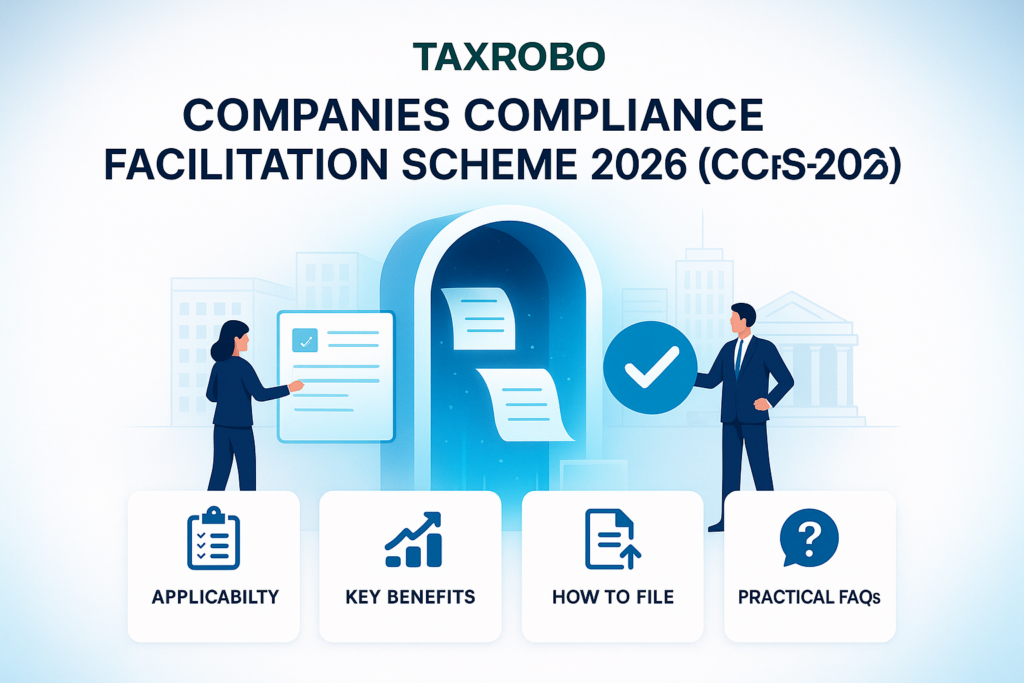
Running a business in India comes with its share of responsibilities, and corporate compliance is a major one. For many small business owners, keeping up with the annual filings mandated by the Ministry of Corporate Affairs (MCA) can be a daunting and expensive task, especially when delays occur. The additional fees for late filings can quickly spiral into lakhs, placing a significant financial burden on the company. To address this widespread issue, the MCA periodically introduces amnesty schemes, and the upcoming Companies Compliance Facilitation Scheme 2026 is poised to be a game-changer for countless businesses. This scheme offers a one-time, golden opportunity for defaulting companies to wipe their slate clean by filing pending documents without hefty penalties. This comprehensive guide will walk you through the scheme’s applicability, the significant advantages of the Companies Compliance Facilitation Scheme 2026 in India, a step-by-step filing process, and answers to your most pressing questions.
What is the Companies Compliance Facilitation Scheme 2026 (CCFS-2026)?
The Companies Compliance Facilitation Scheme 2026, or CCFS-2026, is a special window provided by the Ministry of Corporate Affairs to give non-compliant companies a chance to regularize their filings. Think of it as a financial and legal pardon for past delays. The core purpose of the scheme is to encourage companies that have fallen behind on their statutory submissions to come forward and update their records in the MCA registry. By doing so, they can avoid the crippling financial penalties and potential legal action that typically accompany such defaults. This initiative is particularly beneficial for small and medium-sized enterprises (SMEs) that may lack dedicated compliance teams and have inadvertently missed filing deadlines over the years. The scheme simplifies the path back to good standing, allowing businesses to refocus on growth rather than being weighed down by past compliance issues.
A Fresh Start for Indian Companies
At its heart, CCFS-2026 is a temporary amnesty scheme designed to provide relief to “defaulting companies”—those that have failed to file one or more e-forms, documents, or returns with the Registrar of Companies (ROC). The primary goal is to permit these companies to submit their overdue documents without incurring the massive additional fees that are normally calculated on a per-day basis for the entire period of the delay. This waiver of penalties is the scheme’s most significant financial incentive. Furthermore, the scheme provides a crucial layer of legal protection by granting immunity from prosecution specifically for the act of late filing. This comprehensive CCFS 2026 overview and benefits in India highlights its dual role: it not only saves businesses a substantial amount of money but also shields them from legal repercussions, offering a true fresh start on their compliance journey.
Key Objectives of the Scheme
The Ministry of Corporate Affairs has introduced CCFS-2026 with several strategic objectives in mind, all aimed at fostering a healthier and more transparent corporate ecosystem. These goals reflect a pragmatic approach to regulation, acknowledging the challenges faced by businesses while reinforcing the importance of compliance.
- To provide a clean slate for defaulting companies: The scheme’s foremost objective is to give companies a one-time opportunity to clear their backlog of pending filings and start afresh with a compliant status.
- To reduce the financial burden of penalties on SMEs: High additional fees for delays can be unsustainable for smaller companies. The scheme directly addresses this by waiving these fees, promoting business continuity and growth.
- To update the public records in the MCA registry: A large number of non-compliant companies leads to an outdated and inaccurate public registry. This scheme encourages mass filings, ensuring the MCA’s data is current, which benefits stakeholders, lenders, and investors.
- To encourage a culture of compliance: By offering a non-punitive path to regularization, the government aims to bring more companies into the compliant fold, hoping they will maintain good standing in the future.
CCFS 2026 Applicability for Companies in India: Who is Eligible?
Understanding eligibility is the first critical step before you can take advantage of the scheme. The CCFS 2026 applicability for companies in India is broad, designed to cover the majority of incorporated entities that have defaulted on their filing obligations. However, there are specific criteria for both the types of companies that can apply and the forms that are covered under this amnesty. It is equally important to know which companies are explicitly excluded from the scheme to avoid wasting time and resources. The scheme primarily targets active companies that have simply fallen behind on their paperwork, offering them a direct route to correct their compliance status without facing the full force of the usual penalties. This clear definition helps streamline the process for both the companies and the regulatory authorities.
Eligible Companies and Forms
The scheme is generally open to most types of companies registered under the Companies Act. This inclusive approach ensures that a wide range of businesses can benefit. The typical entities that can avail the scheme include:
- Private Limited Companies
- One Person Companies (OPC)
- Public Limited Companies
- Section 8 Companies (non-profit organizations)
- Nidhi Companies
The scheme covers a wide array of annual and event-based e-forms that are frequently delayed. While the official MCA notification will provide the definitive list, based on past schemes, the following are likely to be included:
- Form AOC-4: For filing financial statements and other related documents.
- Form MGT-7: The Annual Return, a comprehensive summary of a company’s shareholding, directors, and financial health.
- Form ADT-1: Intimation to the ROC about the appointment of an auditor.
- Form PAS-3: The Return of Allotment of Shares, filed after a company issues new shares.
- Form MGT-14: For filing special and ordinary resolutions with the ROC.
- Forms related to charge creation and modification (CHG-1, CHG-4).
- Forms for director-related changes (DIR-12).
Disclaimer: The final and exhaustive list of forms covered under CCFS-2026 will be specified in the official circular issued by the Ministry of Corporate Affairs. Companies should refer to that notification for definitive guidance.
Who is NOT Eligible for CCFS-2026?
While the scheme is generous, it is not a free-for-all. The MCA has carved out specific exceptions to ensure that only deserving companies get the benefit, while those already undergoing severe regulatory action are kept out. It’s crucial to check this list before proceeding.
Do Not Apply If:
- Final notice for striking off has been issued: If the Registrar of Companies has already sent a final notice for striking off the company’s name from the register, you cannot apply.
- The company has already applied for strike-off: Companies that have voluntarily filed an application for striking off their name (Form STK-2) are ineligible.
- The company is under liquidation: Companies that are in the process of being wound up, either voluntarily or by a tribunal, cannot avail this scheme.
- The company has been amalgamated: Companies that have merged with another entity under a scheme of amalgamation are not eligible.
- “Vanishing companies”: This term refers to companies that have raised funds from the public and then disappeared without a trace. Such entities are blacklisted and cannot use the scheme.
Unlocking the Benefits of the Companies Compliance Facilitation Scheme 2026 in India
The advantages of availing the CCFS-2026 are substantial and go far beyond simple cost savings. For a business owner, this scheme represents a strategic opportunity to reset the company’s legal and financial standing, opening doors that may have been closed due to non-compliance. The Companies Compliance Facilitation Scheme benefits in India are threefold: direct financial relief through the waiver of heavy penalties, legal protection from prosecution, and the restoration of the company’s reputation and operational capabilities. A proper benefit analysis of CCFS 2026 India reveals that the long-term value of becoming compliant far outweighs the effort of participating in the scheme. It’s a chance to clear historical baggage and position the company for a more secure and prosperous future.
Complete Waiver of Additional Fees
This is undoubtedly the most compelling benefit of the scheme. Under normal circumstances, the Companies Act, 2013, imposes a hefty additional fee for every day of delay in filing statutory documents. This fee is currently ₹100 per day, per form. It doesn’t take long for this penalty to accumulate into a massive sum. For instance, if a company has failed to file its Annual Return (MGT-7) and Financial Statements (AOC-4) for just two years, the delay is over 730 days for each form. The additional fees alone would amount to over ₹1,46,000, in addition to the normal filing fees.
Let’s consider a practical example:
| Form Type | Normal Delay Period | Additional Fee (per day) | Total Additional Fee | Fee Under CCFS-2026 | Total Savings |
|---|---|---|---|---|---|
| AOC-4 | 730 Days | ₹100 | ₹73,000 | ₹0 | ₹73,000 |
| MGT-7 | 730 Days | ₹100 | ₹73,000 | ₹0 | ₹73,000 |
| Total | ₹1,46,000 | ₹0 | ₹1,46,000 |
Under CCFS-2026, the company would pay zero additional fees. It would only need to pay the standard, nominal statutory fee for each form, which is typically between ₹300 and ₹600. This 100% waiver translates into direct and significant cash savings that can be reinvested into the business.
Immunity from Prosecution
Delayed filing of statutory documents is not just a matter of financial penalty; it is a legal offense under the Companies Act. The Act empowers the Registrar of Companies to initiate prosecution against the company and its “officers in default,” which includes the directors. Such legal proceedings can lead to further fines, and in some cases, even imprisonment. The CCFS-2026 provides a crucial shield against this. By successfully filing all pending documents under the scheme and submitting the final immunity form, the company and its directors are granted complete immunity from any prosecution that could arise specifically from the late submission of those documents. This legal safe harbor is invaluable, providing peace of mind to directors and allowing them to run the business without the threat of legal action looming over them.
Regain “Active” Compliance Status
In the MCA’s registry, companies that fail to file their annual returns or financial statements are flagged as “ACTIVE non-compliant.” This status is publicly visible and acts as a major red flag for banks, investors, government agencies, and potential business partners. An “ACTIVE non-compliant” status can severely hinder a company’s operations. For example, it can make it nearly impossible to secure a bank loan, participate in government tenders, attract investors, or even get a GST registration in some cases. Successfully completing the process under CCFS-2026 allows the company to regularize its status. Once the filings are processed and the scheme is concluded, the MCA updates the company’s status to “ACTIVE Compliant.” This restoration of a clean compliance record is critical for building trust, enhancing business reputation, and ensuring smooth operations.
How to File for CCFS-2026: A Step-by-Step Guide
Navigating the MCA portal and ensuring all requirements are met can be complex. To help you take full advantage of this opportunity, we’ve broken down the process into three clear, actionable steps. Following these filing guidelines for the Companies Compliance scheme in India will ensure a smooth journey from identifying pending forms to securing your immunity certificate. While the process is straightforward in theory, it requires meticulous attention to detail, especially when dealing with documents from previous financial years. Proper preparation is key to a successful filing under the scheme.
Step 1: Identify All Pending Filings
The first and most crucial step is to get a complete picture of your company’s compliance history. You need to identify every single e-form that is overdue. You can start by viewing your company’s master data on the MCA portal, which often shows the last filing dates for annual returns and financial statements. However, this may not reveal all pending event-based forms (like DIR-12 or PAS-3). Therefore, it is highly recommended to conduct a thorough compliance audit. This involves reviewing your company’s records since its incorporation to pinpoint every missed deadline. Given the complexity, engaging a professional is the wisest course of action. At TaxRobo, our experts can perform a detailed compliance check to create an exhaustive list of all pending documents, ensuring nothing is missed. This foundational step prevents any surprises later in the process.
Step 2: Prepare and File the Belated Documents
Once you have the list of all pending forms, the next step is to prepare the necessary documents for filing. This could involve drafting financial statements (Balance Sheet, Profit & Loss Account) for multiple years, preparing Annual Returns, and collecting signed resolutions and other supporting documents. All documents must be prepared as per the Companies Act, 2013, and must be signed by the directors and, where required, certified by a Chartered Accountant or Company Secretary. After preparation, you need to file these documents electronically on the MCA V3 Portal. You will need to upload each form individually and pay only the normal statutory fees applicable for each form. The additional fee column will be automatically waived by the system during the scheme period. You can start this process at the official Ministry of Corporate Affairs Portal.
Step 3: File the Final Immunity Form (Form CCFS-2026)
This is the final and most critical step in the how to file CCFS 2026 process. Simply filing the pending documents is not enough to get immunity. After you have successfully submitted all your belated forms, you must file a final, consolidated application form, which will be named something like Form CCFS-2026. This form is your formal request for the waiver of additional fees and immunity from prosecution. It typically requires you to list the Service Request Numbers (SRNs) of all the forms you filed under the scheme. There is a specific deadline for filing this immunity form, which is usually a month or two after the main scheme window for filing individual forms closes. Missing the deadline for Form CCFS-2026 will make you ineligible for the scheme’s benefits, even if you have filed all the other documents. This is a critical part of the Companies Compliance registration process in India under the scheme.
Conclusion
The Companies Compliance Facilitation Scheme 2026 represents a rare and invaluable opportunity for defaulting companies to rectify their compliance record without suffering crippling financial or legal consequences. It’s a lifeline from the Ministry of Corporate Affairs, designed to help businesses, especially SMEs, get back on track. The top three benefits are clear: a 100% waiver on massive additional fees, complete immunity from prosecution for late filings, and the restoration of your company’s “ACTIVE Compliant” status, which is vital for business growth and reputation. This is not an opportunity to be taken lightly, as the consequences of remaining non-compliant after the scheme ends are likely to be severe.
Don’t let this chance slip away. The process can be complex, involving the preparation of documents spanning several years and careful navigation of the MCA portal. But the long-term benefits are immense. Our experts at TaxRobo are here to help. We can manage the entire process for you, from a detailed compliance audit to the final submission of the immunity form. Contact us today for an online CA consultation and ensure your business becomes fully compliant under CCFS-2026 with ease.
Practical FAQs for CCFS 2026 India
Here are answers to some of the most common questions business owners have about the scheme. This section on practical FAQs for CCFS 2026 India aims to provide clarity on key aspects of the scheme.
1. What is the last date to file under the Companies Compliance Facilitation Scheme 2026?
The official notification will specify the exact dates. Typically, such schemes have a clear timeline. For example, the scheme might be open for filing belated documents from [Start Date] to [End Date]. After this period, you will be required to file the final immunity form, Form CCFS-2026, by a later deadline, such as [Final Date]. It is crucial to adhere to both deadlines.
2. Does this scheme provide immunity for all non-compliances?
No, this is a very important distinction. The immunity granted under CCFS-2026 is strictly limited to the penalties and prosecution that arise from the late filing of the specific e-forms submitted under the scheme. It does not provide a waiver or immunity for any substantive violations of the Companies Act. For example, if a company conducted an illegal transaction, filing a related form under this scheme will not protect it from the consequences of that transaction.
3. What if my company’s directors are disqualified? Can we still use the scheme?
Yes, in fact, this scheme is the first step toward resolving director disqualification. Director disqualification under Section 164(2) of the Companies Act often occurs due to the non-filing of annual returns and financial statements for three consecutive years. The first and most critical step is to file these overdue documents under CCFS-2026. Once the company’s status becomes compliant, the directors can then initiate a separate legal process to have their disqualification removed.
4. What happens if I don’t use the CCFS-2026 and my filings remain pending?
Ignoring this opportunity is a significant risk. Once the amnesty period of CCFS-2026 ends, the MCA and ROC are expected to take stringent action against the remaining defaulting companies. This will likely include levying the full, uncapped additional fees (which could be in lakhs), initiating prosecution against the company and its directors, and marking the company for compulsory strike-off (closure). The cost of compliance will be exponentially higher after the scheme concludes.