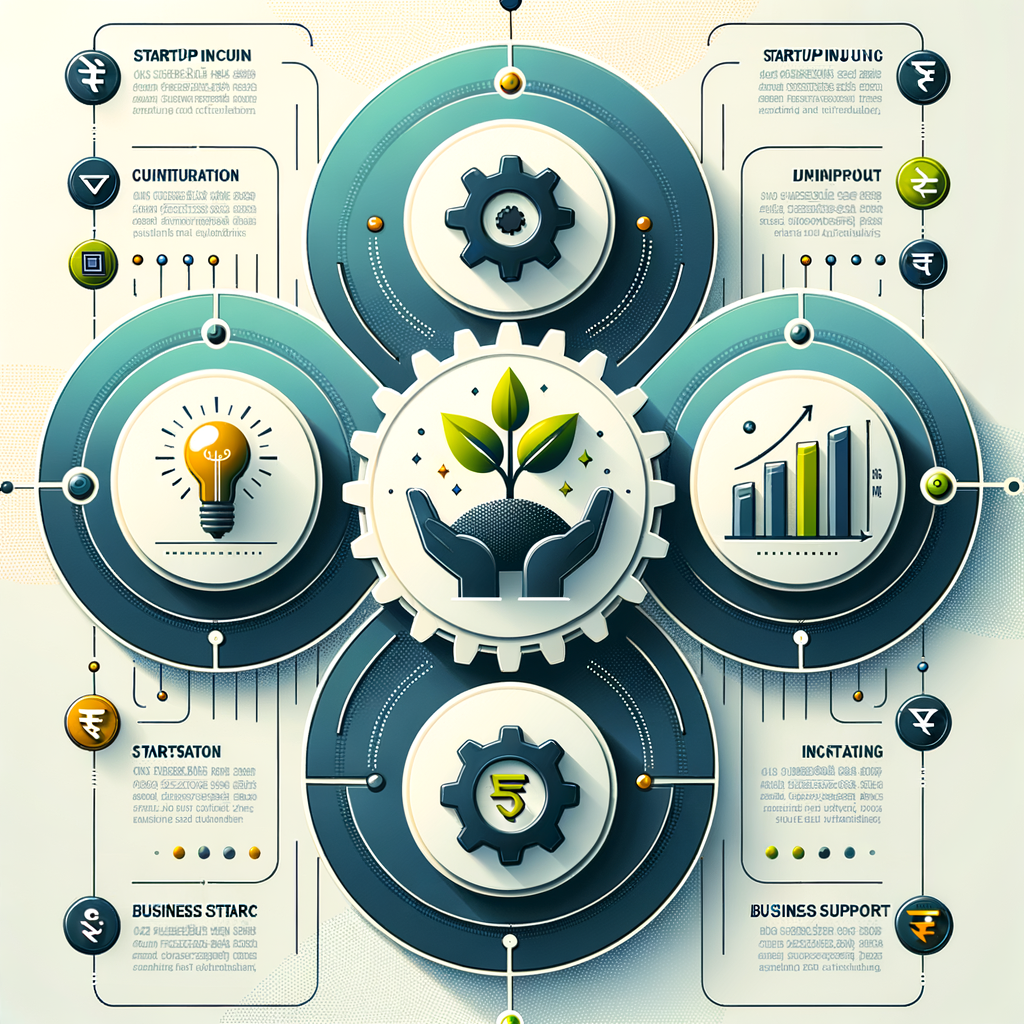

The Main Object of Startup Incubation & Business Support Services in India
Imagine you have a groundbreaking startup idea. You’ve spent countless nights refining it, convinced it could be the next big thing. But then reality hits. How do you register a company? What is GST? How do you create a financial projection that investors will take seriously? This overwhelming maze of legal, financial, and operational hurdles is where many brilliant ideas stall. The primary object of startup incubation services is to provide a structured ecosystem that transforms a raw concept into a thriving, legally compliant, and scalable business. Understanding this objective is the first critical step for any founder in India looking to build a company that not only survives its initial years but is also built for long-term success and growth.
What is the True Purpose of Startup Incubation Services?
Beyond offering trendy co-working spaces and a steady supply of coffee, the core mission of incubation programs is to de-risk the entrepreneurial journey. They act as a dedicated support system, providing the tools, mentorship, and environment necessary to navigate the treacherous early stages of a business. This structured approach significantly increases the chances of survival and success by focusing on building a solid foundation. The ecosystem of entrepreneurial support services India provides is vast, but incubators package this support into a cohesive program designed to address the most common and critical challenges that new founders face, from validating their initial idea to preparing for their first round of funding.
From Raw Idea to Viable Business
The most fundamental goal of an incubator is to help a founder answer the most important question: “Is this a viable business?” They provide the framework and guidance needed to move beyond a simple idea and develop a Minimum Viable Product (MVP). This process involves intensive market research, customer discovery, and product development cycles. Mentors within the program push founders to test their assumptions, gather real-world feedback, and pivot if necessary. The objective is not just to build a product, but to build the right product for the right market. This phase is also heavily focused on crafting a robust business plan and a go-to-market strategy that outlines a clear path to generating revenue and acquiring customers.
Reducing Early-Stage Failure Rates
It’s a well-known statistic that a significant percentage of startups fail within their first few years. The reasons are often predictable: running out of cash, poor market fit, a flawed business model, or getting tangled in legal and compliance issues. Startup incubation programs are designed to act as a safety net against these common pitfalls. By providing access to seed funding or investor networks, they address the immediate cash flow problem. Through rigorous mentorship and validation processes, they help ensure product-market fit. Most importantly, they instill a culture of discipline around financial management, operational efficiency, and legal compliance, dramatically reducing the risk of making a critical, company-ending mistake in the early days.
Building a Foundation for Scalable Growth
While survival is key, the ultimate object is to build a business that can scale. Incubators focus on establishing sustainable and scalable systems from day one. This includes helping founders develop repeatable sales processes, create efficient operational workflows, and build a strong company culture that can attract and retain top talent. They assist in creating financial models that are not just for the present but are designed for future growth and fundraising rounds. The goal is to ensure that when the business hits its growth stride, it doesn’t collapse under the weight of its own success. This foundational work creates a resilient organization capable of adapting to market changes and capitalizing on new opportunities.
The Core Pillars of Business Support Services for Startups
An incubation program is a composite of various specialized services. These core pillars form the comprehensive support structure that allows founders to focus on their core product and vision while experts handle the critical, non-core functions. Understanding these pillars is essential for any entrepreneur evaluating how to best leverage the ecosystem of business support services for startups available in India. From legal compliance to strategic mentorship, each element plays an indispensable role in the journey from idea to enterprise.
Foundational Legal and Financial Compliance
This is arguably the most critical and often overlooked pillar. A mistake here can have long-lasting, damaging consequences.
- Company Registration: The first step is choosing the right legal structure. Mentors and legal experts help founders understand the pros and cons of registering as a Private Limited Company (Pvt. Ltd.), a Limited Liability Partnership (LLP), or a One Person Company (OPC), ensuring the choice aligns with their long-term funding and operational goals.
- GST Registration and Filing: From the very first invoice, GST compliance is mandatory. Incubators provide access to experts who ensure timely registration and guide startups on correct invoicing, input tax credit claims, and regular filing. For detailed information, you can always refer to the official GST Portal.
- Income Tax & TDS Compliance: Startups must adhere to corporate income tax laws and Tax Deducted at Source (TDS) regulations. Support services ensure that the company meets all its obligations with the Income Tax Department, avoiding penalties and legal issues down the line.
- Intellectual Property (IP) Protection: A startup’s most valuable asset is often its idea, brand name, or proprietary technology. Business support services include guidance on Trademark and Copyright registration to protect these intangible assets from infringement, securing the company’s unique identity and competitive advantage in the market.
Strategic Guidance through Startup Mentorship Programs
Access to knowledge and experience is invaluable. The best startup mentorship programs India offers provide founders with a dedicated network of seasoned entrepreneurs, industry veterans, and functional experts. This isn’t just generic advice; it’s targeted, actionable guidance. Mentors hold regular one-on-one sessions to review progress, challenge assumptions, and help solve specific problems—whether it’s refining a marketing strategy, navigating a technical hurdle, or preparing for a difficult negotiation. These workshops and advisory sessions provide a knowledge transfer that can save founders months, or even years, of learning through trial and error.
Access to Funding and Investor Networks
Capital is the lifeblood of any startup. Incubators play a crucial role in making startups “investor-ready.” This involves a multi-step process that starts with perfecting the business model and creating compelling financial projections. They conduct workshops on creating persuasive pitch decks and coach founders on how to present their vision effectively to potential investors. More importantly, incubation centers leverage their extensive networks to provide direct introductions to a curated list of angel investors, venture capitalists (VCs), and corporate venture arms. These warm introductions significantly increase the chances of securing the necessary funding to fuel growth.
Infrastructure and Operational Support
By taking care of the day-to-day operational overhead, incubators allow founders to maintain a laser focus on building their business. This support is highly tangible and immediately impactful. It typically includes access to affordable, fully-equipped co-working spaces, which eliminates the headache of long-term commercial leases. Many programs also offer shared resources like HR support for initial hiring, marketing and PR assistance to build brand visibility, access to essential software tools at discounted rates, and robust IT infrastructure. This plug-and-play environment conserves a startup’s most precious resources: time and money.
Finding the Right Startup Incubation Services in India’s Thriving Ecosystem
India’s startup landscape is booming, with world-class incubators and accelerators spread across its major cities. This abundance of choice, however, can also be overwhelming for a new founder. Finding the right program is not about finding the most famous one, but about finding the one that is the best fit for your specific industry, stage, and goals. A thorough evaluation is necessary to ensure the program aligns with your vision and can provide the specific support you need to succeed.
Evaluating Programs Across Major Hubs
The ecosystem for startup incubation services in India is diverse and geographically distributed, with each major city developing its own unique specializations. Your search for the right fit requires understanding these nuances. Whether you are searching for startup incubation centers Mumbai known for their deep connections in the fintech and media industries, or specific startup incubation programs Bangalore that are famous for nurturing SaaS and deep-tech ventures, the core criteria for selection remain crucial. The landscape for the best business support services Delhi is equally competitive, with a strong focus on e-commerce and consumer tech. Similarly, the business incubation services Hyderabad are renowned for their focus on life sciences and pharmaceuticals, while the sharp focus of startup accelerator programs Chennai on automotive and enterprise tech offers unique advantages for startups in those domains.
Key Questions to Ask Before Joining
Before committing to any program, it’s vital to conduct your own due diligence. Asking the right questions can reveal whether an incubator is truly the right partner for your journey. Here are four essential questions every founder should ask:
- Industry Focus: Does the incubator have a proven track record and a strong network in your specific sector (e.g., FinTech, HealthTech, EdTech, AgriTech)? A generic program may not provide the domain-specific expertise you need.
- Mentor Quality: Who are the mentors? Don’t just look at their names; research their backgrounds. What is their track record as founders, investors, or industry leaders? Ask if you can speak to a current or former mentee.
- Equity Dilution: How much equity, if any, does the program require in exchange for its services and potential funding? Understand the terms clearly. While giving up equity is standard for many private programs, the percentage should be reasonable and justified by the value provided.
- Alumni Network: How strong and supportive is the alumni community? A powerful network of past graduates can be an invaluable resource for future partnerships, hiring, and advice. Inquire about alumni engagement and success stories.
Conclusion
The main object of startup incubation services is far more profound than simply providing a desk and internet access. It is about creating a nurturing, high-growth environment that systematically de-risks the entrepreneurial process and builds a robust, legally compliant, and scalable business from the ground up. By offering a powerful combination of mentorship, funding access, operational infrastructure, and critical business support services, they provide the essential framework needed to turn a promising idea into a successful company. This structured support helps founders avoid common pitfalls and sets them on a clear path toward sustainable growth.
While an incubator provides a holistic environment, the legal and financial foundation of your startup cannot be compromised. Ensure your venture is built on solid ground. Contact TaxRobo today for expert assistance with Company Registration, GST filing, and IP Protection – the essential first steps on your entrepreneurial journey.
Frequently Asked Questions
Q1: What is the main difference between startup incubators and accelerators?
A: The primary difference lies in their timeline, focus, and business stage. Incubators nurture early-stage ideas over a longer period, while accelerators aim to rapidly scale existing businesses.
| Feature | Startup Incubator | Startup Accelerator |
|---|---|---|
| Focus | Developing a business idea, building an MVP, finding market fit. | Rapidly scaling an existing business with a proven model. |
| Duration | Long-term, typically 1-2 years. | Short, intensive programs, typically 3-6 months. |
| Stage | Idea or very early-stage startups. | Early-stage startups that already have traction or an MVP. |
| Equity | May or may not take equity (Govt. incubators often don’t). | Almost always take equity in exchange for seed funding and mentorship. |
| Example | Many university-affiliated programs. | Programs like Y Combinator or startup accelerator programs Chennai. |
Q2: Do all startup incubation services in India require equity?
A: Not all. There is a wide spectrum. University-affiliated and government-backed incubators (like those under the Atal Innovation Mission) often do not take equity, as their primary goal is to foster innovation. However, most private incubators and nearly all accelerators do require equity, typically ranging from 2% to 10%. It is crucial to read the terms and conditions carefully and clarify this before joining any program.
Q3: Can I access business support services without being in an incubation program?
A: Absolutely. Services like company registration, GST compliance, accounting, payroll management, and trademark registration are foundational and can be procured from specialized firms. This à la carte approach allows you to get expert help precisely where you need it, without committing to a full-time program. Firms like TaxRobo specialize in providing these essential business support services for startups, offering flexibility and expertise on an as-needed basis.
Q4: What are the first three legal steps I should take when starting my business in India?
A: The first three crucial legal steps lay the entire foundation for your business. Getting them right is non-negotiable.
- Choose and Register the Right Legal Structure: Decide whether a Private Limited Company, LLP, or OPC is best for your vision and register it with the Ministry of Corporate Affairs (MCA).
- Obtain GST Registration: If your business turnover is expected to exceed the threshold limit, or if you are engaged in inter-state trade, obtaining a GST registration is mandatory from day one.
- Protect Your Intellectual Property: Secure your brand name and logo by filing a trademark application. This prevents others from using your brand identity and is a critical asset for your company.