
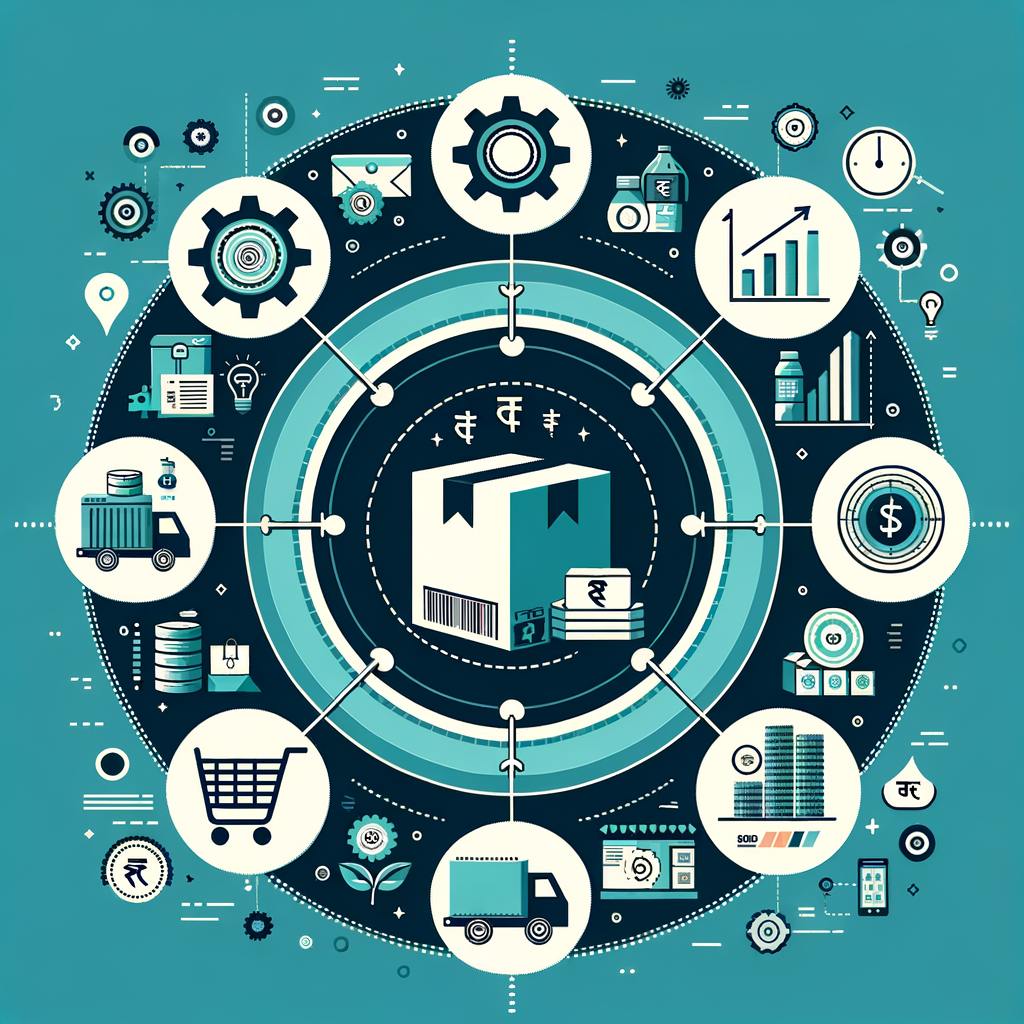

Decoding the Main Object of FMCG Trading & Distribution in India
Introduction: Your First Step into India’s Dynamic FMCG Sector
The Indian FMCG market is a bustling ecosystem of opportunity, from the familiar neighbourhood kirana store to the sprawling aisles of a modern supermarket. For aspiring entrepreneurs, understanding the core principles of FMCG Trading & Distribution is the first step towards building a successful venture in this vibrant sector. Fast-Moving Consumer Goods (FMCG) are products that sell quickly and at a relatively low cost, encompassing everything we use daily—food items, beverages, toiletries, cleaning supplies, and more. But before you can stock your shelves or make your first sale, you must lay a crucial legal foundation for your business. This foundation is built upon defining your business’s primary purpose, known as the “Main Object.” This guide will break down everything you need to know about crafting the main object for an FMCG business, covering the legal drafting, operational realities, and strategic planning necessary for success. This detailed exploration is essential for understanding FMCG trading in India from the ground up, ensuring your business is built to last.
What is the “Main Object Clause” and Why Does it Matter for Your Business?
Embarking on your entrepreneurial journey requires more than just a business idea; it demands a solid legal framework. The “Main Object Clause” is the cornerstone of this framework, a statement that officially declares the primary activities your company is permitted to undertake. It’s not just legal jargon; it’s a declaration of your business’s identity and scope. A clearly defined object clause provides clarity to shareholders, lenders, and regulatory authorities, preventing any ambiguity about your company’s purpose. More importantly, it acts as a safeguard, ensuring that the company’s funds and resources are utilized only for the business activities specified in this clause. Any action taken by the company that falls outside the scope of its main object can be deemed “ultra vires” (beyond its powers) and declared void, leading to significant legal and financial complications. Therefore, getting this clause right from the very beginning is non-negotiable for sustainable growth and legal compliance.
The Legal Foundation: The Memorandum of Association (MOA)
Every company registered in India must prepare a charter document known as the Memorandum of Association (MOA). Think of the MOA as the constitution of your company; it defines its scope, powers, and relationship with the outside world. Within this critical document lies the “Main Object Clause.” This specific section is arguably the most important part of the MOA because it explicitly states the primary business the company will engage in upon incorporation. For an FMCG business, this would involve activities like trading, distributing, marketing, and dealing in consumer goods. A well-drafted clause is broad enough to allow for future expansion but specific enough to provide a clear operational direction. Failing to define this properly can lead to issues with bank loan applications, investor agreements, and even routine regulatory checks. It’s the legal bedrock upon which your entire business operation is built.
Sample Main Object for an FMCG Trading & Distribution Company
Drafting the main object clause requires a blend of legal precision and business foresight. It should be comprehensive to cover all intended activities without being overly vague. Here is a standard yet effective sample clause for a company focused on FMCG trading and distribution:
“To carry on the business of trading, distributing, marketing, importing, exporting, and dealing in all types of Fast-Moving Consumer Goods (FMCG), including but not limited to food products, beverages, toiletries, cosmetics, personal care products, and household cleaning products, both online and offline through various distribution channels.”
This clause clearly outlines the core functions:
- Trading, distributing, marketing: Covers the primary business operations.
- Importing, exporting: Provides scope for international business in the future.
- “Including but not limited to…”: Offers flexibility to add new product categories.
- “Both online and offline”: Accounts for modern e-commerce and traditional sales channels.
Expert Tip: While this sample is a great starting point, your business may have unique needs. The experts at TaxRobo can help you draft a precise and comprehensive MOA tailored to your specific business model and future goals. Explore our TaxRobo Company Registration Service for end-to-end support.
The Core Activities of FMCG Trading & Distribution
The Main Object Clause outlines your business on paper, but bringing it to life involves a series of interconnected operational activities. These core functions are the engine of your FMCG business, transforming legal intent into real-world commerce. From sourcing products to ensuring they reach the end consumer efficiently, each step is vital for profitability and market presence. A successful distributor must master these activities to build a reliable and scalable supply chain. Let’s break down what the day-to-day operations of an FMCG trading and distribution business look like in practice.
Procurement and Sourcing
The journey of any FMCG product begins with procurement. This involves identifying reliable suppliers—either directly from manufacturers or from larger super-stockists—and purchasing goods for resale. This is far more than simple buying; it’s a strategic function that directly impacts your profit margins and reputation. Key activities include rigorous price negotiation to secure competitive rates, conducting stringent quality checks to ensure products meet standards, and building strong, long-term relationships with suppliers. Effective sourcing also means managing lead times to prevent stockouts and ensuring a consistent supply of popular products. A smart procurement strategy balances cost, quality, and reliability, forming the foundation of your entire inventory.
Warehousing and Inventory Management
Once goods are procured, they need to be stored safely and managed efficiently. This is where warehousing and inventory management come into play. A well-organized warehouse, or godown, is essential for protecting products from damage, theft, and expiry. Effective inventory management is critical in the FMCG sector, where many products have limited shelf lives. Implementing the FIFO (First-In, First-Out) principle is a must to ensure that older stock is sold before newer stock, minimizing losses due to expiry. Using inventory management software can help track stock levels in real-time, forecast demand, and automate reordering processes, preventing both overstocking (which ties up capital) and under-stocking (which leads to lost sales).
Logistics and Supply Chain Management
Logistics is the backbone of any distribution business. It encompasses the entire process of moving goods from your warehouse to the retail outlets. An efficient and cost-effective transportation system is crucial for timely deliveries and maintaining retailer satisfaction. This involves planning delivery routes to maximize efficiency, choosing the right mode of transport (e.g., small vans for city routes, larger trucks for longer distances), and managing the costs associated with fuel and vehicle maintenance. A streamlined supply chain ensures that products are available on retail shelves when consumers want them, which is a key competitive advantage in the fast-paced FMCG market.
Sales, Marketing, and Order Processing
No distribution business can thrive without a proactive sales and marketing engine. A dedicated sales team is responsible for visiting retailers, building relationships, taking orders, and ensuring product visibility on shelves. This is where various FMCG marketing strategies in India come into play. Distributors often implement trade discounts, volume-based promotional schemes, and point-of-sale branding materials to push sales. The order processing system must be seamless, from accurately recording orders placed by the sales team to generating invoices and coordinating with the logistics team for dispatch. A responsive sales and order management process ensures a smooth flow of goods and revenue, directly contributing to the business’s growth and profitability.
Essential Legal & Tax Compliances for FMCG Trading in India
Navigating the legal and tax landscape is a critical aspect of running a successful FMCG trading in India business. Compliance is not optional; it is a mandatory requirement that protects your business from penalties and ensures smooth operations. From choosing the right legal structure for your company to obtaining the necessary licenses and registrations, every step must be taken with care and diligence. For an FMCG distributor, the key areas of focus are business structure, GST, and food safety regulations. Overlooking these compliances can lead to severe financial penalties and even business closure.
Choosing Your Business Structure
The first legal decision you will make is choosing the right legal structure for your business. Each structure has different implications for liability, compliance, and fundraising capabilities.
| Business Structure | Key Advantages | Key Disadvantages | Best Suited For |
|---|---|---|---|
| Sole Proprietorship | Easy to start, full control, minimal compliance. | Unlimited personal liability, difficult to raise funds. | Small, local distributors with low initial investment. |
| Partnership Firm | Shared investment and responsibilities. | Unlimited liability for partners, potential for disputes. | Two or more individuals starting a business together. |
| LLP | Limited liability for partners, separate legal entity. | Higher compliance than a partnership. | Businesses seeking liability protection and flexibility. |
| Private Limited Co. | Limited liability, separate legal entity, easy to raise funds. | Higher compliance costs, more regulations. | Startups planning for significant growth and funding. |
Mandatory GST Registration and Filing
The Goods and Services Tax (GST) is a cornerstone of India’s tax system, and compliance is mandatory for any FMCG business exceeding the specified turnover threshold. Once registered, you must correctly charge, collect, and remit GST to the government.
- CGST & SGST: Central GST and State GST are levied on intra-state transactions (sales made within the same state).
- IGST: Integrated GST is levied on inter-state transactions (sales made from one state to another).
It is also crucial to use the correct HSN (Harmonized System of Nomenclature) codes for different FMCG products, as GST rates vary by category. Regular filing of GST returns (monthly or quarterly, depending on your turnover) is a legal obligation. For hassle-free compliance, TaxRobo’s automated TaxRobo GST Service can manage your filings accurately and on time. For official information, you can always refer to the GST Portal.
FSSAI License: A Must for Food Products
If your business deals with any food products—be it packaged snacks, beverages, or raw food items—obtaining a license from the Food Safety and Standards Authority of India (FSSAI) is non-negotiable. This license ensures that the food products are safe for consumption and meet quality standards. Depending on the scale and nature of your operations, you will need one of the following:
- Basic Registration: For small businesses and startups with an annual turnover below ₹12 lakh.
- State License: For mid-sized businesses with an annual turnover between ₹12 lakh and ₹20 crore.
- Central License: For large businesses, importers, or those operating in multiple states, with an annual turnover above ₹20 crore.
You can apply for the license and find more details on the official FSSAI Portal.
Other Key Registrations
Beyond GST and FSSAI, a few other registrations are beneficial for an FMCG distribution business:
- Trade License: This is obtained from the local municipal corporation and gives you the permission to operate your business in a specific locality.
- MSME/Udyam Registration: Registering your business as a Micro, Small, or Medium Enterprise (MSME) can make you eligible for various government schemes, subsidies, and priority sector lending benefits.
Building Your Network: Choosing the Right FMCG Distribution Channels in India
Selecting the right distribution channels is a strategic decision that defines how your products will reach the end consumer. Your choice will impact your logistics, marketing efforts, and overall profitability. The landscape of FMCG distribution channels in India is diverse, ranging from traditional networks that have existed for decades to modern digital platforms. Effective distribution strategies for FMCG India often involve a hybrid approach, leveraging the strengths of multiple channels to maximize market penetration and reach different customer segments. Understanding these channels is key to designing a supply chain that is both efficient and scalable.
The Traditional Two-Tier Channel
This is the most common and time-tested distribution model in India, especially for reaching the vast network of kirana stores and general trade outlets. The structure is straightforward: Company -> Distributor -> Retailer -> Consumer. In this model, you, as the distributor, are the crucial link. You purchase goods in bulk from the company or a super-stockist, hold the inventory in your warehouse, and then service a designated territory of retail stores. Your sales team takes orders from these retailers, and your logistics team ensures timely delivery. This channel is effective for deep market penetration, especially in smaller towns and rural areas where modern retail is less prevalent.
The Modern Trade Channel
Modern Trade refers to organized retail chains such as supermarkets (e.g., Big Bazaar, More), hypermarkets (e.g., DMart), and convenience stores. The distribution model here is often more direct: Company -> Distributor -> Modern Trade Outlet -> Consumer, or sometimes even Company -> Modern Trade Outlet -> Consumer. Supplying to modern trade requires a different operational setup. These large chains have centralized warehouses and demand stricter adherence to delivery schedules, packaging standards, and credit terms. While the order volumes are significantly larger, the profit margins can be tighter, and the payment cycles longer. Success in this channel depends on strong logistical capabilities and the ability to manage complex relationships with large corporate clients.
The Online/D2C Channel
The rise of e-commerce has opened up a powerful new channel for FMCG distribution. This includes selling through established online marketplaces like Amazon, Flipkart, and BigBasket, or adopting a Direct-to-Consumer (D2C) model by selling through your own website. The online channel allows you to reach a wider, geographically diverse customer base without a physical retail presence. However, it comes with its own set of challenges, including managing digital marketing, handling individual order fulfillment (picking, packing, and shipping), and dealing with customer service and returns. For many new businesses, a hybrid approach—partnering with e-commerce platforms while building a D2C brand—is an effective strategy to tap into the growing online consumer market.
Conclusion: Laying a Strong Foundation for Your FMCG Business
Starting a business in India’s competitive FMCG sector is an exciting venture filled with immense potential. However, long-term success hinges on building a strong foundation from day one. This begins with the legal framework of your company, where a well-defined main object in your Memorandum of Association (MOA) provides clarity and protects your business. Beyond the legalities, a deep understanding of the core operational activities—from procurement and inventory management to sales and logistics—is essential. Furthermore, navigating mandatory compliances like GST and FSSAI is non-negotiable for smooth and lawful operations. Finally, making a strategic choice of distribution channels will determine your market reach and scalability. A comprehensive grasp of FMCG Trading & Distribution, covering both its legal and operational facets, is the ultimate key to building a profitable and sustainable enterprise in India.
Ready to launch your FMCG business but unsure about the legal paperwork? Let TaxRobo handle your company registration, MOA drafting, and GST filing. Contact us today for a free consultation and start your entrepreneurial journey with confidence!
Frequently Asked Questions (FAQs)
Q1. What is the minimum investment needed to start an FMCG trading in India?
A: There’s no fixed amount, as it depends on your scale. You can start small as a local distributor with a modest investment. Key initial costs will include company registration fees, GST registration, the initial purchase of stock from manufacturers, and potentially a deposit for a small warehouse or godown rental. A realistic starting budget could range from a few lakhs to a more substantial amount depending on the brands you partner with and the size of your territory.
Q2. Is an FSSAI license required even if I am just a trader and not a manufacturer?
A: Yes, absolutely. Under FSSAI regulations, any entity that handles food products at any stage of the supply chain—including storage, distribution, transportation, and sale—is considered a Food Business Operator (FBO). Therefore, even as a trader or distributor, you are required to obtain an FSSAI license or registration that is appropriate for the scale of your business operations.
Q3. What is the difference between a distributor and a super-stockist?
A: A super-stockist (also known as a C&F agent or carrying and forwarding agent) operates at a higher level in the distribution hierarchy. They are typically appointed by a large FMCG company to manage logistics and supply for a large region, such as an entire state. They hold large volumes of inventory and their primary customers are other distributors. A distributor, on the other hand, buys goods from the company or a super-stockist and operates within a smaller, designated territory (like a few districts or a part of a city), selling directly to the end retailers.
Q4. Can I mention both trading and manufacturing in my Main Object Clause?
A: Yes, you can, and it is often a wise strategy to do so. Drafting a broad and forward-looking object clause can save you the time and expense of amending your MOA in the future. You can include potential future activities like manufacturing, packaging, importing, or exporting, even if you don’t plan to pursue them immediately. This provides your business with the legal flexibility to expand and diversify its operations seamlessly. The experts at TaxRobo can advise on drafting a comprehensive object clause that allows for your company’s future growth.