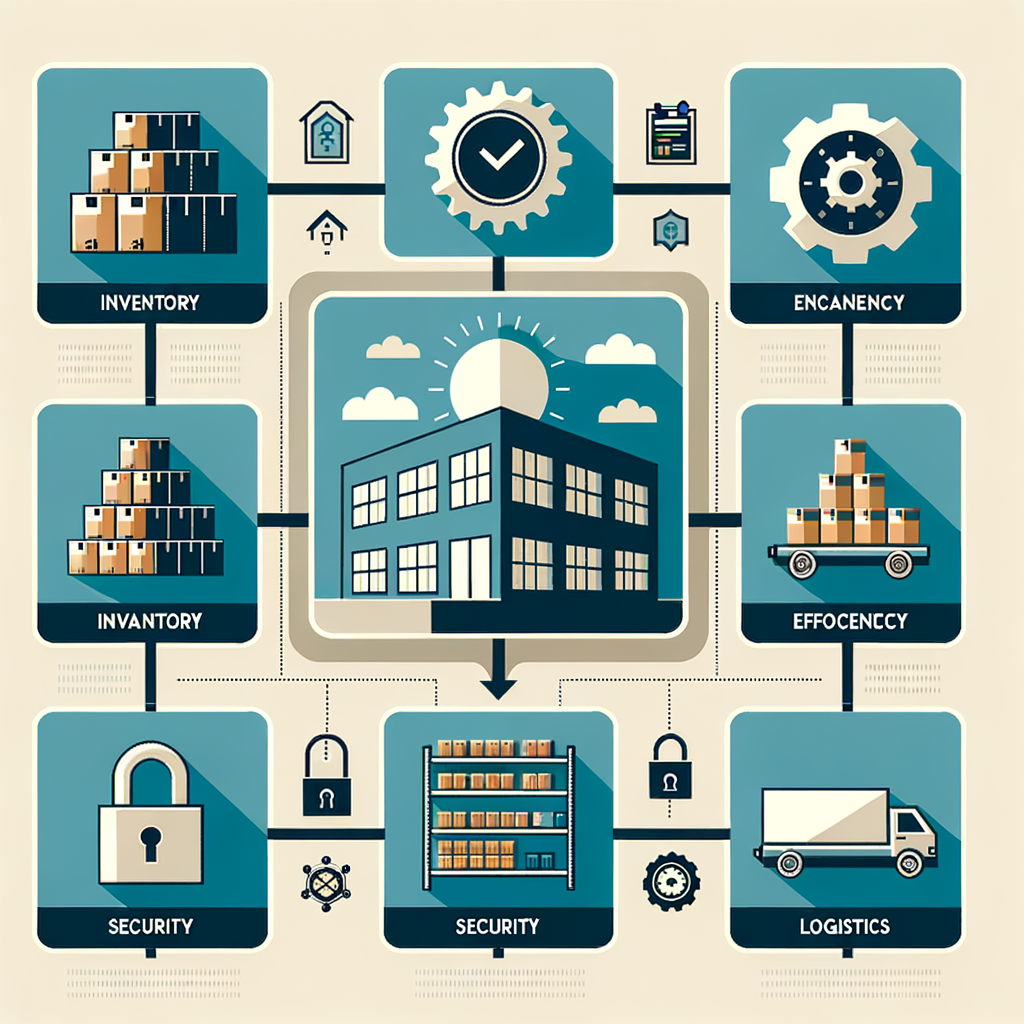

Main Object of Warehousing & Storage Services: A Guide for Indian Businesses
The e-commerce boom in India has transformed how businesses operate, making efficient supply chain management more critical than ever. For any company, big or small, the journey of a product from manufacturer to customer is complex and filled with logistical challenges. Understanding the tax implications is also vital, leading to many questions about GST for E-commerce Businesses: Key Considerations. Behind every timely and successful delivery lies a robust system of storage, management, and movement. Understanding the main object of professional warehousing services is the first crucial step for any entrepreneur looking to optimize inventory, manage operational costs, and scale their business effectively. These services are no longer just about four walls and a roof; they are dynamic hubs that power modern commerce and provide essential storage solutions for businesses in India.
What is the Core Purpose of Warehousing Services?
At its most basic level, warehousing is the act of storing goods that will be sold or distributed later. However, the core purpose of modern warehousing extends far beyond simple storage. It encompasses both static and dynamic functions that add significant value to a business’s supply chain. The static function is the traditional role of providing safe, secure, and systematic storage for goods, which can include raw materials waiting for production, semi-finished goods in the manufacturing process, or finished products ready for sale. The dynamic function, on the other hand, is about the movement and handling of these goods. Modern warehousing and storage solutions India act as logistics nerve centers, performing tasks like order consolidation (grouping items for a single customer), break-bulk (dividing large shipments into smaller ones for different destinations), cross-docking (transferring goods directly from inbound to outbound trucks with minimal storage), and various value-added services like product packaging, labeling, and quality checks. This dual role ensures that goods are not only kept safe but are also positioned for efficient and rapid distribution.
The Four Main Objects of Warehousing
To fully grasp the strategic importance of warehousing, it’s essential to understand its four primary objectives, which collectively contribute to a smoother and more profitable business operation.
- Systematic Storage: The most fundamental object is to provide organized and secure storage. A professional warehouse protects goods from damage due to weather, pests, or mishandling, and secures them against theft. More importantly, it ensures items are stored systematically, allowing for easy identification, tracking, and retrieval. This organized approach minimizes errors, speeds up order processing, and provides a clear picture of inventory levels at all times.
- Price Stabilization: Warehousing plays a crucial role in balancing market supply and demand. Businesses can store goods when production is high or demand is low and release them into the market when demand picks up. This practice, known as smoothing, helps prevent drastic price fluctuations caused by seasonal or cyclical changes. By maintaining a buffer stock, companies can ensure a steady supply to the market, thereby stabilizing prices for consumers and ensuring consistent revenue for themselves.
- Risk Bearing: Once goods are handed over to a warehouse keeper, the responsibility for their safety is transferred. The warehouse assumes the risk of loss or damage from events like theft, fire, or spoilage during the storage period. Professional warehouses are equipped with advanced security systems, fire safety measures, and are typically covered by comprehensive insurance policies. This risk transfer protects the business owner from potentially catastrophic financial losses.
- Financing: Warehousing can be a powerful tool for unlocking working capital. When a business stores its goods in a warehouse, it receives a warehouse receipt, which is a legal document acknowledging the storage of the goods. This receipt can be used as collateral to secure loans from banks and other financial institutions. This allows businesses to raise funds against their inventory without having to sell it, providing crucial liquidity to manage day-to-day operations and fund growth.
Key Benefits of Warehousing Services for Your Small Business
For small and growing businesses, partnering with a third-party logistics (3PL) provider for warehousing can be a game-changing decision. Outsourcing storage and fulfillment unlocks numerous advantages that allow entrepreneurs to focus on their core activities like product development, marketing, and sales. The benefits of warehousing services are not just operational; they directly impact the financial health and growth trajectory of the business.
- Cost Efficiency: Building, equipping, and staffing a private warehouse requires a massive capital investment. By using a professional warehousing service, you convert this large fixed cost into a variable operational expense. Most providers operate on a pay-as-you-go model, where you only pay for the space you use and the services you need. This eliminates expenses related to rent, utilities, security, and staff salaries, significantly lowering your overheads.
- Improved Inventory Management: Effective storage service providers use sophisticated Warehouse Management Systems (WMS). This technology provides real-time visibility into your inventory, enabling accurate tracking of stock levels, expiry dates, and movement. Professional warehouse management services India leverage this technology to minimize human error, prevent stockouts or overstocking, and provide valuable data for demand forecasting, leading to a more efficient and leaner inventory.
- Scalability and Flexibility: A key challenge for growing businesses is managing fluctuating demand. During peak seasons, you might need more storage space, while in leaner periods, that extra space becomes a financial burden. Professional warehousing offers unparalleled flexibility, allowing you to easily scale your storage space up or down as your business needs change, without being tied to long-term lease agreements.
- Enhanced Customer Service: In today’s competitive market, delivery speed is a major differentiator. Warehouses are strategically located to optimize distribution networks. By storing your products closer to your customers, you can significantly reduce shipping times and costs. Faster order processing, accurate picking and packing, and quicker delivery cycles lead directly to higher customer satisfaction and loyalty.
Choosing from Different Types of Warehousing Facilities in India
The Indian logistics landscape offers a variety of warehousing solutions, each designed to meet specific business needs. Selecting the right type of facility is crucial for optimizing your supply chain and controlling costs. Understanding the different warehousing facilities in India will help you make an informed decision based on your product type, target market, and business model.
- Public Warehouses: These are owned by government or semi-government bodies and are rented out to private companies for short or long-term storage. They are a cost-effective option for businesses that don’t need a constant, large-scale storage presence and offer flexible terms.
- Private Warehouses: These are owned and operated by large manufacturers, wholesalers, or merchants exclusively for their own distribution needs. While they offer maximum control, they require significant capital investment and are generally feasible only for large, established enterprises with stable, high-volume storage requirements.
- Bonded Warehouses: These are licensed by customs authorities to store imported goods before customs duties are paid. This is an ideal solution for importers, as it allows them to defer tax payments until the goods are sold or moved out of the warehouse. This improves cash flow and allows for storage until market conditions are favorable.
- Cold Storage Warehouses: These specialized facilities are designed to store perishable goods at controlled low temperatures. They are essential for industries dealing with pharmaceuticals, dairy products, fresh produce, meat, and other temperature-sensitive items, ensuring product integrity and extending shelf life.
- Fulfilment Centers: These are a modern evolution of warehouses, specifically designed for e-commerce (B2C) businesses. Beyond just storage, they specialize in processing online orders—picking individual items, packing them, and shipping directly to customers. They are technologically advanced and focused on speed and accuracy, making them the preferred choice for online retailers seeking reliable storage services in India.
How to Select Effective Storage Service Providers in India
Choosing the right logistics partner is a critical decision that can significantly impact your business’s success. When evaluating potential effective storage service providers India, it’s important to look beyond just the price. A reliable partner in logistics and warehousing services India will act as an extension of your business. Here is a checklist to guide your selection process:
- Location & Connectivity: The warehouse’s location is paramount. It should be strategically positioned close to your key suppliers, manufacturing units, and major customer hubs. Check for its proximity to major highways, ports, and airports to ensure smooth transportation and faster delivery times.
- Technology & Automation: A modern provider must have a robust Warehouse Management System (WMS). Ask for a demo of their software. Does it offer real-time inventory tracking, automated order processing, and detailed reporting? Technology is key to efficiency and minimizing errors.
- Security Measures: Your inventory is a valuable asset. Ensure the facility has comprehensive security measures in place, including 24/7 CCTV surveillance, controlled access points for personnel, and robust fire detection and suppression systems.
- Pricing Structure: Understand their pricing model completely. Is it per pallet, per square foot, or a percentage of sales? Ask for a detailed breakdown of all potential costs, including inbound (receiving), outbound (shipping), pick-and-pack fees, and any monthly minimums.
- GST Compliance: This is non-negotiable. Verify that the provider is registered under GST and can issue proper tax invoices for the services rendered. This is essential for you to claim Input Tax Credit (ITC) and maintain your own tax compliance.
Legal & Tax Essentials for Warehousing in India
As with any business service, engaging with a warehousing provider involves important legal and tax considerations. At TaxRobo, we emphasize that understanding these aspects is crucial for seamless operations and avoiding future complications. From registration to GST, keeping your finances in order ensures that your logistics operations support, rather than hinder, your business growth.
Business Registration and Licensing
If you are planning to start your own warehousing business, you must first register your entity. This could be as a Private Limited Company, a Limited Liability Partnership (LLP), or another appropriate structure. It is important to understand the differences when Choosing the Right Legal Structure for Your Business. Once registered, you will need to obtain various licenses, which may include a license under the Shops and Establishment Act, a trade license from the local municipal authority, and other specific permits depending on the nature of goods being stored (e.g., FSSAI license for food items).
GST on Warehousing and Storage Services
The Goods and Services Tax (GST) regime has streamlined the taxation of logistics services. Here’s what you need to know:
- SAC Code: Warehousing and storage services fall under the Services Accounting Code (SAC) 9967.
- GST Rate: The current GST rate applicable to these services is 18%.
- Place of Supply: The applicability of CGST/SGST or IGST depends on the location of the service provider and the service recipient. If both are in the same state, CGST and SGST apply. If they are in different states, IGST is levied.
- Input Tax Credit (ITC): This is a key benefit. As a business owner using these services, you can claim ITC on the 18% GST you pay to the warehouse provider. This credit can be used to offset your own GST liability on sales, effectively reducing your overall tax burden.
For the most current information, always refer to the official GST Council website.
Accounting and Auditing
Proper accounting is essential. To do this correctly, a business owner must first Set Up An Accounting System for My Small Business. The fees paid for warehousing and storage are treated as an operational expense in your profit and loss statement. It’s also critical to maintain accurate records of the inventory held in the third-party warehouse. These records are vital for periodic physical stock verification, financial audits, and accurate calculation of your business’s profits for income tax purposes.
Warehousing for Salaried Individuals: Beyond the 9-to-5
Warehousing isn’t just for large corporations. It offers practical solutions for salaried individuals exploring entrepreneurial ventures or managing personal logistics. The accessibility of professional storage services in India has opened up new possibilities for those with a 9-to-5 job.
- E-commerce Side Hustle: Are you running an online store on the side? As your orders grow, managing inventory from your home can become chaotic. Professional storage solutions for businesses in India, especially fulfilment centers, can take over your storage, packing, and shipping. This frees up your personal space and time, allowing you to manage your side business efficiently without it taking over your life.
- Personal Storage: The need for extra space is a common urban challenge. Whether you are shifting houses, renovating, or simply want to declutter, personal storage units offered by warehousing companies provide a secure and affordable solution. You can store furniture, documents, or other valuable items in a climate-controlled and secure environment, giving you peace of mind.
Conclusion
The main object of warehousing services has evolved dramatically from being a simple storage space to a vital, strategic component of a successful business’s supply chain. For Indian businesses, especially in the e-commerce sector, these services offer profound benefits, including cost savings, operational efficiency, improved customer satisfaction, and crucial scalability. By carefully selecting the right type of facility and a reliable logistics partner, you can build a resilient and agile business. However, success also hinges on meticulous financial management. Ensuring proper GST compliance, claiming your Input Tax Credit, and maintaining accurate accounts are just as important as a well-organized warehouse. As the landscape of warehousing services India continues to advance, a strong financial and legal foundation will be your key to sustainable growth.
Whether you’re starting a new e-commerce venture or scaling your existing business, managing finances and compliance is key. Let TaxRobo handle your GST registration, filing, and accounting, so you can focus on growth. Contact us today for a free consultation!
Frequently Asked Questions (FAQs)
Q1: What is the main difference between a warehouse and a fulfilment center?
A: A warehouse is primarily for storing goods, often in bulk and for longer periods (B2B or long-term inventory), while a fulfilment center is specifically designed for processing and shipping online orders directly to customers (B2C). A fulfilment center focuses on high-speed, high-accuracy, small-parcel order processing.
Q2: Is GST applicable on rent paid for a warehouse in India?
A: Yes, renting immovable property for commercial purposes, which includes warehouses, attracts GST at a rate of 18%. The business renting the space can typically claim Input Tax Credit (ITC) on this GST amount, provided they are registered under GST and meet the conditions for claiming ITC.
Q3: How much do warehousing services in India typically cost?
A: Costs vary significantly based on factors like location (metro vs. non-metro city), type of storage (ambient vs. temperature-controlled), the amount of space required, and the scope of services included (e.g., pick-and-pack, shipping management, returns processing). Pricing models can be per pallet, per square foot, a percentage of sales, or a combination. It is always best to get detailed quotes from multiple effective storage service providers India to compare and find the best fit for your budget and needs.