
The Main Object of Cyber Security & Networking Services in India for Your Business
In today’s fast-paced digital economy, Indian businesses are embracing technology like never before. From processing online payments to enabling remote work, digital operations are the new normal. However, this rapid digital transformation comes with a significant challenge: a dramatic increase in cyber threats. For any business owner, the primary goal is to grow and succeed, but this is impossible without robust and reliable cyber security services. These services form the digital shield that protects your sensitive data, while efficient networking acts as the backbone that keeps your operations running smoothly. Understanding the core purpose of both is no longer an IT department concern; it’s a fundamental business necessity. The importance of cybersecurity in India cannot be overstated, as a single breach can lead to devastating financial loss, reputational damage, and legal trouble. This article demystifies the main objectives of cyber security and networking, explaining why an integrated approach is non-negotiable for your business’s survival and growth.
What is the Main Object of Cyber Security Services?
At its core, the primary goal of any cyber security service is to protect a company’s digital assets—its data, systems, and infrastructure—from all potential threats, whether they originate from malicious external hackers or accidental internal errors. This protection is not a single action but a continuous process built on a foundational framework designed to ensure the confidentiality, integrity, and availability of your information. It’s about creating a resilient digital environment where your business can operate securely and your customers can trust you with their data.
The CIA Triad: The Foundation of Digital Protection
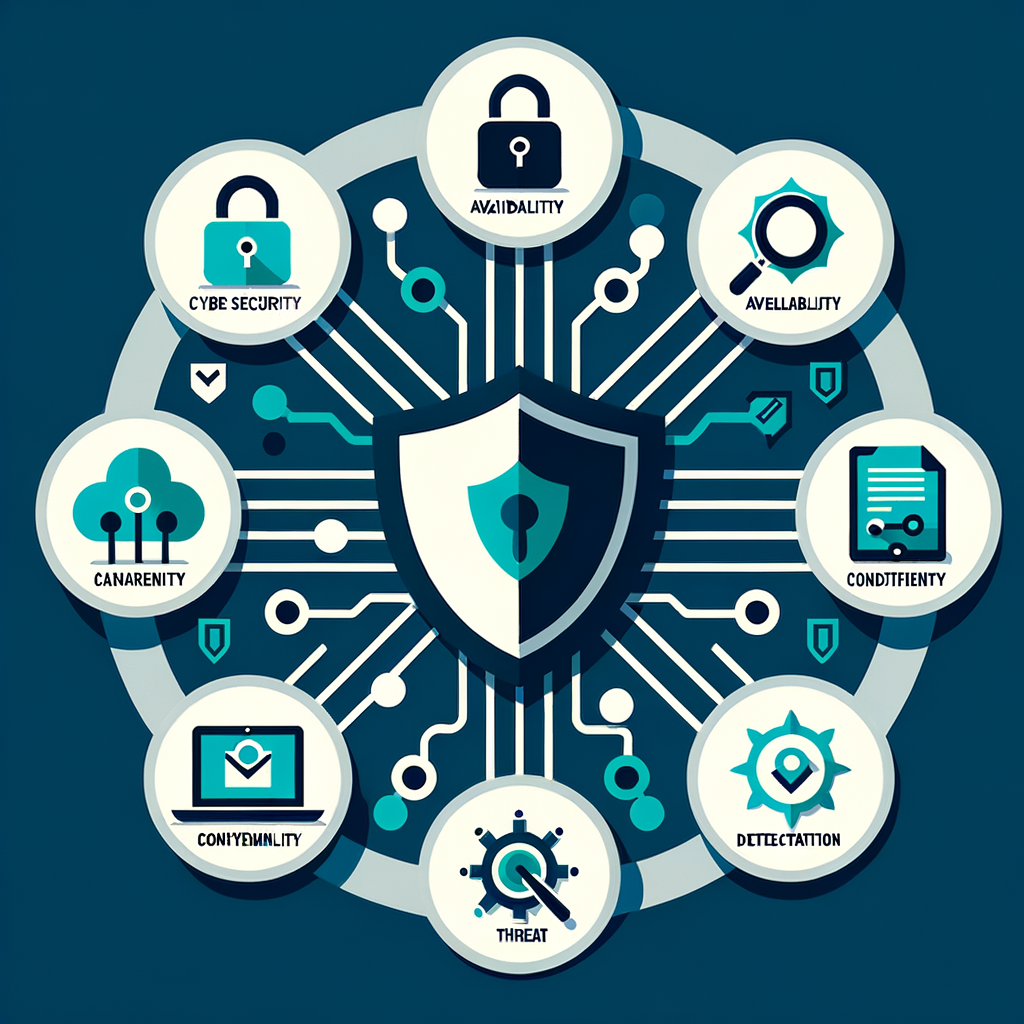
The entire field of information security is built upon a model known as the CIA Triad. This isn’t the intelligence agency, but rather three core principles that guide all security policies and solutions. Understanding these helps clarify the true benefits of cyber security in India.
- Confidentiality: This principle is about privacy and preventing the unauthorized disclosure of sensitive information. It ensures that data is accessible only to authorized individuals. Think of it as a digital lock and key. For your business, this means protecting customer details like names, addresses, and phone numbers (Personally Identifiable Information – PII), safeguarding internal financial reports, and keeping your unique business strategies or product designs a secret from competitors. This makes tasks like Protecting Your Business Data During Tax Season a critical operational requirement.
- Integrity: This principle focuses on maintaining the consistency, accuracy, and trustworthiness of data over its entire lifecycle. It means preventing any unauthorized alteration or modification of information. For example, integrity ensures that a hacker cannot fraudulently change the transaction amount in your sales records or that an employee’s salary details in the HR system remain accurate and untampered with.
- Availability: This principle ensures that your systems, networks, and data are operational and accessible to authorized users whenever they are needed. It’s about preventing disruptions to your business. Common threats to availability include Distributed Denial-of-Service (DDoS) attacks that can overload and crash your website during a peak sales period, or ransomware attacks that encrypt your critical files, making them completely unusable until a ransom is paid.
Proactive Defence: Moving Beyond Reaction
Modern cybersecurity has evolved far beyond simply putting up a digital wall and waiting for an attack. Today, the approach is proactive. It involves actively seeking out and neutralizing potential threats before they can cause damage. This forward-thinking strategy is what differentiates basic protection from a comprehensive security posture. Leading cybersecurity solutions for businesses India now focus heavily on this proactive stance. Key measures include:
- Threat Hunting & Intelligence: Security experts actively search through networks and datasets to detect and isolate advanced threats that evade existing automated security solutions.
- Vulnerability Assessments: These are regular, automated scans of your systems to identify known weaknesses or security loopholes that could be exploited by attackers.
- Penetration Testing: Often called “ethical hacking,” this is a simulated cyberattack against your computer system to check for exploitable vulnerabilities. It’s a real-world test of your defenses.
The Core Objectives of Business Networking Services
If cybersecurity is the shield, then your network is the central nervous system of your entire business operation. It’s the infrastructure that connects your employees, devices, and data. The primary objective of professional networking services is to design, implement, and maintain a network that is not just fast and reliable but also inherently secure and capable of growing with your business. A poorly configured network can lead to slow performance, frequent downtime, and gaping security holes, crippling your productivity and leaving you exposed.
Ensuring Seamless Connectivity and Communication
The most fundamental goal of any network is to facilitate the efficient and uninterrupted flow of information. This is the lifeblood of a modern company, enabling everything from sending an email to accessing cloud applications. Professional networking services focus on building a robust framework for this communication. These are essential networking solutions for industries India, regardless of their size. Key components include:
- Local Area Networks (LAN): Connecting devices within a single physical location, like your office.
- Wide Area Networks (WAN): Connecting multiple office locations across different cities or even countries.
- Virtual Private Networks (VPN): Providing secure, encrypted connections for remote employees to access the company network safely from anywhere.
- Reliable Wi-Fi Setups: Designing and deploying a strong, secure, and seamless wireless network for employees and guests.
Building a Scalable and Secure Foundation
A well-designed network is your first line of defense against cyber threats. Security cannot be an afterthought; it must be woven into the very fabric of your network architecture from day one. Furthermore, your network must be scalable, meaning it can handle increased traffic and more connected devices as your business expands without a significant drop in performance or a complete overhaul. This involves leveraging modern networking technologies for Indian businesses. Key strategic concepts include:
- Network Segmentation: This practice involves dividing your network into smaller, isolated sub-networks. For example, you can keep the network used by your finance department completely separate from the public guest Wi-Fi. This contains potential breaches, preventing an intruder from moving freely across your entire system.
- Firewall Implementation: A firewall acts as a critical gatekeeper, monitoring and controlling all incoming and outgoing network traffic based on a set of defined security rules. It establishes a barrier between your secure internal network and untrusted external networks like the internet.
- Scalability: A professional provider will design your network with future growth in mind, choosing the right hardware and architecture to ensure it can support your business not just today, but for years to come.
The Synergy: Why Cyber Security and Networking are Inseparable
One of the most critical mistakes a business can make is treating cyber security and networking as two separate, unrelated functions. In reality, they are two sides of the same coin. A strong security posture is fundamentally impossible without a well-architected and secure network, and a network is not truly reliable if it isn’t secure. For instance, understanding The Importance of Cybersecurity in Digital Accounting highlights this dependency perfectly. A truly resilient business is built on the seamless integration of both disciplines, where security policies inform network design and network capabilities enable advanced security measures.
Securing the Digital Perimeter and Data in Transit
Think of your business infrastructure with this analogy: your network is the foundation, walls, and layout of your building. Your cybersecurity measures are the locks on the doors, the security cameras, the alarm systems, and the guards at the gate. You cannot have a secure building without a strong foundation, and a strong building is useless without robust security measures.
Many essential tools are, by their nature, integrated networking and security components. A firewall, for instance, is a network device that exists purely for security. An Intrusion Prevention System (IPS) monitors network traffic for malicious activity and blocks it in real-time. A VPN is a networking technology used to create a secure, encrypted communication channel. Furthermore, protecting data in transit is crucial. This is achieved through encryption protocols like SSL/TLS, which ensure that any data moving between a user’s browser and your website is scrambled and unreadable to eavesdroppers.
The Indian Context: A Pressing Need for Integration
The push for a ‘Digital India’ has been incredibly successful, bringing millions of businesses and individuals online. However, this has also exponentially increased the digital “attack surface” for Indian companies, making them more attractive targets for cybercriminals. The number of cybercrime incidents reported in the country continues to rise each year, highlighting a critical need for a more robust defensive strategy. For authoritative statistics and advisories on the latest threats, businesses can refer to the official website of the Indian Computer Emergency Response Team (CERT-In). This landscape underscores the importance of cybersecurity in India and proves that an integrated network and security strategy is the only way to safely navigate the modern digital ecosystem.
Choosing the Right Partner for Your Business Needs
Navigating the complex world of digital protection and infrastructure can be overwhelming. Finding the right expert partner is crucial to implementing a strategy that fits your specific needs and budget. Here’s what you should look for when you begin evaluating cyber security services India and networking providers.
Evaluating Top Cyber Security Firms in India
When you are looking for a partner to protect your digital assets, you need more than just software. You need expertise, vigilance, and a comprehensive approach. When assessing the top cyber security firms India, consider the following checklist:
- Compliance Expertise: Do they have deep knowledge of Indian laws like the IT Act, 2000, and its provisions? Navigating Legal Compliance for Startups in India is a crucial aspect that a good firm can assist with. If you handle international customer data, are they familiar with regulations like GDPR?
- 24/7 Monitoring and Incident Response: Cyberattacks don’t happen only during business hours. A good firm offers round-the-clock monitoring and has a clear, fast plan of action to respond to any security incident.
- A Comprehensive Suite of Services: Look for a provider that offers a full range of services, including security audits, penetration testing, implementation of security tools, and employee awareness training.
- Proven Track Record: Ask for case studies or references from businesses of a similar size and in a similar industry to yours.
What to Expect from Professional Networking Services Providers India
Your network provider is responsible for the foundation of your entire digital operation. Their work directly impacts your productivity, efficiency, and security. When searching for reliable networking services providers India, look for these qualities:
- Focus on Reliability and Uptime: They should be able to offer Service Level Agreements (SLAs) that guarantee a certain percentage of network uptime, ensuring your business stays connected.
- Ability to Provide Scalable Solutions: The provider should understand your business growth plans and propose a network design that can be easily and cost-effectively scaled up in the future.
- Strong Post-Installation Support: A great provider doesn’t just set up the network and disappear. They offer ongoing maintenance, support, and troubleshooting to resolve any issues quickly.
- Expertise in the Latest Networking Technologies: They should be proficient in the latest networking technologies for Indian businesses, including SD-WAN, cloud networking, and advanced Wi-Fi standards, to provide you with the most efficient solutions.
Conclusion
In conclusion, the core objectives of cyber security and networking are distinct yet deeply interconnected. Cyber security is dedicated to protecting your valuable digital assets by upholding the principles of Confidentiality, Integrity, and Availability. Networking, on the other hand, is focused on building the secure, reliable, and scalable digital pathways that your data travels on. Their synergy is undeniable; you cannot have one without the other. In today’s hyper-connected and threat-filled landscape, investing in integrated cyber security services and professional networking is not an optional expense—it is a fundamental requirement for business continuity, customer trust, and long-term success.
Don’t wait for a breach to secure your business. Contact TaxRobo’s experts today for a consultation on comprehensive cybersecurity solutions for businesses India and protect your digital future.
FAQ Section
Q1: What is the first cybersecurity step a small business in India should take?
Answer: The first and most crucial step is to master the basics. Start by implementing a strong password policy that requires complex, unique passwords for different services. Enable multi-factor authentication (MFA) on all critical accounts, especially email and banking. Regularly update all software, operating systems, and applications to patch known vulnerabilities. Finally, conduct basic cybersecurity awareness training for all employees to teach them how to spot phishing emails and other common scams.
Q2: Are professional cyber security services expensive for a small business?
Answer: The cost of cyber security services can vary significantly depending on the size of your business and the complexity of your needs. However, the industry has evolved to cater to businesses of all sizes. Many providers offer scalable, subscription-based packages, from one-time essential vulnerability assessments to fully managed security services (MSSP). This flexibility makes it affordable for small businesses to start with foundational protection and enhance their security posture as they grow.
Q3: What’s the main difference between a firewall and an antivirus?
Answer: A firewall and antivirus software protect against different types of threats. A firewall is a network security device that acts as a perimeter guard. It monitors and controls incoming and outgoing network traffic based on predefined security rules, effectively acting as a barrier between your trusted internal network and an untrusted external network like the internet. Antivirus software, conversely, is installed on individual computers and devices (endpoints). Its job is to detect, prevent, and remove malicious software (malware) like viruses, trojans, and worms that have already made it onto a device.
Q4: Can I set up my own office network, or do I need networking services providers in India?
Answer: While it’s technically possible to set up a very basic Wi-Fi network for a small home office, it is highly recommended to engage professional networking services providers India for a business environment. Professionals bring expertise in ensuring optimal security, reliability, and scalability. They can properly configure firewalls, segment the network to isolate and protect sensitive data (like financial records), ensure consistent performance across the office, and design an infrastructure that can support your business as it adds more employees and devices.